search icon
search icon
Flag Arrow Down
Română
Română
Magyar
Magyar
English
English
Français
Français
Deutsch
Deutsch
Italiano
Italiano
Español
Español
Русский
Русский
日本語
日本語
中国人
中国人

Change Language

arrow down
  • Română
    Română
  • Magyar
    Magyar
  • English
    English
  • Français
    Français
  • Deutsch
    Deutsch
  • Italiano
    Italiano
  • Español
    Español
  • Русский
    Русский
  • 日本語
    日本語
  • 中国人
    中国人
Sections
  • News
  • Exclusive
  • INSCOP Surveys
  • Podcast
  • EU
  • Diaspora
  • Republic of Moldova
  • Politics
  • Economy
  • Current Affairs
  • International
  • Sport
  • Health
  • Education
  • IT&C knowledge
  • Arts & Lifestyle
  • Opinions
  • Elections 2025
  • Environment
About Us
Contact
Privacy policy
Terms and conditions
Quickly scroll through news digests and see how they are covered in different publications!
  • News
  • Exclusive
    • INSCOP Surveys
    • Podcast
    • EU
    • Diaspora
    • Republic of Moldova
    • Politics
    • Economy
    • Current Affairs
    • International
    • Sport
    • Health
    • Education
    • IT&C knowledge
    • Arts & Lifestyle
    • Opinions
    • Elections 2025
    • Environment
43 new news items in the last 24 hours
  1. Home
  2. International

A study published in Nature Sustainability shows that exposure to extreme heat will significantly increase by 2050, especially affecting developing countries.

Cristiana Dida
whatsapp
facebook
linkedin
x
copy-link copy-link
26 January 2026, 17:24
main event image
International
Foto: Pixabay
google-preference

Always see our news on Google

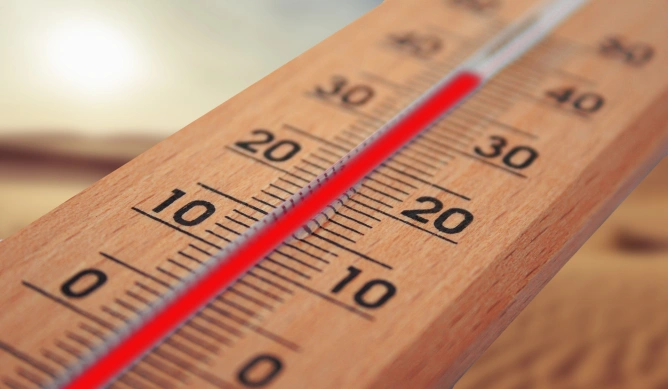
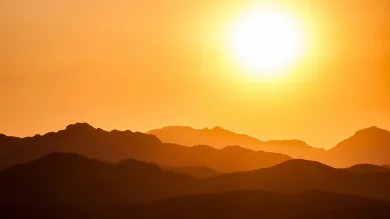
Scientists have published a study in the journal Nature Sustainability, highlighting the impact of global warming on exposure to extreme heat. Projections suggest that if global temperatures rise by 2°C compared to pre-industrial values, the number of people affected by extreme heat could nearly double by 2050, reaching 3.79 billion. The effects will be felt as early as this decade, as the threshold of 1.5°C approaches.

The lead author, Jesus Lizana, emphasizes that the need for adaptation is more urgent than previously estimated, requiring the construction of infrastructure such as sustainable cooling systems. The energy demand for cooling will increase drastically in developing countries like India and Bangladesh, which are facing severe health consequences.

Additionally, wealthy countries like Canada and Russia are not prepared for the anticipated heatwaves. These countries need to be aware of the risks and prepare for the increasing number of hot days. Radhika Khosla, a co-author of the study, emphasizes that the most disadvantaged will suffer the most from these climate changes.

Sources

sursa imagine
Stirile ProTV
Studiu: Omenirea nu este pregătită pentru a face faţă creşterii temperaturilor extreme
sursa imagine
Agerpres
Omenirea nu este pregătită pentru a face față creșterii temperaturilor extreme (studiu)
sursa imagine
Stiripesurse
Omenirea nu este pregătită pentru a face faţă creşterii temperaturilor extreme (studiu)

Latest News

23:21

The option of a technocratic government could return to the negotiating table. Ciprian Ciucu: "The President would have tested one or two, three options, but I was not told what those options are."

22:53

The President of Brazil, Lula da Silva, is launching his campaign for a fourth term / He declares himself to be "in excellent shape" at the age of 80.

22:17

Radu Miruță: "It is a complicated situation, a situation that is merely the consequence of poor management of the balance between electricity production and consumption / Romania, for years, has only shut down"

21:50

Fire on a ferry in Indonesia, off the coast of Madura Island: Five people have died and 41 are missing.

21:26

Superliga: Corvinul Hunedoara and Sepsi finished in a draw, 1-1

See more news

NEWS ON THE SAME TOPICS
event image
Environment
In the first half of this year, two-thirds of children in Western Europe were exposed to extreme temperatures, three times more compared to 2025.
event image
International
The heat wave in Europe disproportionately affects poor households. The burden falls on the most vulnerable.
event image
Environment
Over 95 million Europeans are facing temperatures of at least 35 degrees Celsius on Tuesdays, especially in the east and south of the continent, including Romania.
event image
Current Affairs
Almost 1.1 billion children worldwide are exposed to at least three simultaneous climate threats, according to a UNICEF report. The most common risks are drought, extreme heat, and heatwaves.
event image
Exclusive
ANALYSIS The increasingly hot summers of Europe: When the new climate reality crosses the danger threshold
event image
International
WHO: Extreme heat, a health crisis that requires urgent action
app preview
Personalized news feed, AI-powered search, and notifications in a more interactive experience.

app preview app preview
global warming exhibition extreme heat study

Editor’s Recommendations

main event image
Current Affairs
Yesterday 17:53

The first detonation to divert the Danube towards Cernavodă has failed. The military will resume the intervention on Monday.

Sources
imagine sursa
imagine sursa
imagine sursa
imagine sursa
imagine sursa
+6
main event image
Exclusive
1 August 2026, 09:15
Original Content

IT News Review by Control F5 Software: AI cameras can detect phone use while driving

main event image
Opinions
Yesterday 05:17

Sever Voinescu: Temptation and tendency

app preview
Personalized news feed, AI-powered search, and notifications in a more interactive experience.

app preview
app store badge google play badge
  • News
  • Exclusive
  • INSCOP Surveys
  • Podcast
  • EU
  • Diaspora
  • Republic of Moldova
  • Politics
  • Economy
  • Current Affairs
  • International
  • Sport
  • Health
  • Education
  • IT&C knowledge
  • Arts & Lifestyle
  • Opinions
  • Elections 2025
  • Environment
  • About Us
  • Contact
Privacy policy
Cookies Policy
Terms and conditions
Open source licenses
All rights reserved Strategic Media Team SRL

Technology in partnership with

anpc-sal anpc-sol