search icon
search icon
Flag Arrow Down
Română
Română
Magyar
Magyar
English
English
Français
Français
Deutsch
Deutsch
Italiano
Italiano
Español
Español
Русский
Русский
日本語
日本語
中国人
中国人

Change Language

arrow down
  • Română
    Română
  • Magyar
    Magyar
  • English
    English
  • Français
    Français
  • Deutsch
    Deutsch
  • Italiano
    Italiano
  • Español
    Español
  • Русский
    Русский
  • 日本語
    日本語
  • 中国人
    中国人
Sections
  • News
  • Exclusive
  • INSCOP Surveys
  • Podcast
  • EU
  • Diaspora
  • Republic of Moldova
  • Politics
  • Economy
  • Current Affairs
  • International
  • Sport
  • Health
  • Education
  • IT&C knowledge
  • Arts & Lifestyle
  • Opinions
  • Elections 2025
  • Environment
About Us
Contact
Privacy policy
Terms and conditions
Quickly scroll through news digests and see how they are covered in different publications!
  • News
  • Exclusive
    • INSCOP Surveys
    • Podcast
    • EU
    • Diaspora
    • Republic of Moldova
    • Politics
    • Economy
    • Current Affairs
    • International
    • Sport
    • Health
    • Education
    • IT&C knowledge
    • Arts & Lifestyle
    • Opinions
    • Elections 2025
    • Environment
139 new news items in the last 24 hours
  1. Home
  2. International

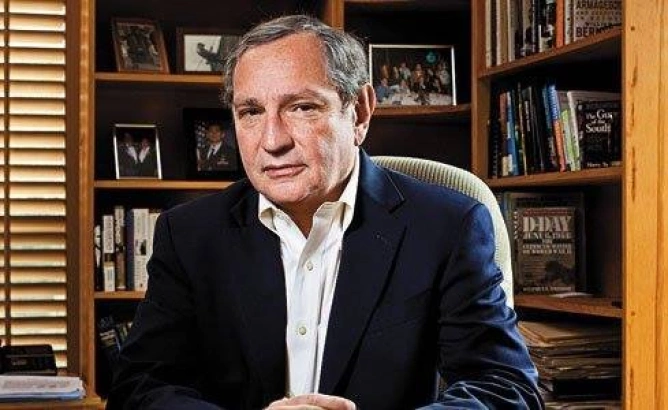
George Friedman, about the tensions between the USA and Europe, the feeling of mutual betrayal, and the challenges in building an effective European defense.

Călin Nicolescu
whatsapp
facebook
linkedin
x
copy-link copy-link
27 February 2026, 08:43
main event image
International
Foto https://www.facebook.com/GeorgeFriedmanGPF/photos?locale=ro_RO
google-preference

Always see our news on Google

The United States and Europe are going through a phase of mutual alienation, in which each side feels betrayed by the other, and the transatlantic alliance is entering a tough renegotiation of terms, asserts geopolitical analyst George Friedman in a dialogue conducted by Geopolitical Futures after the conferences in Davos and Munich.

A "unfortunate marriage" between the US and Europe

Friedman describes the transatlantic relationship as an "unfortunate marriage": Europeans believe that Washington has a moral obligation to guarantee their security, while Americans feel that they are unwilling captives in a partnership from which they no longer derive proportional benefits. He recalls that the US entered World War II against its will, lost many people in Europe, then financed the reconstruction of the continent and stationed entire generations of troops at the border with the USSR.

While European economies have prospered, including by avoiding massive defense spending, Washington notes that the European Union today has an economy comparable to that of China and would have the capacity to build its own defense forces if there were political will.

"There is no place called Europe"

The analyst dismisses the idea of a homogeneous Europe and argues that the discussion about "Europe's position" is misleading. In his view, the continent remains fragmented, with about 50 states marked by conflicting histories, different languages, and cultures, and the real question is not what "Europe" wants, but what the Poles, Hungarians, Italians, or British want.

Friedman emphasizes that Europeans have only managed to build partial structures – the European Union as an economic system and NATO as a military structure – but have not done the "hard work" of real political unification, either in the form of a "United States of Europe" or through another model capable of transcending the logic of old nation-states.

The Russian threat and European "infantilism"

Regarding Russia, Friedman believes that the direct military threat to Europe is greatly exaggerated. He points out that the Russian army has failed to defeat Ukraine in four years of war and that Moscow has resorted to recruiting 50-year-old men and mercenaries from Africa, indicating serious resource limitations.

The concept of "hybrid warfare" – cyberattacks, drones on infrastructure, interference in elections – is described as a strategy of an actor that "cannot wage a real war, so it skirmishes at the periphery." Meanwhile, Europeans already have their own nuclear deterrent, through the arsenals of Great Britain and France, and could significantly strengthen it if they wished. Their refusal to fully assume defense is characterized by Friedman as "infantile," in relation to the new geopolitical reality.

Trump, broken norms, and the aggressive politeness of Europeans

Reflecting on President Donald Trump's role in this paradigm shift, Friedman states that, although he considers his behavior "irritating," he is doing what "any president would do at this moment": trying to reduce US military commitments in Europe and forcing allies to take on more of their own security.

However, he also criticizes the discourse of European leaders, which he sees as a politeness that hides a fundamental aggressiveness and the claim of an "eternal" obligation of the US to guarantee their freedom. At the same time, he notes that perceptions are beginning to change even on the continent, evoking British Prime Minister Keir Starmer's statements in Munich, which acknowledged the delay in European investments in defense.

The key question: what will Europe do with itself?

For Friedman, the stakes are no longer what the United States will do, but whether Europeans are capable of transcending their history of wars and fragmentation. He considers a gradual "separation" between the two sides of the Atlantic inevitable – either a peaceful one or a "savage" one, in the conflictual tradition of the continent.

In this context, discussions about a "European NATO" or an EU defense fund remain, for now, formulas without political and cultural cover. The United States holds the "biggest card," as they can choose to leave, while Europeans cannot change their geography and must decide whether to remain in a fragmented model or take on the costs of a new project of political and military unity.

Sources

sursa imagine
Revista Cultura
„Statele Unite se simt trădate de Europa, iar europenii se simt trădați de americani”

Latest News

22:58

The Oradea City Hall will turn on the public lighting an hour later to reduce energy consumption.

22:42

Volodymyr Zelensky dismissed Olha Stefanișena from the position of ambassador to the USA, in the context of allegations of embezzlement.

22:30

Switzerland: An outbreak of legionellosis in Basel has led to 26 cases / Authorities suspect cooling towers as the source of contamination

22:18

Unit 2 of the Cernavodă Nuclear Power Plant can operate for only five days due to the decrease in the Danube's water level.

21:57

At Mița, the cyclist turns off the architectural lighting of the facade to reduce energy consumption.

See more news

NEWS ON THE SAME TOPICS
event image
EU
Carnegie Europe warns that the European Union avoids saying how serious the rift with the United States has become.
event image
EU
The European Union Institute for Security Studies says that Europe must focus on its own defense, not on maintaining Donald Trump's support.
event image
EU
Europe must prepare its defense for scenarios with less American support
event image
EU
Carnegie Europe warns that tensions between France and Germany weaken the European Union's ability to act strategically.
event image
International
How Europe tries to prevent Trump from destabilizing NATO (Politico)
event image
EU
An ECFR survey shows that Europeans no longer trust the protection of the United States, but support European defense and energy produced in Europe.
app preview
Personalized news feed, AI-powered search, and notifications in a more interactive experience.
app preview app preview
USA Europe relations challenges defense Donald Trump

Editor’s Recommendations

main event image
Current Affairs
1 hour ago

Grozăvești CET resumes electricity production, providing 30 MW for the stabilization of the National Energy System.

Sources
imagine sursa
imagine sursa
imagine sursa
imagine sursa
imagine sursa
+2
main event image
International
1 hour ago

Donald Trump stated that the naval blockade of the USA against Iran will only be lifted in the case of an agreement or a total capitulation of Tehran.

Sources
imagine sursa
imagine sursa
imagine sursa
imagine sursa
imagine sursa
+1
main event image
Exclusive
9 hours ago

SPECIAL Informat.ro / The top international political topics of the last week. Effects on Romania

app preview
Personalized news feed, AI-powered search, and notifications in a more interactive experience.
app preview
app store badge google play badge
  • News
  • Exclusive
  • INSCOP Surveys
  • Podcast
  • EU
  • Diaspora
  • Republic of Moldova
  • Politics
  • Economy
  • Current Affairs
  • International
  • Sport
  • Health
  • Education
  • IT&C knowledge
  • Arts & Lifestyle
  • Opinions
  • Elections 2025
  • Environment
  • About Us
  • Contact
Privacy policy
Cookies Policy
Terms and conditions
Open source licenses
All rights reserved Strategic Media Team SRL

Technology in partnership with

anpc-sal anpc-sol