Euro becomes digital. The EU is preparing an electronic currency that will complement cash in the era of digital payments.



Always see our news on Google
The European Commission and the ECB state that the digital euro is essential for reducing dependence on global payment providers and for strengthening Europe's strategic autonomy.
Brussels, December 9, 2025 - The European Union is accelerating preparations for the introduction of a digital euro, intended to complement cash and provide citizens with a secure, free, and universally accepted payment method online and offline. The project, part of the Single Currency Package, aims to protect access to cash and reduce Europe's dependence on payment infrastructures controlled by non-European providers.
In short
The digital euro will complement, not replace, cash.
It will be free, secure, accessible to all, and issued by the ECB.
It will function online and offline, with data protection similar to cash.
The EU aims to reduce dependence on global payment providers.
It is part of the Single Currency Package: two legislative proposals regarding cash and the digital euro.
2026: completion of legislation; 2027: pilot project; 2029: potential launch.
Bulgaria will join the euro area in 2026, marking the expansion of the monetary union to 21 countries.
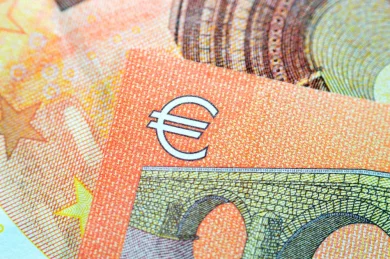
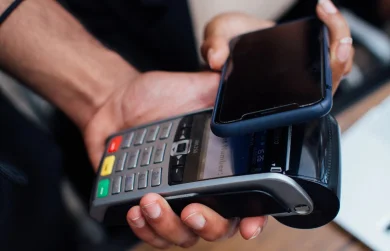
The European Commission and the European Central Bank have presented the arguments for introducing a digital euro, in a context where electronic payments are becoming dominant in Europe. While cash remains the "tangible expression" of the single currency, more and more citizens are choosing to pay digitally, which, according to officials, necessitates the creation of a tool that will be the digital equivalent of euro banknotes and coins.
The digital euro is expected to be issued by the ECB and to function as a "digital form of cash," accepted for any electronic payment in the euro area. It will be free for users, easy to use, and inclusive, according to the framework proposed by the Commission. The system will allow transactions both online and offline, providing high standards of privacy protection – possible due to its nature as public money, not private.
The digital euro is just part of the Single Currency Package presented in 2023. The package includes two legislative proposals: one to guarantee access to cash, the other to establish the legal framework for the digital euro. According to the Commission, euro banknotes and coins "will not disappear": cash will remain accepted everywhere in the euro area and will continue to be issued and updated, with the ECB already working on a new generation of safer and more inclusive banknotes.
The strategic argument is central to justifying the project. The EU currently relies heavily on non-European providers for digital payments, raising issues of sovereignty, economic security, and resilience. The introduction of a digital euro would create a public European infrastructure to complement and strengthen the European payment ecosystem, facilitating the scaling of private European solutions.
The implementation of the project follows a precise timeline: by 2026, legislative negotiations should be completed, a pilot project will be launched in 2027, and a potential issuance of the digital euro is anticipated for 2029, if the Parliament and Council adopt the necessary framework. At the last summit, leaders of euro area countries called for the acceleration of the process.
The introduction of the digital euro is presented as a natural evolution of the single currency, in a period when the European economy is becoming increasingly digitalized. In 2026, when Bulgaria becomes the 21st member of the euro area, the Commission emphasizes that the currency representing European unity must be adapted to the technologies of the 21st century.
The digital euro is a joint initiative of the European Commission and the ECB, part of Europe's strategy for technological and financial autonomy. The project aims to provide a public alternative to private global payment systems, ensure financial inclusion, and strengthen the European monetary infrastructure in an increasingly digital economy.
Latest News
16:51
16:49
16:46
16:39
16:38
See more news
NEWS ON THE SAME TOPICS