search icon
search icon
Flag Arrow Down
Română
Română
Magyar
Magyar
English
English
Français
Français
Deutsch
Deutsch
Italiano
Italiano
Español
Español
Русский
Русский
日本語
日本語
中国人
中国人

Change Language

arrow down
  • Română
    Română
  • Magyar
    Magyar
  • English
    English
  • Français
    Français
  • Deutsch
    Deutsch
  • Italiano
    Italiano
  • Español
    Español
  • Русский
    Русский
  • 日本語
    日本語
  • 中国人
    中国人
Sections
  • News
  • Exclusive
  • INSCOP Surveys
  • Podcast
  • EU
  • Diaspora
  • Republic of Moldova
  • Politics
  • Economy
  • Current Affairs
  • International
  • Sport
  • Health
  • Education
  • IT&C knowledge
  • Arts & Lifestyle
  • Opinions
  • Elections 2025
  • Environment
About Us
Contact
Privacy policy
Terms and conditions
Quickly scroll through news digests and see how they are covered in different publications!
  • News
  • Exclusive
    • INSCOP Surveys
    • Podcast
    • EU
    • Diaspora
    • Republic of Moldova
    • Politics
    • Economy
    • Current Affairs
    • International
    • Sport
    • Health
    • Education
    • IT&C knowledge
    • Arts & Lifestyle
    • Opinions
    • Elections 2025
    • Environment
58 new news items in the last 24 hours
  1. Home
  2. International

The Entry-Exit System does not change the Schengen rules. The Commission responds to protests from the Western Balkans.

2eu.brussels
whatsapp
facebook
linkedin
x
copy-link copy-link
19 January 2026, 15:32
main event image
International
Foto Pexels
google-preference

Always see our news on Google

The European Commission has rejected criticisms related to the implementation of the Entry-Exit System (EES) at the Schengen borders, in the context of protests announced by transport associations and workers from the Western Balkans, emphasizing that the new system does not introduce new entry rules and that there are already flexibilities provided in Schengen legislation.

In brief

Protests are announced at the Schengen borders by workers and transporters from the Western Balkans.

The Commission states that the Entry-Exit System does not change the entry rules in the Schengen area.

There are flexibilities for frequent cross-border workers and for local permits.

The decision regarding border controls belongs to the member states, not the Commission.

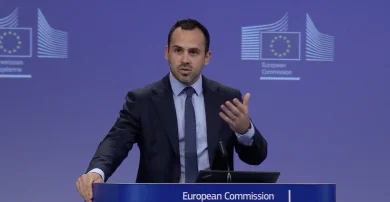
In response to questions during the European Commission's daily briefing about the protests announced at the borders between the Western Balkans and the Schengen area, triggered by the introduction of the Entry-Exit System, the Commission stated that it is monitoring the situation "closely" and is in contact with regional partners.

A spokesperson for the Commission clarified that the Entry-Exit System does not add new obligations regarding the duration of stay: "The Entry-Exit System does not introduce any new requirement regarding short stays in the Schengen area." He explained that the role of the system is to ensure more efficient enforcement of existing rules and to detect irregularities, which makes the system ensure better enforcement of existing rules and systematic detection of irregularities.

The Commission reminded that, according to Schengen rules, citizens of visa-free travel countries can stay in the Schengen area for a maximum of 90 days within a 180-day period, and exceeding this term requires a long-stay visa or residence permit issued by a member state. Regarding cross-border workers, the Commission emphasized that Schengen legislation already provides for flexibilities. The spokesperson stated: "Schengen rules already provide flexibility for frequent cross-border workers who cross the same border point, as they are subject only to random checks."

Additionally, individuals holding a local traffic permit at the border are not required to be registered in the Entry-Exit System. The Commission emphasized that the decision on how to conduct border checks at external borders belongs to the member states: "The decision to conduct random checks or not at external borders is the responsibility of the member states, not the Commission."

The European executive also specified that it remains in contact with the authorities in the Western Balkans and is monitoring developments related to the protests, insisting that the Schengen legal framework has not been modified by the introduction of the EES and that the system already includes adaptation mechanisms for specific situations.

The Entry-Exit System is designed to automatically record the entries and exits of non-EU citizens traveling in the Schengen area, replacing the manual stamping of passports. European authorities assert that its purpose is to increase security and ensure uniform application of existing rules, not to restrict mobility rights. In the Western Balkans, concerns about the impact on transporters and cross-border workers have generated calls for protests and blockades at the border.

https://2eu.brussels/ro/stiri/sistemul-entry-exit-nu-schimba-regulile-schengen-comisia-raspunde-protestelor-din-balcanii-de-vest

Latest News

23:14

A small aircraft crashed on Saturday in Ganderkesee, Germany, causing the death of one person on board.

23:10

France will make prior consent from consumers mandatory for telemarketing calls starting from August 11.

23:05

Kazakhstan becomes the first country in Central Asia to launch electric eVTOL air taxis.

22:58

Traian Băsescu states that Romania must negotiate with Ukraine to prevent incidents with drones

22:51

The USA is preparing a plan for the confiscation of enriched uranium from Iran, in the context of failed negotiations.

See more news

NEWS ON THE SAME TOPICS

event image
EU
Schengen airports can receive Frontex support and can temporarily suspend biometrics when the new EES system causes long queues.
event image
EU
The European Commission calls for the gradual removal of controls at the Schengen internal borders.
event image
Current Affairs
Operational issues of the European Control System (EES) at the border recorded in Cluj
event image
International
The director of Fiumicino Airport in Rome blames the EU for the long queues at the borders.
event image
International
The airports in Rome request the suspension of the EES system for border control.
event image
EU
Organizations in the aviation industry are requesting the suspension of the Entry/Exit System (EES) during peak months, as waiting times at border control have increased to up to five hours.
app preview
Personalized news feed, AI-powered search, and notifications in a more interactive experience.
app preview app preview
Entry Exit Schengen rules critics Western Balkans European Commission

Editor’s Recommendations

main event image
Current Affairs
8 hours ago

The Romanian Army responds to criticism regarding the cost of missiles: "The safety of citizens has no price"

Sources
imagine sursa
imagine sursa
imagine sursa
main event image
Exclusive
13 hours ago
Original Content

IT News Review by Control F5 Software: The United Kingdom proposes a voluntary nighttime restriction for social networks

main event image
Opinions
Yesterday 08:55

Andrei Cornea, Dilemma: Odysseus Among Us

app preview
Personalized news feed, AI-powered search, and notifications in a more interactive experience.
app preview
app store badge google play badge
  • News
  • Exclusive
  • INSCOP Surveys
  • Podcast
  • EU
  • Diaspora
  • Republic of Moldova
  • Politics
  • Economy
  • Current Affairs
  • International
  • Sport
  • Health
  • Education
  • IT&C knowledge
  • Arts & Lifestyle
  • Opinions
  • Elections 2025
  • Environment
  • About Us
  • Contact
Privacy policy
Cookies Policy
Terms and conditions
Open source licenses
All rights reserved Strategic Media Team SRL

Technology in partnership with

anpc-sal anpc-sol