The Commission says that illegal movements from Ceuta to the rest of Europe have been prevented so far.



Always see our news on Google
Italy and Spain have notified the Commission regarding the introduction of controls at internal borders after the crisis in Ceuta, and both governments have presented them as temporary measures. Brussels states that illegal movements further towards mainland Spain and the rest of Europe have been prevented until now and expects the situation to normalize if positive developments continue.
The European Commission states that illegal movements from Ceuta to mainland Spain and the rest of Europe have been prevented until now, following massive entries from Morocco that prompted Italy and Spain to temporarily introduce controls at internal borders. Brussels expects the situation to return to normal if positive developments continue, but has not indicated a date when the controls will be lifted.
In short
The Commission has confirmed that it has received notifications from Italy and Spain regarding the introduction of controls at internal borders following the events in Ceuta.
The interior ministers of the two states have publicly confirmed that the measures are temporary, and the Commission has reminded them of the applicable legal framework in the Schengen area.
According to the Commission, illegal movements further from Ceuta to mainland Spain and the rest of Europe have been prevented until now.
Brussels states that individuals who remain illegally in Ceuta must be returned and insists on preventing new border crossings.
The Commission has not provided a date for lifting the controls nor an updated figure regarding the number of people still in Ceuta. For this latest count, it referred the press to the Spanish authorities.
Italy and Spain have notified the European Commission regarding the introduction of controls at internal borders in the context of the crisis triggered by massive entries from Morocco into Ceuta.
The Commission specified that the interior ministers of the two states have publicly confirmed the temporary nature of the measures. Brussels has discussed with the Spanish and Italian authorities the rules applicable in the Schengen area and the need to maintain trust among member states.
The Spanish authorities have informed the Commission that the events in Ceuta should not have lasting effects on the Schengen area.
Under the conditions in which the situation continues to improve, the Commission states that it expects the situation at internal borders to return to normal.
Brussels has also indicated that, until now, there has not been a significant illegal movement further from Ceuta towards mainland Spain and other European states.
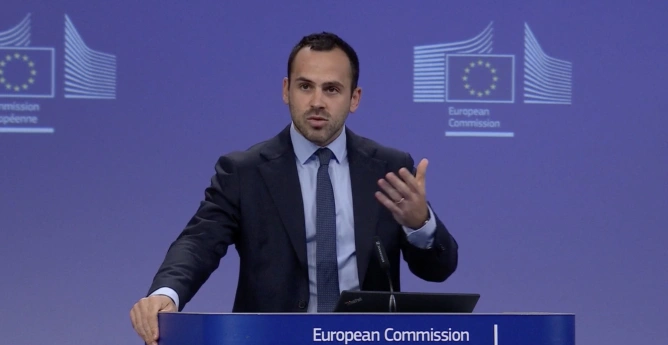
According to the Commission's spokesperson, illegal movement further towards mainland Spain and Europe has been successfully prevented until now.
However, the Commission has not provided data regarding the number of people who have attempted to leave Ceuta for other regions of Spain or to other member states.
The statement concerns the situation known to the Commission at the time of the briefing on August 11 and does not represent a guarantee that there will not be subsequent attempts to move.
Brussels insists in parallel on the return of individuals who do not have the right to remain. The Commission has stated that it expects individuals who are illegally in Ceuta to be returned and that efforts must continue to prevent new crossings.
The Commission has linked the response to the need to strengthen external borders, control infrastructure, and measures against migrant smuggling networks.
The institution has rejected the idea that the risk should be analyzed around a single date. When asked about concerns regarding possible new crossings around August 15, the Commission stated that the protection of external borders must be ensured permanently.
Brussels believes that the events in Ceuta should be used to improve prevention systems, border infrastructure, combat trafficking networks, and returns.
The Commission has not announced a date by which Italy or Spain would maintain internal controls.
When explicitly asked if the two governments have committed to lifting them by a certain date, the spokesperson said that he does not have such confirmation to communicate.
The Commission's position is that developments must be assessed based on the situation on the ground. If improvements continue, Brussels expects the normalization of controls.
The Commission has also not provided the updated number of individuals remaining in Ceuta after the entries from Morocco.
When asked about the contradictory figures regarding individuals still present in the enclave, the Commission indicated that the Spanish authorities are the ones who can provide the updated count.
Managing physical movements is also accompanied by measures regarding information distributed online.
The Commission states that misinformation spread through social networks in Morocco and possibly elsewhere has contributed to the situation in Ceuta. Brussels is trying to clarify the rules applicable to individuals who enter illegally and to prevent the spread of new false information about the possibility of remaining in the EU.
Meta and TikTok have activated their crisis situation protocols and are participating in a cooperation mechanism with fact-checking organizations. The Commission, Europol, and the platforms are in daily contact.
These digital measures are distinct from the controls introduced at internal borders and the return procedures. They aim to prevent new mobilizations generated by false information regarding the possibility of crossing the border.
The Commission has presented its broader response around five directions: preventing illegal migration through cooperation with external partners, strengthening external borders, developing early warning systems including through social media monitoring, combating migrant smuggling networks, and strengthening returns.
Ceuta is Spanish territory at the external border of the European Union. Recent events have had effects also within the Schengen area after some states reacted to the risk of secondary movements of individuals who entered from Morocco.
The Commission differentiates the situation at the external border from the measures taken at internal borders. Access control in Ceuta and returns concern the management of the external border and migration, while controls between Schengen states are temporary measures notified separately.
Brussels has not announced that the situation in Ceuta has produced a permanent change in the functioning of Schengen. On the contrary, the position expressed at the briefing is that the situation can return to normal if positive developments continue.
There is no confirmed date in the information provided by the Commission for lifting the controls nor an updated European count of individuals remaining in Ceuta.
Latest News
07:54
07:33
07:27
07:21
07:15
See more news
NEWS ON THE SAME TOPICS

.webp)