ANALYSIS Romania, like a nut against the wall! The topics of debate in Western states, a week after the US-Israel attack in Iran



Always see our news on Google
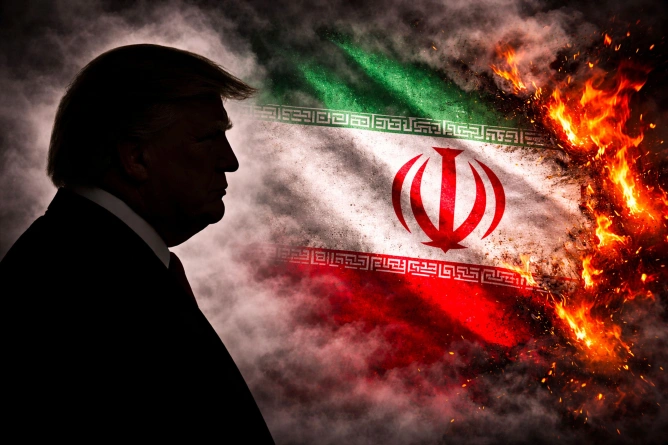
The war initiated by Donald Trump against Iran has highlighted not only the political fractures between European states and NATO but also the extremely different ways in which the press in Europe and the USA has chosen to tell the story of this conflict: from legal and humanitarian frameworks to military spectacle, security calculations, and, in the case of Romania, the politicization of the crisis through the repatriation scandal and the Ponta–Țoiu case.
The European reaction to the war initiated by Donald Trump against Iran is fragmented: at the declarative level, most capitals invoke international law and the need for de-escalation, but in operational military terms, NATO and a number of key states facilitate or support, directly or indirectly, the US–Israel campaign, while Spanish Prime Minister Pedro Sánchez appears as the only leader who openly contests the legitimacy of the war and refuses concrete cooperation.
Romania aligns itself with the dominant Atlantic position - political support for Washington, emphasis on the protection of Romanian citizens, and avoidance of public criticism of Trump - but is shaken internally by scandals related to repatriations and the preferential treatment of some close associates of the former power, such as the Ponta–Țoiu case.
In short, the main events of the war
On February 28, the USA and Israel launched Operation "Epic Fury" / "Roaring Lion", a wave of airstrikes and missile attacks on military and nuclear infrastructure in Iran, the largest Israeli air operation to date. Iran quickly retaliated with volleys of missiles and drones towards Israel and American bases in the Gulf, targeting Qatar, Bahrain, Kuwait, the United Arab Emirates, Iraq, and Jordan, then extending attacks towards Saudi Arabia and Oman. Within 72 hours, the conflict directly involves at least 11 states: the USA, Israel, and Iran, plus the Gulf monarchies hosting American bases, and the effects reach the gates of Europe, after Iranian ballistic missiles are aimed at Turkey, a NATO state, and at a military base in Cyprus. As days go by, the USA reports nearly 2,000 targets hit in Iran and announces a weeks-long campaign, while Tehran gradually reduces the volume of fire but maintains the threat over the Strait of Hormuz and regional energy infrastructure, turning the conflict into a prolonged military and economic crisis for the entire Middle East.
Europe and NATO: official reactions and dominant media themes
At the political level, the underlying message remains the same: NATO, through Mark Rutte, speaks of "broad support in Europe for strikes against Iran", even though the Alliance does not formally enter the war, while EU capitals combine calls for de-escalation with condemnation of the Iranian regime. European journalists quickly adopted the phrase "broad support" as a key headline and emphasized the ambiguity of the position: NATO "is monitoring closely" and "is not part of the operation", but at the same time it activates the missile defense architecture in Turkey, neutralizes Iranian missiles, and protects allied infrastructure in the Mediterranean.
In mainstream European press, three themes have become central in the first days:
The security risks for the continent, including the possibility that Europe could become "an indirect target" - through missile attacks or bombings - if it militarily engages in the conflict, as warned by experts cited by Știrile Pro TV or Adevărul;
The economic effects of the conflict, especially the threat of blocking the Strait of Hormuz and the impact on the price of liquefied gas destined for Europe;
The legal and political dilemma: how far can European governments go in supporting the USA without being accused of legitimizing a "unilateral military action" that is on the edge or outside international law.
How the war was framed in the American press
In the USA, part of the mainstream press initially adopted the narrative of the Trump administration: Operation "Epic Fury" or "The Roaring Lion" is presented as an effort to "eliminate imminent threats" and destroy Iranian nuclear infrastructure, with an emphasis on the military and technological success of the attacks.
Washington invoked the failure of negotiations and Tehran's refusal to accept "unlimited free nuclear fuel" to justify the offensive.
In parallel, more critical American media bring two scandal themes to the forefront:
Accusations from Democratic Senator Mark Warner, who claims that the Trump administration "distorted intelligence data" to justify the war, raising the issue of the legal and constitutional legitimacy of the campaign;
The debate about the role of Congress and the risk of "a new regime change conflict" without a clear mandate, a subject revisited by commentators and think tanks, such as the Council on Foreign Relations, in their analyses of the US–Iran confrontation.
Thus, while Europe mainly discusses costs and security, in the USA a large part of the debate focuses on the internal game: whether Trump has gone too far, whether he has manipulated information, and how the Democratic Party is repositioning itself in the face of a new war in the Middle East.
Spain and Pedro Sanchez's vocal criticism
In Spain, the mainstream left and center-left press quickly transforms Pedro Sánchez's position into the main narrative thread: a European leader who says "no" to the attack on Iran and accuses the USA and Israel of "unilateral military action" and "dangerous escalation".
Reuters, picked up by HotNews, describes Madrid's position as "the clearest criticism" coming from an EU state, noting that Spain goes further than standard calls for de-escalation and qualifies the intervention as a contribution to "a more uncertain and hostile international order".
Analyses from CNN and the New York Times in the Spanish edition insist on two ideas:
On the one hand, Sánchez criticizes not only the timing but also the logic of the war, suggesting that Trump uses the attack on Iran to "mask the failure to improve people's lives" and to "fill the pockets of a few", while the world "builds more missiles and fewer hospitals";
On the other hand, Spain's refusal to allow the use of bases in Rota and Morón is presented as a rare act of insubordination in a Western alliance where many leaders criticize in whispers but cooperate in practice.
The right-wing Spanish press, on the other hand, is much more critical of Sánchez, accusing him of "isolating" Spain in NATO, sacrificing the strategic relationship with the USA, and risking economic retaliation at a fragile moment for the Iberian economy. The conflict with Trump becomes a front-page story, where the war in Iran is filtered through the lens of the "personal confrontation" between the two leaders.
The rest of Europe: between risk analyses and convenient silences
In Germany, France, the United Kingdom, and Italy, quality press tends to approach the conflict predominantly through the lens of security risks and economic implications, focusing on:
the protection of American bases and European infrastructure in the Gulf and the Mediterranean;
escalation scenarios, including the possibility that Iran or actors from the "axis of resistance" might strike European targets;
the debate - so far more technical than political - regarding the compatibility of the intervention with international law.
Sources such as Adevărul or Știrile Pro TV, which also take analyses from Romanian experts, discuss especially how the war "harshly hits Europe" through energy prices, but also through potential waves of refugees and terrorism risks, while major Western newspapers (Le Monde, Süddeutsche Zeitung, The Guardian) discuss more subtly the legal and reputational implications for the EU.
What is generally missing is a discourse as frontal as that of Spain: criticisms are present but rarely personalized on Donald Trump or translated into explicit calls to stop the attacks.
Romania shifts the stakes from war to the repatriation scandal
In Romania, the initial coverage of the war in Iran follows the European model: agency news about attacks, NATO and EU reactions, analyses about risks for Romania - from the base at Deveselu, presented as a potential target, to energy effects. However, quite quickly, the media agenda shifts from the geopolitical dimension to the internal conflict generated by repatriations.
ObservatorNews, Digi24, B365, and other publications document the "first major scandal" related to Romanians stranded in the Middle East: the case of Victor Ponta's daughter, about whom the former prime minister claims she was removed from the list of a repatriation flight at the direct intervention of Foreign Minister Oana Țoiu. Ponta publicly accuses Țoiu of "personally calling" the consul in Dubai to stop her from boarding, claims recorded in reports by ObservatorNews and Digi24;
Țoiu denies the accusations and explains, including in a press conference, that repatriations are carried out through the European Civil Protection Mechanism, prioritizing vulnerable groups, medical cases, and unaccompanied children, which the press takes in a defensive key.
Stiripesurse and other sites close to the political area openly discuss the possibility of a criminal case, explaining what crimes could be considered if it is proven that a child was arbitrarily removed from a repatriation transport.
B365 reconstructs, on the other hand, the decision-making thread and emphasizes the ambiguities of the criteria used, transforming the incident into a story about abuse of power and inequality in the face of the state.
A intervention was even made by President Nicușor Dan, demanding complete clarifications and promising that "it will be found out who did what" in this operation, but avoids turning the dispute into an open conflict with the Ministry of Foreign Affairs, precisely to avoid eroding public trust in the state's ability to protect its citizens in a full-blown war. Beyond the specific case, the scandal highlights a structural fragility: the lack of transparent procedures and coherent communication in times of external crisis.
The result is that, in the Romanian media space, the war in Iran becomes the backdrop of an internal political scandal, while the debate about the legality of the Americans' and Israelis' intervention, or about Romania's position towards Trump, remains marginal compared to the political spectacle of the Ponta–Țoiu case.
The subjects that sparked scandal in media coverage
If we summarize, the main scandal subjects in the European and American press are:
In the USA, accusations regarding the manipulation of intelligence information by the Trump administration and bypassing Congress's role in initiating the war;
In Spain: the open confrontation Sánchez–Trump, threats of economic sanctions from Washington, and the internal debate about whether Spain should break ranks in NATO;
In the rest of Europe: tensions between declared principles (international law, civilian protection) and participation in the military architecture of the war, reflected in editorials that speak of "Europe that criticizes in whispers and supports in fact";
In Romania: the repatriation scandal and the Ponta–Țoiu case, where the war is just the context that brings to the surface suspicions regarding political clientelism and double standards in the treatment of citizens.
Only in Spain is the war framed in the media primarily as a principled issue - the legality of the attack, the moral consequences, the cost of saying "no" to the American president - while in most other Western countries the emphasis falls on risks, costs, and political opportunities, not on a frontal condemnation of Trump.
Romania, in turn, illustrates how an external conflict with huge stakes for the international order can be almost entirely absorbed by the logic of internal scandal and the media war for internal use.
The case of the United Kingdom and the attack on the Akrotiri base
In the United Kingdom, the war in Iran has mainly generated political and legal scandals, not as "tabloid" as in Romania. Prime Minister Keir Starmer announced that the UK does not participate in offensive strikes but allows the use of bases "for defensive purposes", which has triggered legal and political controversies regarding the risk of de facto entering the war and repeating the Iraq precedent. Additionally, the Iranian drone attack on RAF Akrotiri has generated tensions with Cyprus, where authorities and civil society accuse London of turning the island into a target by using the bases in conflict.
On the other hand, there is the case of over 40 British parliamentarians who danced in the atrium of Portcullis House together with stars from "Strictly Come Dancing", in an event to promote health and the benefits of dancing. The images were widely distributed by tabloids and on social media, being criticized as "insensitive" in the context of the crisis in Iran and tensions in the Middle East.
The event came under the scrutiny of mainstream media, as BBC, STV, Yahoo News UK, and other general publications reported on the episode and the reactions of outrage, even though the tone was more explanatory than "lynch".
Which leaders invoked international law
Some leaders and European governments explicitly talk about the violation or non-compliance with international law of the American–Israeli attacks, but without breaking relations with Washington. Pedro Sánchez qualifies the offensive as "inconsistent with international law", while Ireland, Austria, and Malta share the assessment that the strikes do not fall under either legitimate self-defense or under a UN mandate, but, unlike Spain, do not transform their position into a practical refusal of military cooperation. Emmanuel Macron states that the US and Israeli strikes "were outside international law", but emphasizes Iran's responsibility and strengthens the French military presence in the Gulf, sending radars, Rafale jets, a frigate, and the Charles de Gaulle aircraft carrier. These positions remain minority and cautiously formulated, illustrating the "gap" between legal discourse and operational decisions in states hosting American bases, but do not firmly condition their use.
States that facilitate the war
Although few capitals openly declare themselves "pro-war", the behavior of many indicates solid cooperation with the American military effort. France, Germany, and the United Kingdom deploy defensive capabilities to protect regional infrastructure and their own bases, a gesture that experts read as de facto support for US operations, despite the rhetoric of "strictly defensive".
Greece sends navy ships near Cyprus, contributing to deterring Iran, while the Baltic states and Poland remain very close to Washington, publicly speaking about the "Iranian threat" and the need for NATO unity, without limiting US access to infrastructure or airspace. Overall, all European states with American bases, except for Spain, accept their use for operations against Iran, which emphasizes the contrast between the "convenient silence" of the majority and Madrid's insistence on legal conditionalities.
Pedro Sánchez and "no to war"
Pedro Sánchez becomes the most consistent critic of Trump on the issue of Iran and the only European leader who translates his discourse into a concrete refusal of military cooperation. In a televised statement, he reactivates the slogan "No a la guerra", rejects the idea that Spain should be "complicit" in an "unjustified" war and "contrary to its values" and denounces both the repression of the Iranian regime and the American–Israeli bombings, insisting that the protection of civilians and respect for international law must prevail over loyalty to an ally. The conflict with Trump quickly personalizes: the American president threatens to "cut trade relations" and calls Spain a "terrible partner" in NATO, while the EU warns that any unilateral sanctions against Madrid will be treated as a problem for the entire Union, and the Western press describes Sánchez as the leader who refuses to accept a war perceived as illegal just out of fear of retaliation.
Why Sánchez remains almost alone in his fierce criticism of the American attack
Sánchez's uniqueness can be explained by a combination of historical memory, ideology, and geopolitical calculation. The trauma of Iraq 2003 remains vivid in Spanish society, and the socialists have built their identity on opposition to that war, so the reactivation of the slogan "No a la guerra" resonates authentically internally. The government, supported by leftist civil rights forces, has political space to privilege legal and humanitarian arguments over alliance discipline, unlike more conservative or heavily American-dependent governments. Additionally, Spain is not on the front line of confrontation with Russia, which allows it to assume economic costs and tension relations with Washington to gain credibility in the Global South and in front of its own electorate. In the rest of Europe, leaders "cannot or do not want" to confront Trump directly: the Baltic states and Poland fear any crack in relations with the USA, while leaders like Macron combine targeted criticism with maintaining strategic cooperation, leading to a rhetoric of "concern" and "regret" that rarely transforms into concrete gestures to limit the war.
Romania aligns with NATO
Romania positions itself in the camp of states that avoid any frontal criticism of Trump and emphasize solidarity with NATO allies, but at the same time tries to minimize the visibility of its involvement in the conflict. Official statements emphasize the "need for de-escalation", "support for the Iranian people's right to freedom" and coordination with "European partners, including Poland", without references to the illegality of the attacks or possible violations of the UN Charter.
Practically, Romania has raised the alert level for Iran to "do not travel, leave the territory immediately", has established a crisis cell at the Ministry of Foreign Affairs, and has begun successive operations to repatriate Romanian citizens from Israel, Iran, Iraq, and other affected areas. Foreign Minister Oana Țoiu announces that nearly 1,000 citizens have already returned from the Middle East and that about 3,000 are actively seeking repatriation assistance, with an estimated total of 15–16,000 Romanians in the region.
****Summary made with the help of a data monitoring flow provided by the media monitoring platform NewsVibe Romania. The analysis, data, and images presented have been enhanced with the help of Machine Learning and Artificial Intelligence tools.
Latest News
08:48
08:12
07:54
07:38
See more news
NEWS ON THE SAME TOPICS