Andrés Ritter takes over leadership of the European Public Prosecutor’s Office; Kövesi warns of risks to the institution’s independence



Always see our news on Google
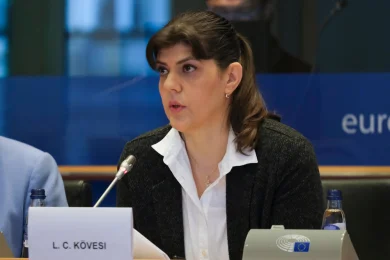
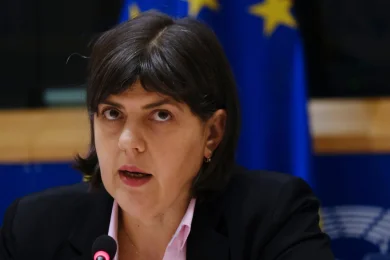
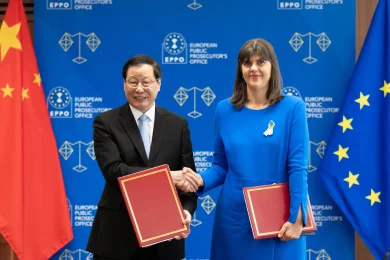
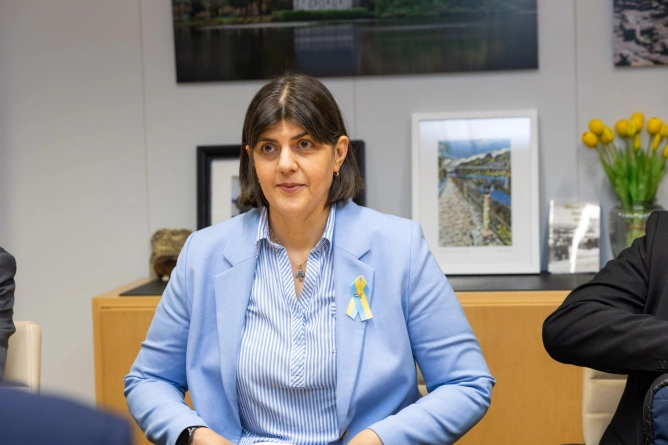
Andrés Ritter took over as European chief prosecutor on November 1, 2026, following the expiration of Laura Codruța Kövesi’s term as the first head of the European Public Prosecutor’s Office (EPPO). The German prosecutor, who had served as her deputy since 2020, is beginning a seven-year, non-renewable term. The transition is accompanied by calls to protect the institution’s independence, following warnings issued by Kövesi at the end of her term and the political reactions triggered by her statements about Greece.
In brief, Andrés Ritter succeeds Laura Codruța Kövesi as of November 1, based on a joint decision by the European Parliament and the Council. Kövesi’s term expired on October 31; this was not a dismissal or resignation. Ritter has worked at the EPPO since its establishment and has been deputy European chief prosecutor since 2020. In the spring, Kövesi welcomed his appointment and commitment to judicial independence. In her end-of-term interview with POLITICO, Kövesi cited underfunding and institutional obstacles. Her warnings were followed by calls from politicians, researchers and anticorruption organizations for support for the EPPO. In Greece, the controversy concerns the length of delegated prosecutors’ terms and legislative changes challenged by the EPPO. Sources in the Ministry of Justice cited previous consultations with Kövesi; political statements and accusations do not amount to court rulings. At the end of 2025, the EPPO had 3,602 active investigations and estimated damage of €67.27 billion. These figures do not represent recovered money or a cumulative balance for the entire term. Reactions included praise from Siegfried Mureșan and George Savvides, criticism from Victor Ponta and calls in Greece for Commission intervention. OLAF welcomed Ritter’s assumption of office and the continuation of cooperation.
Appointed by the European Parliament and the Council in the spring, Ritter succeeds the first European chief prosecutor after her term expired. He will lead the institution for seven years, with no possibility of renewing his term.
Ritter has known the EPPO since the period when the institution was being organized. He was Germany’s first European prosecutor and Kövesi’s deputy from 2020, before the prosecutor’s office began operational activity in 2021. Previously, he headed several German public prosecutor’s offices, including the unit specializing in economic and cybercrime in Rostock.
Kövesi welcomed his appointment, highlighting his experience within the institution and his commitment to judicial independence. She expressed confidence that the EPPO would continue to protect the EU’s financial interests and the rule of law under Ritter’s leadership.
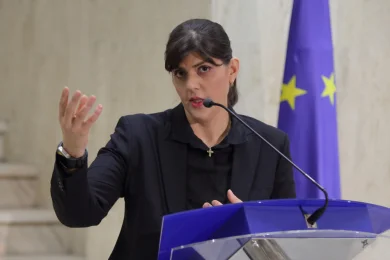
In her farewell message, Kövesi spoke about building an unprecedented institution, the team’s achievements, as well as failures and unmet objectives. “Protecting its independence is a permanent responsibility,” she said, insisting that the results of justice cannot be reduced to financial indicators.
In an interview reviewing her seven-year term, Kövesi warned about underfunding, delayed reforms and bureaucracy. She described the dispute over renewing the terms of delegated prosecutors in Greece as the most obvious attempt to intimidate the EPPO that she had encountered during this period.
MEP Siegfried Mureșan praised Kövesi’s role in building the European Public Prosecutor’s Office and protecting European money. “I am grateful for the work carried out by the EPPO and Ms. Kövesi,” he wrote, also recalling the support given to her candidacy in 2019.
Former Dutch MEP Sophie in ’t Veld called for greater powers and resources for the EPPO and criticized the European Commission’s attitude toward the institution.
Michal Ovádek, a researcher at University College London, said Kövesi had proved to be a very good choice, continuing her work in Romania. Adelina Marini, a doctoral researcher at KU Leuven studying the EPPO and judicial independence, strongly praised the former leadership’s firmness and argued that an effective prosecutor’s office makes governments that undermine the rule of law uncomfortable.
Former Prime Minister Victor Ponta, by contrast, challenged Kövesi’s record and accused her of failing to target powerful economic interests in Western Europe. The EPPO’s annual report, however, documents investigations in several participating states, not only in Romania and Bulgaria, the countries referred to in his criticism.
Cyprus Attorney General George Savvides congratulated Kövesi on establishing and developing the institution and wished Ritter success at a regional EPPO meeting. He expressed confidence in the successor’s experience and commitment to the rule of law.
The institution’s reports show the scale of the activity inherited by the new leadership. As of December 31, 2025, the EPPO had 3,602 active investigations, involving estimated damage of €67.27 billion. That year, 2,030 investigations were opened and 275 indictments were filed. Cases involving VAT and customs fraud accounted for estimated damage of €45.01 billion.
The estimates concern ongoing cases and may change as proceedings progress; they do not represent money definitively recovered. In 2025, freezing orders worth €1.13 billion were approved, while assets actually frozen that year were worth €288.93 million. These categories must also not be confused with the definitive recovery of funds.
The dispute in Greece predates the change in leadership. In the spring, Kövesi referred to the European Commission the amendment of the criminal procedure applicable to parliamentarians and the refusal by the national judicial authority to fully recognize the five-year renewal of the terms of three delegated European prosecutors, decided by the EPPO College. The prosecutor’s office argued that these measures affected its independence and investigative capacity.
Sources in Greece’s Ministry of Justice rejected the criticism, citing previous consultations with Kövesi on speeding up proceedings and supporting investigations. The Commission confirmed at the time that it had received the letter and was examining the legislation, without anticipating the outcome or any possible infringement proceedings.
Subsequently, Greece’s supreme court dismissed the EPPO’s challenge as inadmissible, finding that the institution was not entitled to file it on behalf of the prosecutors. The challenged decision had extended their terms by two years, compared with the five years decided by the EPPO College.
Meanwhile, investigations into agricultural subsidies administered through the OPEKEPE agency continued. After the immunity of 11 MPs was lifted in the spring, the EPPO announced in July that 22 people, including four sitting MPs, had been sent for trial, while charges against another seven sitting MPs were dropped due to insufficient evidence for prosecution. Investigations concerning other people and other years were continuing. All persons concerned benefit from the presumption of innocence.
The end-of-term warnings brought the controversy back into the political debate. Greek MEP Nikolas Farantouris called for Commission intervention: an official position on the allegations, measures to ensure unobstructed cooperation with member states, and guarantees for the independence of investigative authorities. “Threats and intimidation of investigative and oversight authorities cannot be tolerated,” he said.
Former Prime Minister Giorgos Papandreou called for serious answers to Kövesi’s warnings and criticized the Greek government, invoking transparency and cooperation with the justice system. “I hope the new leadership of the European Public Prosecutor’s Office will defend its independence with the same determination,” he said.
Rena Dourou, president of the SYRIZA parliamentary group, accused the Mitsotakis government of intimidation and attempts to cover up the OPEKEPE scandal and called for the government to step down. These opposition accusations remain distinct from the establishment of criminal liability.
Transparency International EU believes that revising the EPPO Regulation will test the EU’s commitment to an independent anti-fraud body. The organization calls for better cooperation with European institutions and agencies, solutions regarding the lifting of immunities, and clearer safeguards for resolving jurisdictional conflicts.
OLAF congratulated Ritter on taking office and thanked Kövesi for building the EPPO, expressing its desire to continue cooperation. The two institutions have complementary responsibilities: OLAF conducts administrative investigations, while the EPPO investigates and prosecutes offenses affecting the Union’s financial interests.
For Ritter, the challenge is to preserve the independence and credibility of a prosecutor’s office involved in complex cross-border investigations while seeking solutions to the resource and cooperation problems highlighted by his predecessor.

Latest News
22:56
22:47
22:28
21:57
21:23
See more news
NEWS ON THE SAME TOPICS