ANALYSIS How Ukraine transformed the depths of Russian territory into a war zone



Always see our news on Google
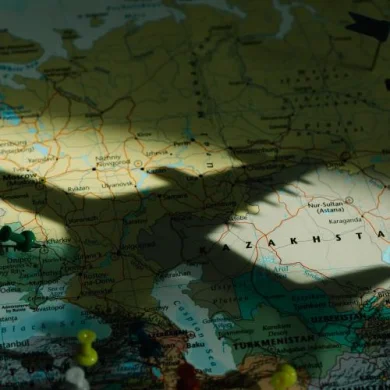
While the front in eastern Ukraine seems stuck in a war of attrition, the real change is happening hundreds and even over a thousand kilometers away: Ukrainian drones and missiles are increasingly hitting refineries, military factories, and logistical hubs in the heart of Russia, transforming what the Kremlin presented as a "safe space" into an exposed, vulnerable, and restless zone.
The new reality: the war reaches the heart of Russia
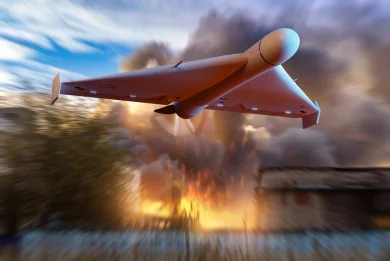
In the past year, but especially in recent months, Ukraine has shifted from sporadic strikes near the front to a systematic campaign of deep strikes targeting military and energy infrastructure located hundreds and even over a thousand kilometers inside Russia. Ukrainian-designed drones and missiles have struck refineries, oil terminals, military factories, and logistical hubs in regions that were considered until recently "safe spaces," from the Moscow-St. Petersburg area to the Urals.
Independent analyses show that, due to the extended range of locally produced drones and cruise missiles, approximately a quarter of Russia's territory and over 70% of its population are now, at least theoretically, within the reach of Ukrainian weapons. In March 2026, estimates from OSINT researchers indicated that Ukraine launched around 7,000 drones in a single month, for the first time more than Russia, a significant portion being used in deep missions on Russian territory.
How is this possible: the technical explanation
The extension of the strike range is primarily due to the development of an internal arsenal of long-range drones and cruise missiles produced in Ukraine, complemented by some capabilities provided by Western states. Kyiv has focused on relatively inexpensive platforms with adapted civilian engines, capable of flying hundreds or over a thousand kilometers, guided by GPS, inertial sensors, and, increasingly, artificial intelligence algorithms that assist in navigation and partial evasion of air defense.
Alongside the range, volume also plays a massive role: missions with dozens or hundreds of drones launched simultaneously force and saturate the Russian defensive system, while some vectors are deliberately used as "decoys" to reveal the positions of air defense batteries. For several years, Ukraine has systematically hunted radars, Buk, Tor, Pantsir, and S-300/S-400 systems, also using medium-range strikes (30-180 km) to "clear" air corridors through which long-range drones can more easily reach targets located hundreds or thousands of kilometers away.
The strategic logic: what Kyiv aims for
At a strategic level, the campaign has at least four main objectives.
1. Weakening Russian military capacity: Ukraine targets arms factories, ammunition depots, training centers (including for drone pilots), and logistical hubs directly related to the war effort. Recent strikes against military facilities and training centers on Russian-controlled territory, including in the Snijne area or some depots near Moscow, fit into this "hit the brain of the system" logic, not just at the periphery.
2. Hitting energy and oil infrastructure: Refineries, export terminals, depots, and pipelines are among the preferred targets of long-range drones, which has led to a decrease in oil processing volume to its lowest level since 2009, according to data cited by Bloomberg. Attacks on oil infrastructure reduce the Kremlin's budget revenues, complicate domestic fuel supply, and force Russia to spend considerable resources on repairs and strengthening the protection of these targets.
3. Forcing the dispersion of air defense: long-range strikes oblige Moscow to redistribute air defense batteries from near the front to regions considered relatively safe until now – the Moscow area, St. Petersburg, industrial and oil hubs. Analysts cited by Reuters note that this dispersion weakens the protection of Russian troops on the front line and creates opportunities for more effective medium-range strikes against depots, command centers, and logistical columns.
4. Eroding the internal sense of "invulnerability": Beyond the material effect, Ukraine aims to demonstrate to the Russian population that the war is no longer a "televised event" far away, but can directly hit cities and regions far from the front. The implicit political message is that the decision to continue the war has increasingly visible costs even on the territory of the Russian Federation.
Russia's reactions: between propaganda and anxiety
Officially, the Kremlin continues to downplay the impact of these strikes, insisting that most drones are shot down and that damages are "limited" or quickly remedied. However, acknowledgments from within the Russian system paint a much bleaker picture. A former head of intelligence for the Russian ground forces publicly admitted that the number of Ukrainian drones reaching Russian territory has increased by 2.5 times in just a few months and described the situation as "bad news."
In the background, authorities have introduced or expanded security measures in several regions – flight restrictions, civil alert systems, moving school courses online in cities like Lipetsk, Penza, Stavropol, or Cheboksary, citing the "drone threat." Polls from institutes close to power, such as VCIOM, indicate an increase in the level of anxiety among Russians in recent months, with about a quarter of respondents stating that they feel more worried than before due to the developments of the war and the attacks.
In the media space, propaganda tries to play a double game: on one hand, attributing the attacks to the "Kyiv regime" and the "collective West," insisting on the idea of imminent revenge; on the other hand, avoiding acknowledging the scale of the structural vulnerabilities of air defense, so as not to undermine the image of a strong state with total control.
The military effects on the course of the war
The direct and immediate effects of long-range strikes are difficult to quantify, but there are some clear trends.
Logistically, the disruption of refineries, export terminals, and fuel depots puts pressure on the supply chains of the Russian army, especially regarding fuel for transport, aviation, and armored vehicles. Even though Russia has considerable reserves, stopping or reducing the activity of some strategic facilities translates into additional costs, reconfiguring routes, and delays.
Operationally, military analysts consulted by Reuters and the Institute for the Study of War note that the pace of Russian advances on the front has slowed in recent months, one of the cited factors being precisely the combination of medium and long-range strikes, which hit radars, air defense, depots, and command centers up to 150-200 km behind the contact line. These "deep" strikes force Russian commanders to operate with more dispersed reserves and longer, more exposed supply lines.
At a strategic level, the fact that Ukraine can project power 1,500-2,000 km into the interior of Russia changes the perception ratio: a territory that was considered almost impossible to defend entirely becomes a structural vulnerability, not just a depth advantage. This reality creates additional political pressure on Moscow, including in potential future negotiations, where the ability to maintain a campaign of long-range strikes can be used as a deterrent or negotiation tool.
In the short term, these strikes do not seem to lead to a radical change in the Kremlin's attitude – the Russian president continues to project the image of a campaign "under control." But, in the medium term, the combination of economic, military, and psychological pressure could gradually erode Russia's ability to sustain a large-scale war of attrition under current conditions.
Analysis conducted with the help of Perplexity
Latest News
15:55
15:55
15:55
15:51
15:51
See more news
NEWS ON THE SAME TOPICS