ANALYSIS How the global tariffs of Donald Trump circumvented the decision of the Supreme Court. Effects on Romania



Always see our news on Google
The decision of the Supreme Court of the United States to annul a large part of the tariffs imposed by the Donald Trump administration marked a turning point in American trade policy and in the relations between the executive and judicial branches. The judges decided, with six votes to three, that the "reciprocal" tariff scheme and other measures based on the International Emergency Economic Powers Act (IEEPA) of 1977 represented an overreach of executive power. The Court emphasized that, according to American legislation, a president cannot create an extensive global tariff without the authorization of Congress and cannot indefinitely use an emergency regime to circumvent the role of the legislature.
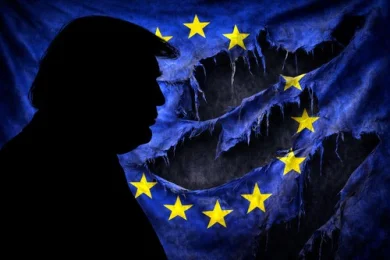
This ruling was perceived as a serious blow to Donald Trump, including by the international press and European actors, as it called into question not only his tariff policy but also the credibility of trade agreements concluded in recent years. The European Parliament reacted quickly, preparing to suspend the implementation procedure of the EU–US trade agreement signed in the summer of 2025, precisely in the context of the Supreme Court's verdict and the uncertainty surrounding Washington's future tariff architecture.
In domestic political terms, Trump publicly rejected the Supreme Court's decision, harshly criticized the judges who voted against him, and immediately announced that he would propose alternatives. Instead of tempering his trade agenda, the president quickly sought new legal instruments to reintroduce global tariffs, this time within the maximum limits allowed by another law, the Trade Act of 1975, which gives him the ability to temporarily impose global tariffs of up to 15% without prior approval from Congress.
What exactly did the Supreme Court decide regarding tariffs
The Supreme Court invalidated a broad package of tariffs, known as "reciprocal tariffs," imposed under the IEEPA, a law that grants the executive special powers in conditions of international emergency. The judges found that the president exceeded the limits of these powers when he used the emergency framework to generalize tariffs globally, without explicit authorization from Congress and without sufficiently clear national security justifications.
As a result, the previous tariffs ceased to be collected, and American customs officials announced that the collection of these annulled tariffs would stop on Tuesday, at midnight, Washington time. This abrupt termination of a very aggressive tariff regime created a legal and economic void that Trump rushed to fill with a new approach.
How Trump managed to reintroduce global tariffs after the Supreme Court's decision
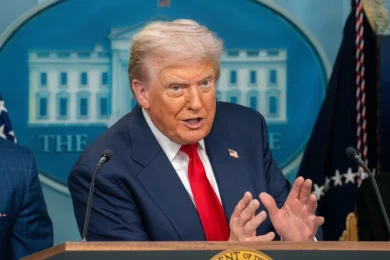
After the decision was announced, Donald Trump announced on Friday, in a press conference at the White House, a new package of global tariffs, this time at 10%, presented as a response to the Supreme Court's verdict. The next day, Saturday, the president raised the level to 15%, which he described as part of the "strong alternatives" available after the annulment of previous schemes.
The key to this move lies in the change of legal basis. Trump abandoned the IEEPA, the emergency framework rejected by the Court, and repositioned himself on a mechanism provided by the Trade Act of 1975, which allows the imposition of temporary global tariffs, with certain ceilings and strictly defined deadlines. According to an opinion piece, under this law, tariffs can be maintained without a vote from Congress for a maximum of five months, and the maximum allowable level is 15%.
Thus, the president used a legal loophole: he no longer applies a permanent global tariff justified by a vaguely defined "emergency," but resorts to a classic, time-limited instrument, within his mandate, which can have a significant short-term economic impact. After 150 days, or approximately five months, the Washington government will need Congress's vote if it wishes to maintain these tariffs at a permanent level.
Legal loopholes and their political effect
The new tariff architecture relies on several legal and political loopholes and strategies. First, there is the change of legal framework, from IEEPA to the Trade Act of 1975. While the Court sanctioned the extensive use of emergency powers, the trade law provides the president with a clear, albeit limited, margin to introduce temporary global tariffs without initially seeking Congress's approval. This changes the nature of the discussion: it is no longer about an abuse of power in the name of urgency, but about maximizing the use of an existing legal instrument.
Secondly, the overlap between the new global tariffs and existing bilateral agreements creates additional pressure. A clear example is the relationship with Japan, where Washington and Tokyo agreed in July on a "reciprocal" tariff of 15% on Japanese goods, including automobiles, in exchange for a promise of Japanese investment of $550 billion in the US. After the Court's decision, Trump announced a new global tariff of 10%, then 15%, "under a separate legal framework," and Japan explicitly requested not to be treated less favorably than in the bilateral agreement.
This overlap provides the president with additional negotiation tools but also increases the level of confusion for trading partners, who no longer have a clear reference point as to whether to relate to bilateral agreements or the new global tariffs.
Reactions from markets and international partners
Reactions in financial markets and in capitals around the world have been mixed, reflecting both concern and opportunistic adaptation to the new context. Stock markets in Asia predominantly closed higher, especially in China, after the resumption of trading activity following the Lunar New Year, despite Trump's new tariff threats. The Shanghai and Shenzhen indices advanced, supported also by the maintenance of key interest rates by the Chinese central bank. Tokyo also recorded an increase in the Nikkei index, amid a weakening yen, while Europe opened with slight declines in Paris, London, and Frankfurt, a sign of caution among European investors.
In Mexico, the trade situation changed "favorably" after the Court's annulment of Trump's tariffs, at least for the flows covered by the USMCA agreement, which represent about 85% of Mexican exports. However, the new global tax of 15% announced by Trump reintroduces a dose of uncertainty for those exports that do not fall under the North American treaty.
The Brazilian industry feels a combination of relief and fear. Analysts cited by economic press from São Paulo argue that the new global tax of 15% "relieves pressure" on the Brazilian industry, in the sense that it puts all exporters on a more even footing and reduces some previous distortions. However, Brazil remains subject to investigations under US trade law, which could lead to new tariffs, and uncertainty is not eliminated.
The European Union reacted by freezing the ratification of the trade agreement with the United States, at least until Trump clarifies the new tariff plan. The decision, made a few days after the Supreme Court blocked the use of IEEPA for "reciprocal" tariffs, amplified economic turbulence in an already tense relationship.
Long-term impact: reallocating trade flows
Beyond the immediate shock, officials and analysts warn about the long-term effects of Trump's tariffs. Alan Taylor, a member of the Monetary Policy Committee of the Bank of England, believes that "high tariffs on imports seem to be here for the long term," and their full effects represent a major change that will take "many years" to manifest. He states that there are already signs that China is redirecting its exports to other East Asian countries and to the European Union, while British companies are reorienting towards Europe to mitigate the impact of American tariffs.
These reallocations suggest that the world is heading towards a more pronounced fragmentation of the trading space, with more cohesive regional blocks and relatively reduced dependence on the American market. An article about British companies shows that they are reorienting towards Europe and warns that "the impact of tariffs will be felt for years to come," reflecting a structural change in how firms project their export strategies.
What the new tariff regime means for Romania and the EU
For Romania, the effects of the new tariffs will be felt mainly indirectly, through the European Union and global trade reconfigurations. The European Union has decided to freeze the ratification of the trade agreement with the US until Washington clarifies the direction of the new tariff policy, which means that any potential additional benefits of access to the American market, negotiated in 2025, are currently on hold. For Romanian exporters, this means a climate of uncertainty, in which plans for expansion or investments oriented towards the US may be delayed or recalibrated.
At the same time, the redirection of Chinese and British exports towards the European Union will amplify competitive pressure in the common market, including in sectors where Romania is active, such as the manufacturing industry, auto components, or agri-food products. This can mean both risks, through increased competition, and opportunities, if Romanian firms manage to become suppliers in supply chains that are relocating or expanding in Eastern Europe to avoid American tariffs.
Moreover, a global environment marked by high tariffs and volatility may amplify inflationary pressures and uncertainty in financial markets. As warned by Bank of England representative Alan Taylor, the "shock" of tariffs will unfold over many years, and these effects may also influence the European economy, with implications for funding costs, investment choices, and monetary policy. Romania, as an EU member state integrated into the single market, will feel these developments through its relationship with European partners and its dependence on intra-EU exports.
Politically, this episode highlights the role of stability and predictability of trade rules for smaller economies that depend on access to large markets. For Bucharest, the ability to contribute to formulating the EU's common position in relation to Washington and to position its economy as a potential regional hub in a Europe under pressure from reallocating trade flows may become as relevant as point negotiations with American partners.
*****Synthesis made with the help of a data monitoring flow provided by the media monitoring platform NewsVibe Romania. The analysis, data, and images presented have been enhanced with the help of Machine Learning and Artificial Intelligence tools.
Latest News
20:59
20:42
20:22
20:02
19:40
See more news
NEWS ON THE SAME TOPICS