ANALYSIS The impossible embargo: how far can Trump's threat to stop US–Spain trade go?



Always see our news on Google
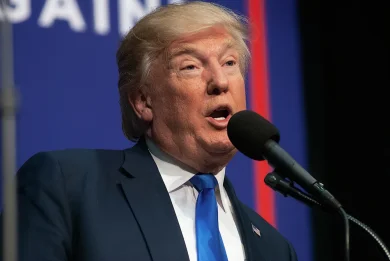
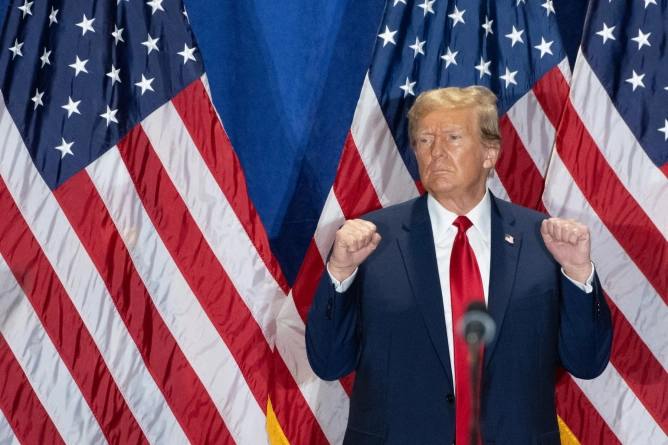
The American President Donald Trump publicly announced that he "will break all trade relations with Spain" and even spoke about a "total embargo" in the context of dissatisfaction with Madrid's role in NATO and the refusal to provide bases for military operations in the Middle East. The statements were made at the NATO summit in Ankara, where Trump called Spain "a terrible partner" and "a lost cause," turning a political-military dispute into a direct threat on the commercial front.
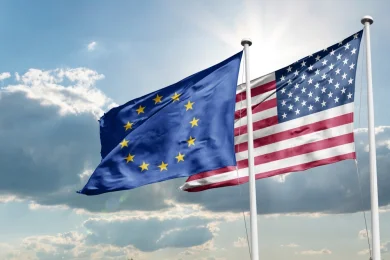
The Spanish government responded calmly, emphasizing that economic relations with the U.S. are mainly conducted by private companies and are framed within a legal framework dominated by agreements between Washington and the European Union, not just by political will towards a single member state. Brussels, in turn, has indicated that it expects the United States to respect commitments from the trade agreement with the EU, signaling that the dispute goes beyond the bilateral U.S.-Spain relationship and directly impacts the transatlantic architecture of trade.
What can the U.S. legally do?
Legally, the Trump administration invokes the International Emergency Economic Powers Act (IEEPA), an American legislation that allows the president to restrict or block trade transactions in the context of "external emergencies." Treasury Secretary Scott Bessent indicated that this law, validated by the Supreme Court, could justify an embargo on Spain, and the USTR and the Department of Commerce have been mandated to explore additional tools – punitive tariffs, targeted sanctions, export restrictions.
However, analysts cited by the Associated Press and European press emphasize that a "total embargo" against a single EU member state would collide with legal reality: Spain does not have a separate trade agreement with the U.S., but is part of the EU-U.S. framework, so unilateral measures against Madrid would implicitly affect the body of rules applicable to the entire Union. Moreover, a large part of the trade flows involving Spain pass through intra-EU production and distribution chains – from processed oranges in other European states to industrial products – making it difficult to strictly delineate "Spanish goods" solely by political will.
Are U.S.-Spain exchanges "between states"?
Despite the rhetoric about "breaking ties" between governments, trade between the U.S. and Spain is mainly conducted between private operators: American corporations and Spanish companies or multinationals based in various EU member states. The Spanish government has publicly insisted on the autonomy of private companies and that the role of the executive is to create a regulatory framework, not to direct every commercial contract.
In turn, the European Commission reminds that trade policy is an exclusive competence of the EU, which means that negotiations, tariffs, and market access are established in Brussels, not in Madrid, Rome, or Berlin. Thus, the U.S.-Spain trade relationship cannot be legally separated from the U.S.-EU relationship, even if certain statistical flows are measured at the member state level, and political statements explicitly target Spain.
Can the U.S. sanction only Spain, ignoring the EU?
Theoretically, Washington could announce administrative restrictions targeting imports and exports directly identified as originating from or destined for Spain – for example, limiting imports of agricultural products or increasing tariffs for certain sectors. Practically, such an approach would immediately raise compliance issues with commitments made to the EU within the framework of the transatlantic relationship, but also the risk of countermeasures from Brussels, including at the World Trade Organization.
The Spanish executive has publicly explained that "the United States cannot break trade relations with Spain, as this relationship extends to the entire European Union," directly pointing out that any unilateral discrimination would be interpreted as discrimination against a segment of the European internal market. Additionally, some of the goods that reach the U.S. pass through several EU states, making it difficult to identify a single "culprit" – trade flows are integrated, and sanctioning Spain would actually hit an entire network of European producers and distributors.
U.S.-Spain trade balance and who loses
According to official U.S. data cited by the economic press, in 2025, trade in goods between the U.S. and Spain totaled about $47.9 billion, with U.S. exports of approximately $26.6 billion and imports from Spain of $21.3 billion. The United States thus recorded a trade surplus of over $5 billion (in other estimates $4.8 billion), meaning that, on the bilateral route, the American economy "gains" more than it loses.
For Spain, the U.S. represents about 4.9% of goods exports, valued at around 18 billion euros, placing it below the dependency level of economies like Italy or Germany in relation to the American market. On the other hand, U.S. exports to Spain are estimated at about 23 billion euros and represent only about 1.2% of total U.S. exports, indicating a relatively low dependency of Washington on the Spanish market, but at the same time showing that American firms use Spain as a profitable sales market.
Who would be more affected – population vs. operators
In the scenario of a real trade escalation, the first affected would be economic operators in exposed sectors – agriculture (citrus, wine, olive oil), automotive, aerospace, IT, and related services, both in the U.S. and in Spain. American companies would lose access to a market segment they dominate in some industries and would see the trade surplus eroded, while Spanish firms would have to reorient towards other European or Asian partners to compensate for the loss of the American market.
For the population, the effects would likely take the form of higher prices or reduced supply of certain products – from fruits and European wines in American supermarkets to consumer goods or American equipment in Spanish stores. The direct impact on the average citizen in Spain would, however, be mitigated by the fact that the country's economy is deeply integrated into the single European market, and 95% of its exports go to other destinations than the U.S., mainly within the Union.
Electoral narratives
Economists and analysts cited in the international press believe that a complete break in trade with Spain is "very difficult to put into practice," even if presidential rhetoric presents it as an immediate option. Legal interdependence (the EU as a single commercial actor), the private nature of contracts, and supply chains distributed within the Union transform the threat into a tool of political pressure rather than a concrete economic policy.
Thus, the real stake of Trump's statements seems to be mainly symbolic: sending a tough message to European allies perceived as "non-cooperative" in NATO and mobilizing the internal political base through gestures of strength on the external front. In this context, Spain becomes a case study for the tensions between security logic – pressure for military spending and alignment with American strategies – and economic logic, in which total embargoes against an EU member state are, at least for the moment, more likely to be impossible to implement than probable.
Analysis conducted with the support of Perplexity
Latest News
22:52
22:48
22:43
22:38
22:20
See more news
NEWS ON THE SAME TOPICS