ANALYSIS Trump, from Cuba to Greenland: how the American leader transforms the "honor of taking over" vulnerable territories into a doctrine of foreign policy



Always see our news on Google
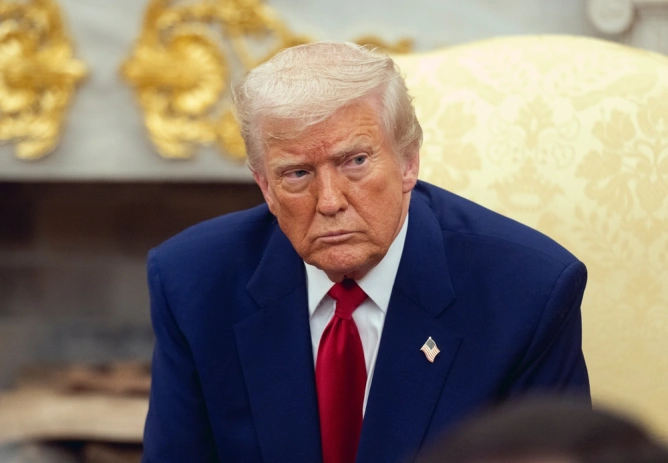
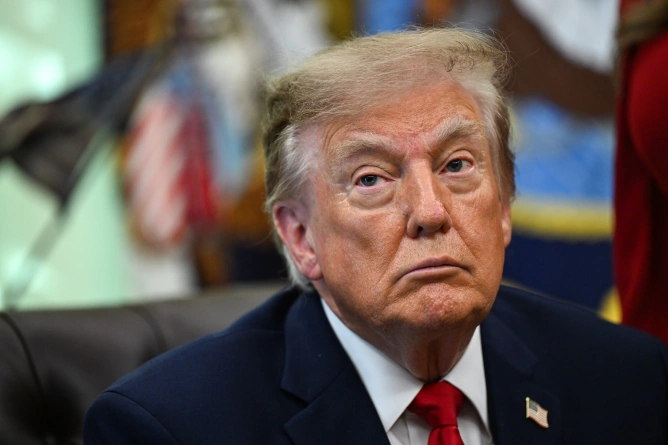
Recent statements in which President Donald Trump said that "he can do whatever he wants" with Cuba and that he would have the "honor" to "take over" the island transform the classic US-Cuba dispute into a test of the new doctrine of the American leader regarding regime change in "weakened" states and the expansion of his sphere of influence. The new wave of tensions between Washington and Havana stems from the intertwining of three crises: the arrest of Nicolás Maduro, the energy blockade imposed on Cuba, and President Donald Trump's declared ambition to "take" states considered vulnerable, from Venezuela to Cuba and even Greenland.
From Maduro to Havana: how the new conflict began
The turning point was the removal from power and capture of former Venezuelan President Nicolás Maduro, an operation in which Washington claimed a central role. After the Trump administration marked Venezuela as an example of "forcing regime compliance" rather than a total system change, the White House's attention quickly shifted to Cuba, the main regional ally of Caracas and a traditional beneficiary of Venezuelan oil supplies.
Following Maduro's fall, the US effectively imposed a blockade on oil flows to Cuba, announcing that it would stop all Venezuelan deliveries and threatening countries willing to supplement Havana's energy deficit with tariffs. According to press reports, Cuba has not received any oil shipments for three months, being forced to introduce drastic energy rationing measures, with extensive power outages and entire sectors of the economy nearly paralyzed.
This economic pressure is the backdrop against which Trump's new statements are inserted, suggesting that after Venezuela and Iran, "Cuba could be next," a phrase repeatedly echoed in recent weeks. The current conflict is therefore not an isolated one, but a logical consequence of a three-step strategy: neutralizing the key ally (Maduro), economically strangling Cuba, and conditioning any relaxation on a change at the top of power in Havana.
"I can do whatever I want with Cuba": rhetoric and stakes
In a press conference that inflamed spirits, Trump stated that he expects to have the "honor of taking Cuba in one form or another" and that he "can do whatever he wants" with the neighboring country, in the context of an unprecedented collapse of the Cuban electrical grid, which has temporarily left the country without national power. The formulations deliberately mix the vocabulary of liberation ("to liberate it") with that of annexation ("to take it"), which refers both to Cold War rhetoric and to recent episodes in which the American leader suggested that "troubled" states could, at the limit, be "taken back."
In parallel, the White House has not presented any clear legal framework for a potential direct intervention in Cuba, despite the fact that historically, Washington has respected the compromise born from the 1962 missile crisis, which excludes an invasion or support for an invasion against the island. The absence of a clearly articulated legal basis, combined with the personalized language – "I can do," "I will take" – transforms the dispute into a symbolic presidential power exercise, in which Trump tests the limits of historical constraints on American policy towards Cuba.
Negotiations with Havana and the demand for Díaz Canel's removal
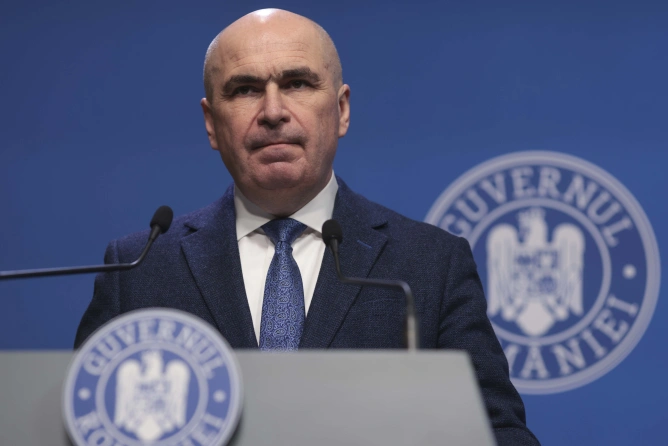
Behind the threatening rhetoric, Washington and Havana have nonetheless opened negotiations aimed, officially, at reducing tensions and finding exits from the energy and economic crisis. Against the backdrop of these discussions, sources cited by quality American press have revealed that the US delegation made it clear that any substantial progress depends on the departure from office of President Miguel Díaz Canel, considered a "hardliner" and an obstacle to structural reforms.
This conditionality fits within the line articulated by officials in the Trump administration, who openly speak about "forcing regime compliance," not about a complete change of political systems. In practice, this means that Washington does not currently show, at least for now, an appetite for dismantling the Cuban communist apparatus or for opening criminal or lustration files that would directly target the political and economic legacy of the Castro family and its close circle, but rather aims for a top sacrifice – Díaz Canel – which could be presented to the American public as a symbolic victory against a leftist regime considered hostile.
For Havana, however, any interference in the internal architecture of power is a red line: the regime has consistently rejected, for decades, any such conditioning, qualifying it as a flagrant violation of sovereignty. If the Americans maintain, in negotiations, the explicit demand that Díaz Canel "must go," discussions risk quickly becoming blocked, and the energy and social crisis may deepen in a context where protests and "unusual acts of defiance" against authorities have already begun to emerge, as noted by analysts cited in the international press.
The Greenland precedent and the threat of "taking back" as a political tool
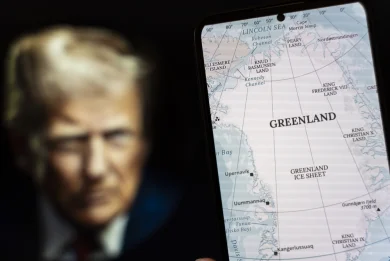
The current statements regarding Cuba fit into a model already tested by Trump when, in recent months, he revived the idea that the United States should "take back" Greenland, a Danish territory that he described as "a great strategic and economic opportunity" for America. At that time, references to the "purchase" of Greenland were presented by some officials as an exercise in "creative thinking" in foreign policy, but fueled serious debates in quality press about the flexibility of traditional boundaries of sovereignty in the political imagination of the American leader.
Put in contrast with the situation in Cuba, the recurrence of the verb "to take" – whether it refers to an autonomous territory within the Kingdom of Denmark or a communist state in the Caribbean – conveys a common message: for the current American president, the economic weakness and diplomatic isolation of an entity can legitimize the discussion about changing its geopolitical status. Regarding Cuba, this discourse comes against a backdrop of a collapsing economy, a regime under siege, and a population at the limit of endurance, which amplifies the perception that Washington is taking advantage of the island's structural vulnerability to push a top-level political engineering agenda.
The American internal dimension: Florida, the Cuban exile, and media echo
Domestically, the escalation of rhetoric towards Havana is calibrated for American electoral consumption, especially in key states like Florida, where the Cuban and Venezuelan communities have significant political weight. Conservative American publications and news channels have amplified in recent weeks the president's narrative that the removal of Maduro, pressure on Cuba, and confrontation with Iran are part of the same offensive against "regimes hostile to America" in the western hemisphere and beyond.
Analyses published by quality press underline that a potential departure of Díaz Canel, obtained through negotiation, would allow the White House to present a double success: avoiding a costly military intervention and achieving a "symbolic capitulation" of a communist leader, without completely destabilizing the power system in Havana. Additionally, the message sent to other capitals – from Tehran to Pyongyang – is that Washington is willing to combine extreme sanctions, energy blockades, and direct demands for leadership changes to force policy adjustments.
On the global media stage, interest in the subject is illustrated by the high number of articles and debates dedicated to the Trump-Cuba relationship in the last 30 days, with hundreds of mentions in American, European, and regional press, predominantly neutral and explanatory in tone. The consistent presence of sources from the US, the UK, and Romania, from conservative publications to mainstream and analytical titles, indicates that the Cuba file is no longer a niche subject of bilateral relations, but a large-scale test of how Washington understands, in the Trump era, to combine sanctions, negotiations, and pressure on foreign leaders.
What follows for Cuba: scenarios between collapse and political transaction
In the short term, the evolution of the crisis will depend on two main variables: Havana's willingness to negotiate a compromise that saves the regime's face and the Trump administration's ability to maintain maximum pressure without triggering an uncontrolled social explosion in Cuba. If Díaz Canel categorically refuses to consider a step back, negotiations risk becoming blocked, and the energy blockade may continue, exacerbating shortages, at a time when the electrical grid is already failing, and the economy is "stopping" in entire sectors.
An alternative scenario, suggested by some sources cited in the American press, is that of a discreet "political transaction," in which the Cuban leader would be replaced by a more flexible figure from within the same apparatus, in exchange for the relaxation of sanctions and the resumption of energy flows. For Trump, such a solution would mean a geopolitical trophy in a year marked by confrontations with Iran and the Venezuelan precedent, allowing him to claim that he forced the hand of another hostile regime without triggering a new open conflict in the western hemisphere.
In the background, however, remains the question of how far Washington is willing to go in violating or reinterpreting the informal agreements post-1962, which have helped avoid a direct US-Cuba conflict for over six decades. The absence of a clear legal justification for a potential intervention, combined with statements like "I can do whatever I want with Cuba" and the discursive precedent of "taking back" Greenland, leaves the impression of an American leader deliberately testing the boundaries of the rules-based international order, betting on the weakness of states and the fragmentation of the international community.
Beyond the rhetoric, the reality in Havana is one of deep crisis: power outages, gas lines, collapsed tourism, and a regime caught between street pressure and pressure from Washington. In this context, Trump's statements about the "honor of taking Cuba" can no longer be read merely as a bombastic campaign phrase, but as the expression of a coherent strategy, built step by step from Caracas to Havana, which redefines the balance of power in the Caribbean in favor of the United States.
*****Synthesis made with the help of a data monitoring flow provided by the media monitoring platform NewsVibe Romania. The analysis, data, and images presented have been enhanced with the help of Machine Learning and Artificial Intelligence tools.
Latest News
21:19
21:03
20:48
20:46
20:46
See more news
NEWS ON THE SAME TOPICS