ANALYSIS The war "is nearing its end". Why is Putin pulling Gerhard Schröder out of the drawer?


Always see our news on Google
Russian President Vladimir Putin declared that the war in Ukraine "is coming to an end" and said he prefers former German Chancellor Gerhard Schroder as a European mediator, but how much of these statements signifies a real willingness to exit the war and how much is actually a cover for military deadlock and internal costs.
What does Putin actually mean when he claims that the war "is coming to an end"?
Putin's statement that "things are coming to an end" comes at the end of the May 9 parade, in the context of a three-day ceasefire and US-mediated negotiations for the exchange of 1,000 prisoners, but without any concrete announcement of withdrawal, concessions, or change of objectives. He repeats, in the same framework, the classic theses: NATO would have escalated the conflict, "Western globalists" would be fighting "through the hands of Ukrainians," and Russia is waging a "just" war, presented as a continuation of the "Great Patriotic War."
An analysis by the Institute for the Study of War (ISW) emphasizes that Putin's formula is deliberately vague and that it has been amplified by state media as if announcing the approach of the end of the war, even though he offers no hint that Moscow would be willing to abandon the goal of "the final defeat of Ukraine." At the same time, Putin insists that he "allows" the army to focus on this "final defeat," which ISW interprets as a reconfirmation of maximalist objectives, not as preparation for compromise.
Western specialists consulting the military picture find that on the ground there is no dynamic of Russian victory that would justify the discourse about "the end." ISW notes that Russia and Ukraine continue limited offensive operations across the entire front even during the ceasefire, that the number of attacks, artillery strikes, and Russian drone attacks remains very high, and that "reducing" fire does not mean "ending" hostilities. Additionally, ISW reports from previous days show that Russian forces have performed worse in spring 2026 than at the time when the Kremlin was demanding the complete capitulation of Donbas in 2025, while Ukrainians have recently recaptured positions in Donbas and Zaporizhzhia.
For analysts in Europe and the US, the dominant conclusion is that Putin is trying to create a narrative: the war would anyway be on the verge of ending on Russia's terms, and the West would be the one caught in a "stalemate" from which it can no longer escape. In fact, they say, it is more of a communication operation ("cognitive warfare," in ISW terminology), meant to cover the rising costs – losses approaching 1% of Russia's active male population, economic pressure, and growing discontent – and the vulnerability exposed by strikes deep into Russian territory.
Does Putin want peace or is he trying to buy time?
ISW explicitly notes that, despite the formulas about "the approaching end," there are no signs that Russia intends to end the war, and Putin reaffirms his maximalist objectives and refusal to meet with Zelensky anywhere other than in Moscow, under conditions of capitulation. In this context, the "peace" he alludes to is more of a "conclusion" in which Ukraine cedes territories, abandons its Euro-Atlantic orientation, and accepts a new security architecture dictated by Russia.
For some Western commentators, Putin's statement is a multi-layered message:
to the Russian public: assuring that the sacrifices have a "horizon," that the war is not a conflict without an end, even if no decisive victory is visible on the battlefield;
to Western leaders: insinuating that a window for negotiations exists now, but that it will close once Russia consolidates its positions – an attempt to hasten pressure on Kyiv;
to Ukraine: a message of discouragement, suggesting that resistance is futile, because the "end" would anyway be decided in Moscow and Washington/Brussels, not in Kyiv.
Reuters notes that Putin linked the discourse about the "end" of the war to the idea of new "security arrangements for Europe," promising that Russia would be willing to discuss the security architecture – but from the position of a power that still occupies almost one-fifth of Ukraine's territory. This formulation is read in Washington and European capitals more as an attempt to legitimize the territorial status quo than as a step towards peace.
In assessments by American military experts, including ISW, the Kremlin is trying to demonstrate that it can control the decisions of Ukraine's partners by threatening escalation, even as the reality on the ground shows Russia's difficulties in protecting its own territory from Ukrainian strikes. Thus, the willingness to negotiate is more instrumental: Putin is not "obliged by the front" to seek peace, but needs a strategic pause, recognition of territorial gains, and relaxation of sanctions.
Why does he bring up Gerhard Schröder?
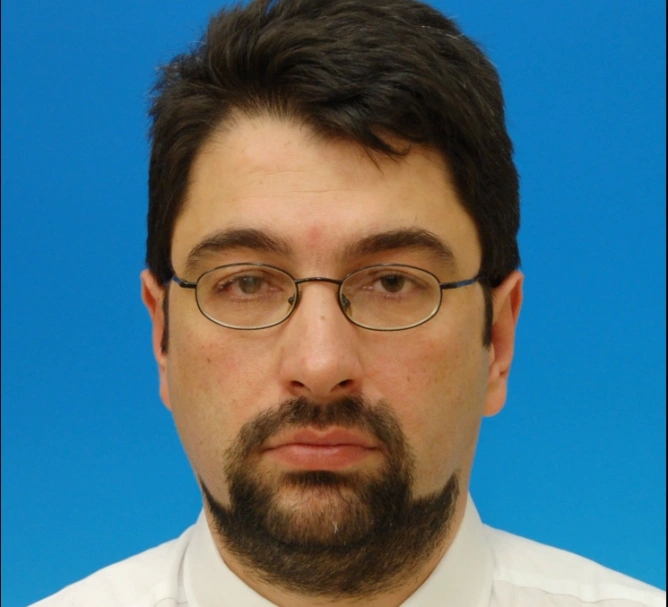
The question about Gerhard Schröder came in a precise context: Putin was asked at a press conference who his preferred interlocutor from the EU would be for possible discussions, and he named the former German chancellor, known for his long-standing personal relationship with the Kremlin leader and for his ties to Russian energy companies. Schröder was until 2022 in leadership positions in the Nord Stream projects and on the board of Rosneft, and his closeness to Moscow has isolated him in mainstream German politics.
In Western media and analysis, cited also by The Guardian, Putin's proposal is viewed with skepticism, as part of a "series of false offers" coming from Moscow. Government sources in Berlin, cited by AFP and picked up by Guardian, say that the statement was officially recorded, but without enthusiasm, as it is not seen as a credible gesture: a mediator "cannot be Putin's friend," emphasizes former chair of the foreign policy committee, Michael Roth (SPD), who insists that acceptability for Ukraine is the central criterion.
However, within the SPD, there are more open voices: some parliamentarians say that the proposal "needs to be carefully analyzed" together with European partners, arguing that Europe should "use any chance, however small, for peace," so as not to leave Ukraine's future solely in the hands of Putin and President Trump. This rift is exactly what the Kremlin seeks: reactivating internal divisions in Germany and the EU between the "realist camp," favoring a quick compromise, and the pro-Kyiv hardline.
From the perspective of specialists in Russia, mentioning Schröder serves three objectives:
sending the signal that Putin prefers to address Europe "through" figures already integrated into his political-economic network, albeit marginalized at home;
relaunching the German debate about the role of the SPD and the establishment in "Ostpolitik" towards Russia – that is, about past failures, which can further fatigue German public opinion regarding support for Ukraine;
projecting the image that he is not isolated and still has "friends" in the West, useful in the internal battle for legitimacy.
The Guardian summarizes a climate of "mixed" reactions in Berlin: officially, the Scholz government remains cautious and skeptical; in the SPD, the foreign policy wing is divided between those who firmly reject the idea of such a compromise mediator and those who believe that, in the logic of "no channel should be excluded," Schröder could be used as an informal communication vehicle, even if he will never be the formal mediator.
How do ISW, Western experts, and NATO allies view Putin's statements?
ISW's analysis from May 10 notes that the Kremlin is intensifying the use of "cognitive warfare" – from doctored videos of Russian flag raisings on the front to communication operations that exaggerate military success and create the impression of a "broad offensive" where, in reality, there are only infiltrations into small groups. In this context, Putin's statement about the "approaching end" of the war is placed by ISW in the register of the same effort to manipulate perceptions, not in that of an authentic strategic change.
Western think tanks and reference media, including Reuters and The Guardian, emphasize that:
Russia has not abandoned the goal of controlling the entire Donbas region and forcing a regime change or at least a political reorientation in Kyiv;
the Russian army is failing to achieve decisive advances, while Ukraine continues local counterattacks and strikes deep into Russian territory;
in parallel, the Kremlin suppresses pro-war voices that criticize the conduct of the campaign and tries to centralize control over the informational space.
In NATO capitals, Putin's discourse is read as an attempt at a "counter-narrative" against the perception that Russia has entered a long-term war of attrition that it cannot win quickly. Therefore, official reactions are cautious and, in general, converge on the idea that any discussion about peace must be decided by Ukraine and respect the principles of the UN Charter, including territorial integrity.
Reactions from Kyiv to Putin's statements
President Zelensky promptly rejected the suggestion that Ukraine is blocking the peace process, insisting that his country respects the agreement on the exchange of prisoners and that the Russian side is the one using the ceasefire to regroup troops, bring in ammunition, and continue artillery and drone attacks. Kyiv interprets Putin's statements as part of a strategy to shift the responsibility for prolonging the conflict onto Ukraine and the West, thus undermining international support for the Ukrainian war effort. Ukrainian leaders reiterate that any "end" to the war that entails the occupation of a significant part of the territory is not peace, but a pause that prepares for the next Russian offensive. In Kyiv's logic, a figure like Schröder is unacceptable, both because of his ties to Moscow and because it would symbolize a return to a "normalization" of relations with Russia over Ukraine's head.
The reaction of Germany and the EU
At the European level, the President of the European Council, António Costa, had already stated that the EU is ready to discuss separately with both Russia and Ukraine "when the right moment comes," but emphasized that this moment depends on the conditions on the ground and Kyiv's position. Thus, Putin's offer is perceived in Brussels more as an attempt to cling to this opening and reinterpret it in his favor than as a response to real peace initiatives.
In Germany, the official reaction – reserved and skeptical – shows Berlin's concern not to be seen as the first to rush towards a "compromise peace" at Ukraine's expense. At the same time, however, the internal debate reignited by Schröder's name indicates increasing political pressure, in the context of society's fatigue over a prolonged war and the rise of populist and pro-Russian parties.
NATO's position
NATO leaders reacted mainly by reaffirming two lines: the unity of the alliance in support of Ukraine and the principle that Moscow cannot dictate the future European security architecture by force. In security assessments by allies, Putin's statements are considered part of a double game: on one hand, threats of escalation, including on the air front and drone attacks; on the other hand, signals of "openness" for negotiations, meant to test the political cohesion of the West.
What does this moment mean for Europe and Ukraine?
If we piece together ISW's analysis, reports from the front, and the political reading from European and American media, the picture that emerges is one of a Kremlin at a moment of adjustment, not of abandonment. Russia is adapting its tactics (infiltrations into small groups, emphasis on drones, disinformation), but it also maintains its strategy intact: maintaining military pressure, combined with informational and diplomatic pressure to force an agreement on its terms.
Schröder's nomination is a piece of this puzzle: a tool to fracture the European front, to reignite old "business as usual" reflexes with Moscow, and to test Berlin's willingness to return to the position of the main communication channel with Russia. The fact that German reactions have been predominantly skeptical shows, however, that the Kremlin's maneuvering space in this regard is much narrower than before 2022.
In the short term, the statement about the "approaching end" of the war may have a psychological effect in Russia, providing the impression of a manageable timeline. In the medium term, however, analysts warn that if this narrative is not supported by concrete results – either on the front or at the negotiating table – it could backfire on Putin, fueling internal cynicism and raising the question "if the war is coming to an end, why is mobilization continuing and losses occurring?".
For Kyiv and its allies, the moment calls for a double fine-tuning: not to reflexively reject any discussion about peace – so as not to be accused of wanting a "perpetual war" – but also not to accept negotiation frameworks built on "false offers" that normalize Russian aggression. Here, ISW's analysis can serve as a benchmark: it shows that, beyond the discourse, on the ground Russia has not made steps indicating a change of strategy, and that the ceasefire from May 9-11 is being used more for regrouping and for image operations.
*****Synthesis made with the help of a data monitoring flow provided by the media monitoring platform NewsVibe Romania. The analysis, data, and images presented have been enhanced with the help of Machine Learning and Artificial Intelligence tools.
Latest News
22:14
21:56
21:32
21:08
20:44
See more news
NEWS ON THE SAME TOPICS