SPECIAL Informat.ro / The top international political topics of the last week. Effects on Romania


Always see our news on Google
The dominant themes of international politics from March 24 to 30 revolve around the escalation of the confrontation between the United States and Iran, the transformation of the Strait of Hormuz into the core of a global energy shock, and the increasing pressure exerted on NATO's architecture and the nuclear balance due to these tensions.
Methodology
The data was collected by the media monitoring platform NewsVibe Romania, during the period of March 24 to 30, 2026, finding over 10,000 articles published in the global press. The ranking of international security themes is based on the number of mentions and their visibility in press articles from the last seven days, taking into account the estimated impact of each material and the recurrence of the subject in distinct sources.
The US–Iran Conflict and Energy Security
The conflict between the United States and Iran remains the central theme, with a direct impact on global energy security and regional stability. A former commander of the US Central Command, General Frank McKenzie, explains that the American military has been working "for years" on plans for ground raids against Iran, including on islands and bases on the southern coast of the country. These operations would aim to humiliate Iran and provide Washington with leverage in negotiations, but also to potentially paralyze the Iranian oil economy by taking over strategic points such as Kharg Island, without destroying the infrastructure.
On the ground, the conflict has visible effects on supply chains and energy flows. The industrial group Foulath Holding from Bahrain, which owns Bahrain Steel and SULB, reports major force for some of its operations due to "regional developments" in the Middle East, mentioning airspace restrictions, maritime disruptions, and security risks. Activities are temporarily suspended until conditions allow for their safe resumption, and the decision is justified by the need to protect employees and partners. In the same context, another important energy company, Bapco Energies, previously reported major force after an attack on its refinery, signaling the fragility of the regional energy infrastructure.
The War in Iran and Pressure on NATO's Architecture
One of the strongest subjects concerns how the war in Iran is reshaping relationships within NATO and Europeans' relations with Washington. Spain, a NATO member state, announces that it is also closing its airspace to American aircraft involved in operations against Iran and refuses to use the Rota and Morón bases for B-52 bombers and B-1 or for air refueling aircraft. The Madrid government explicitly blocks the use of its military infrastructure for Operation "Epic Fury," conducted by the US and Israel against Iran, even though the rest of NATO's architecture remains formally intact.
At the same time, American President Donald Trump publicly expresses his frustration with allies who "were not there" as he wished in the war in Iran, even suggesting that the United States might not help NATO "in case of need" if member states do not align with Washington's priorities. Politically, the tension focuses especially on the US–Spain relationship, but it reverberates throughout Europe, where Madrid's decision is perceived as a test of strategic autonomy and as a precedent for how member states can condition their contribution to American operations.
The Energy Shock of the War in Iran
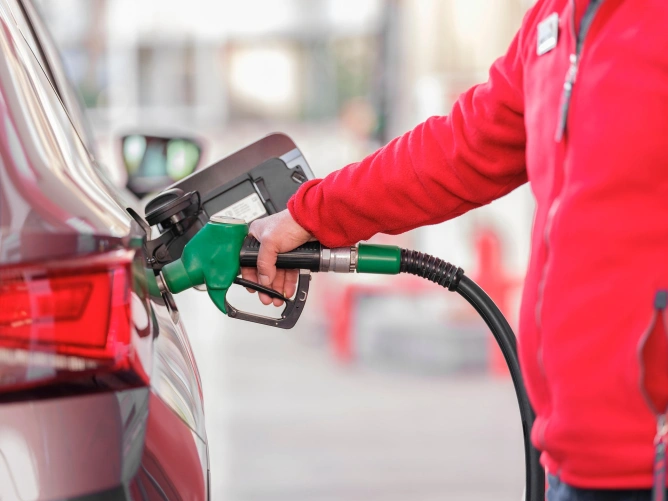
The war in Iran, oil prices, and energy security have become in recent days one of the main drivers of the global political agenda, with a ripple effect that far exceeds the conflict zone. The announcement by American President Donald Trump regarding the "breaking" of the blockade in the Strait of Hormuz, through which twenty oil tankers would have been released, was accompanied by a jump in international oil prices to the threshold of 117 dollars per barrel, signaling how quickly military tensions transfer into the economic sphere.
Amid this market shock, governments like that of Australia have decided on direct interventions, temporarily reducing fuel excise taxes by 50% to cushion the impact on citizens and companies, which shows that the war is no longer perceived merely as a security issue, but as an immediate factor of social and internal political pressure. At the same time, in Iran, an internal crisis deepens: President Masoud Pezeshkian, caught between street demands and pressure from the Revolutionary Guards, warns of the risk of an economic collapse in a few weeks and apologizes to neighbors for the attacks and destabilizations caused, trying to project the image of a rational actor in an explosive context.
The Risk of Renewed Nuclear Arms Race
The analysis regarding the risk of a new nuclear arms race deepens the perception that the world is at a strategic inflection point, comparable to the harsh episodes of the Cold War. A comprehensive material published by Bloomberg and picked up in the Arabic-language press shows how the US and Israel's offensive against Iran reignites discussions about nuclear weapons, both among potential rivals and within Western alliances.
In Poland and Germany, the debate about the American "nuclear umbrella" takes on new accents, while in the United States, there is open discussion about both potential nuclear tests and the modernization of the arsenal, in a logic of extended deterrence. The authors emphasize that the pressure does not come only from Iran: the perception of an increasingly tough competition with Russia and China is pushing more capitals to reevaluate the place of nuclear weapons in their own security strategies, either by strengthening existing guarantees or by exploring options that have been taboo until now.
Implications for Romania in the Global Political Context
For Romania, these developments simultaneously open a front of risks and strategic responsibilities. The war between the United States and Iran, combined with blockades and attacks on energy infrastructure, significantly amplifies the vulnerability of the European market to price shocks, and the rise in oil prices to 117 dollars per barrel inevitably translates into pressure on transport costs, on industry, and on the budgets of the population. Unlike countries like Australia, which can afford rapid and massive cuts in excise taxes, Romania operates with a much more limited fiscal space, which means that the margin for social cushioning of this shock is reduced and that internal political pressure can quickly increase in the face of prolonged price increases.
The decision of Spain to block the use of the Rota and Morón bases for American bombers involved in Operation "Epic Fury" and the critical tone of President Donald Trump towards allies "who were not there" subtly but firmly reshapes the internal dynamics of NATO, of which Romania is a part. Bucharest will be forced to calibrate its positioning between solidarity with Washington, the interest in maintaining allied cohesion on the eastern flank, and the increasingly pronounced European sensitivities regarding strategic autonomy. In a scenario where American support for NATO is politically conditioned by participation in extra-European operations, Romania will need to publicly clarify where it draws the line between allied contribution and the costs incurred in conflict theaters that are not geographically close to it.
Increasingly explicit discussions about a possible renewed nuclear arms race, from the debate about the American "umbrella" in Poland and Germany to scenarios for modernizing the US arsenal, directly hit the security architecture in which Romania has integrated after joining NATO. As a frontline state on the eastern flank, Romania is essentially dependent on the credibility of Western nuclear deterrence, but at the same time is exposed to the risks of a strategic escalation with Russia, which is strengthening its own arsenal and increasingly linking military discourse to pressure on its neighborhood. In this context, Bucharest has an interest in being present and vocal in debates about the future of the Alliance's nuclear posture, to avoid scenarios in which guarantees are negotiated over the heads of states on the contact line.
Finally, the way in which the war in Iran weakens economies serves as an indirect warning for Romania. A potential prolonged worsening of external conditions, combined with internal difficulties in reform and investment absorption, could accentuate social and regional gaps and put pressure on internal political cohesion.
*****Synthesis made with the help of a data monitoring flow provided by the media monitoring platform NewsVibe Romania. The analysis, data, and images presented have been enhanced with the help of Machine Learning and Artificial Intelligence tools.
Latest News
15:40
15:33
15:27
15:25
15:24
See more news
NEWS ON THE SAME TOPICS