



Hanning Case: a possible historic security breach / A story involving spies, kidnappings, and a list of precedents


Always see our news on Google
The arrest of former head of the German foreign intelligence service, August Hanning, opens a case with the potential to become one of Germany’s most serious security breaches since the Cold War, as Politico calls it. Nevertheless, in order to consider it one of the most serious proven compromises of German security, evidence is needed regarding the flow of the information, the secrets exposed, and the actual damage—elements that have not yet been publicly established. Informat.ro presents a summary of the information known so far about this case, as well as other precedents involving information leaks at European level. In addition, with the help of the NewsVibe media monitoring platform, we have produced an analysis of how the case has been presented in the press.
From leading the BND to consultancy
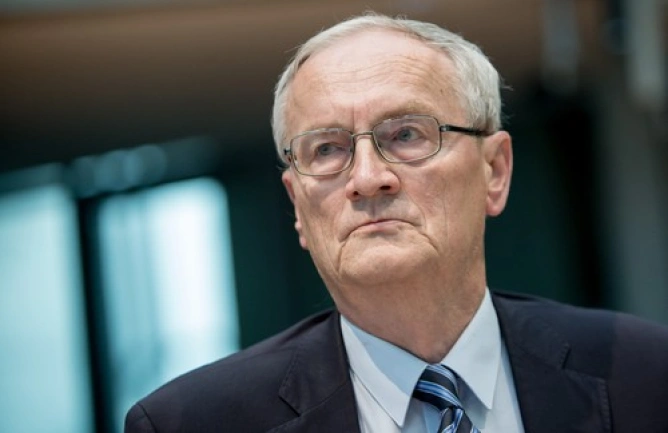
August Hanning, aged 80, headed the Bundesnachrichtendienst, BND, Germany’s foreign intelligence service, from December 1998 to November 2005. He subsequently served as state secretary at the Federal Ministry of the Interior until November 2009. The current allegations concern the period after he left public office, when he began working in private consultancy. The information presented by prosecutors contains no public allegation that he spied during his tenure as director.
The alleged mechanism is said to have begun in spring 2010. According to investigators, Hanning allegedly agreed with his former chief of staff, identified as Manfred D., to receive BND information in exchange for payments. Manfred D. allegedly provided nearly 2,000 documents by June 2022, many of them classified. From March 2012 to March 2026, he worked as chief of staff for several of Hanning’s successors, thereby having access to information from the service’s leadership circle. The documents were intended for internal use, including briefing BND leadership and preparing meetings to assess the intelligence situation at the Federal Chancellery. Hanning allegedly used them in his consultancy work. In one case, he allegedly drafted, on the basis of classified information, an analysis for a representative of a foreign service, but prosecutors have not established whether it reached the recipient. Separately, he allegedly transmitted political information for several years to a representative of another foreign service, partly using materials received from Manfred D. Thus, the investigation does not publicly claim that all nearly 2,000 documents were handed over to a foreign power. It is pursuing both the alleged leak from the BND to Hanning and the subsequent use of the information in his foreign relations. From a kidnapping case to an espionage case The espionage lead emerged in a separate investigation, known in Germany as the Block case. Christina Block, heiress to the Block House restaurant chain, is on trial for allegedly organizing the kidnapping of two of her children from Denmark, where they lived with their father, Stephan Hensel. The case originated in a custody dispute: after a visit in 2021, the children stayed with their father, and the parents continued their dispute in court. On the night of December 31, 2023, to January 1, 2024, the two children, then aged ten and 13, were allegedly forcibly taken by a group of men and transported to Germany. Prosecutors claim that the father was assaulted and the children were forced into a vehicle. After several days, they returned to Denmark following a court ruling. The trial against Christina Block began in July 2025; she denies ordering the kidnapping. Hanning came to the attention of prosecutors in Hamburg in connection with the activities of a private security company. According to Die Zeit, he and a former police officer were suspected of participating in preparations for an earlier kidnapping attempt in 2022. Investigators were also examining possible involvement in the operation on New Year’s Eve 2023–2024. Hanning denied taking part; at the time of the report, he had not been indicted in the main case against Block. On September 16, 2025, authorities conducted searches as part of this investigation. Materials discovered at Hanning’s generated suspicions that BND information had been compromised. The Federal Public Prosecutor’s Office took over the security investigation at the beginning of May 2026, and on October 6 Hanning and Manfred D. were arrested. Relevant European precedents involving espionage One of the most important precedents is the case of Estonian Herman Simm, arrested in 2008 and sentenced in February 2009 to 12 years and six months in prison. A former head of the security structure at the Ministry of Defence, Simm passed information to Russia and had access to NATO secrets. As reported by the BBC, the conviction concerned the disclosure of Alliance and Estonian state information. The case is relevant to Hanning because it shows how the compromise of a person with privileged access can affect international partners, not just their own country. In Germany, Markus R., a BND employee, was arrested in 2014 and sentenced in March 2016 to eight years in prison. According to Reuters, he passed the CIA more than 200 documents and information about more than 3,000 service employees. He did not hold a position comparable to Hanning’s, but his administrative access enabled a significant leak. The case also demonstrates that espionage against a European state is not practiced exclusively by Russia or China. In France, two former agents of the DGSE foreign intelligence service, Henri M. and Pierre-Marie H., were sentenced in July 2020 to eight and 12 years in prison, respectively, for passing information to China. Henri M. had been the DGSE representative in Beijing. The trial was held behind closed doors, limiting public information about the damage. Reuters’ report confirms the convictions, and the case is relevant because it involved former intelligence professionals in activities against the institution they had worked for. In Sweden, brothers Peyman and Payam Kia were convicted in January 2023 of espionage on behalf of the Russian military intelligence service GRU. Peyman, who had worked in the Swedish security service and military structures, received a life sentence; his brother received nine years and ten months. Peyman’s sentence was upheld on appeal in May 2023, according to Reuters.
Also in Germany, BND employee Carsten L. was arrested on December 21, 2022, suspected of passing secrets to Russia. The trial began in December 2023 and, according to POLITICO’s report of October 6, 2026, is continuing; he contests the charges.
What justifies the assessment of seriousness
In the NewsVibe feed, visible headlines use phrases such as “earthquake in Germany,” “unprecedented scandal,” or “the biggest espionage scandal of the century.” Some, however, oversimplify the information: nearly 2,000 documents, many classified, become “2,000 secret documents,” while in one headline the BND is confused with the domestic intelligence service.
Beyond these exaggerations, POLITICO’s assessment has a serious basis: the former director’s rank, the alleged duration of the leak, and his collaborator’s access to documents intended for the service’s leadership.
Nevertheless, the final assessment of the seriousness depends on what exactly was compromised and who received the information, not merely on the number of documents. Prosecutors have not publicly identified the states involved; Reuters cites information from Süddeutsche Zeitung according to which the case does not concern Russia, without this constituting an official identification of the beneficiaries.
**Summary prepared with the help of a data-monitoring feed provided by the NewsVibe Romania media monitoring platform. The analysis, data, and images presented were enhanced with the help of Machine Learning and Artificial Intelligence tools.
Latest News
15:24
15:17
15:14
15:12
15:10
See more news
NEWS ON THE SAME TOPICS



















.webp)


