ANALYSIS What is and how does Russia's phantom fleet operate



Always see our news on Google
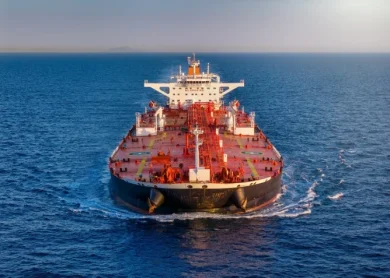
The "phantom fleet" of Russia is a central economic and strategic tool for the Kremlin: a network of hundreds (probably over a thousand) of old, opaque, and underinsured tankers that transport the majority of Russia's maritime exports of crude oil and petroleum products, circumventing G7 sanctions and the price cap. While it provides Moscow with tens of billions of dollars annually to finance the war in Ukraine, the fleet transfers major environmental, safety, and security risks to coastal states – to which the West responds with targeted sanctions, port controls, insurance checks, pressure on flag registries, and initiatives for "shadow-free zones" in seas such as the Baltic Sea.
How the phantom fleet emerged
After the introduction of the $60/barrel price cap for Russian crude oil by the G7 and the EU in December 2022, Russia accelerated the acquisition of old tankers, especially from Western Europe, to no longer depend on Western carriers and insurers. A Brookings analysis shows that nearly 60% of the 75 tankers from the "shadow fleet" sanctioned by the U.S. at the beginning of 2025 came from owners in Western Europe, with Greek shipowners being the main source both in terms of the number of ships and tonnage.
Estimates of the fleet's size vary, but we are talking about several hundred to over a thousand ships: European and maritime security sources place the entire "dark + gray fleet" between approximately 600 and 1,400 ships, depending on criteria (age, evasive behaviors, trade links with Russia). The KSE Institute and other analysis centers show that Russia has spent about $10 billion to purchase these ships after 2022, with the cumulative capacity of a sanctioned sub-list of 75 tankers reaching 64 million barrels alone.
These ships today transport approximately 3.7 million barrels per day – about 65% of Russia's maritime oil exports – generating between $87 and $100 billion annually, amounts comparable to the total military and economic aid provided to Ukraine. In parallel, the model is also extended to LNG, to compensate for Russia's loss of the European market.
What is a "shadow fleet" and how does it operate
Maritime analysts distinguish between the "dark fleet" – the opaque and clearly evasive core – and the "gray fleet", ships with a high-risk profile, but not necessarily sanctioned or illegally involved, yet essential in the ecosystem that supports Russian exports.
The main characteristics of these ships are:
1 Age and technical condition
The average age of shadow fleet tankers is around 18 years, compared to about 10 years for the regular commercial fleet; over 70-75% exceed the 15-year threshold, when the frequency of breakdowns increases sharply.
Many are considered "outdated", with precarious maintenance and poorly qualified crews, as noted by assessments from Lloyd's List and Nordic authorities.
2 Ownership structures and flag
Ownership is disguised through chains of shell companies in jurisdictions such as Dubai, Seychelles, or other offshore centers; ships frequently change flags ("flag hopping") between permissive registries, including from small states that have suddenly become "paper hosts" for dozens of tankers.
This rapid migration between registries and identities makes tracing responsibility difficult in case of an incident or sanction.
3 Evasion tactics
Stopping the automatic identification system (AIS) in sensitive areas ("dark activity"), manipulating GNSS to simulate false locations, and reusing the identity of decommissioned ships ("zombie vessels").
Ship-to-ship (STS) transfers in international waters, away from the oversight of port authorities, to mix Russian crude with other origins and lose track of the cargo.
Use of forged documents, manipulated IMO/MMSI numbers, and fictitious or obscure insurances.
4 Insurance and liability
Over 60-70% of ships do not have clear Protection & Indemnity (P&I) coverage from major clubs; some use false policies or the issuer no longer exists.
The result: the costs of any major accident – estimated between about $600 and nearly $4,000 per barrel spilled – fall on the coastal states or local operators.
Routes and risk zones
About three-quarters of Russian maritime oil exports pass through the Baltic Sea and the Black Sea, meaning that hundreds of high-risk ships traverse narrow, shallow, and crowded seas daily.
The Baltic Sea, the North Sea, and increasingly, Arctic routes and the Norwegian coast are considered hot spots, with high density of underwater infrastructure (cables, pipelines) and fragile ecosystems.
Strategic value for the Kremlin
For Moscow, the phantom fleet is more than just a commercial improvisation: it has become an instrument of economic warfare, hybrid pressure, and "irregular warfare" against the West.
Financing the war
Revenues from oil transported by the phantom fleet – up to $100 billion a year – offset the impact of the price cap and embargoes, allowing Russia to maintain high military spending.
China and India have become the main buyers, taking advantage of discounts below market level and operating outside the G7 price cap regime.
Asymmetric warfare tool and strategic pressure
The fleet transfers the risk of pollution, accidents, and damage to underwater infrastructure to EU and NATO states, while Russia maintains export flows and revenues.
Incidents such as the tanker that dragged an anchor over cables between Finland and Estonia or the series of leaks and "near misses" from 2022-2024 show how ships can become, through negligence or intent, vectors of sabotage and intimidation.
The escalation in May 2025, when Estonia attempted to inspect an unregistered tanker in the Gulf of Finland, and a Russian Su-35 aircraft violated airspace to protect it, suggests that the Kremlin treats the fleet as a strategic asset deserving military cover.
Erosion of maritime order and the sanctions regime
Normalization of evasion – through reflagging, shell companies, and AIS manipulation – undermines the credibility of the sanctions regime and maritime law, showing other sanctioned states (Iran, Venezuela, North Korea) that there is a functional network.
In the logic of modern warfare, Russia uses the fleet to circumvent economic blockade without direct naval confrontation, transforming trade into an irregular battlefield.
Political leverage over the West
The fact that many ships originally come from European fleets and pass daily through key waters and straits (Danish Straits, English Channel, northern bays) gives the EU a potential lever – if it decides to coordinate the enforcement of port-state control and maritime safety regime.
At the same time, the risk of a major accident or energy crisis remains an implicit political pressure factor in negotiations regarding Ukraine and sanctions.
How the West tries to "hunt the ghosts"
The Western response unfolds in multiple layers – sanctions, maritime law, port control, monitoring technology, and pressure on financial and insurance infrastructure.
Sanctions and blacklists
The U.S., the UK, and the EU have gradually sanctioned hundreds of ships and entities linked to the phantom fleet, targeting both shipowners and intermediaries and trading companies.
By mid-2025: the EU had already listed over 300 ships, with new sanction packages targeting approximately 100 additional ships involved in the transport of Russian oil; the UK announced sanctions against up to 100 tankers considered "the core of Putin's fleet"; the U.S. introduced successive rounds of sanctions against operators and companies that violate the price cap or support Russia's trading infrastructure.
These measures have increased operational costs, but have not yet succeeded in stopping the phenomenon, as ships can be quickly reflagged, resold, and reintroduced into the chain through other jurisdictions.
Maritime law, safety, and environment: from UNCLOS to MARPOL
Experts call for a much more aggressive use of existing legal instruments:
UNCLOS: Article 110 allows the right to visit ships suspected of lacking a flag, fraudulent use of a flag, or illicit activities (e.g. "unauthorized broadcasting"), which could be extended to AIS manipulations and "stateless" ships through flag-hopping.
MARPOL and SOLAS: allow inspections and detention of unsafe or polluting ships; European experts propose that the EU and Nordic states treat the phantom fleet as an acute ecological risk and use these conventions to stop ships in key straits such as the Danish Straits or the Gulf of Finland.
The KSE Institute and CSIS propose the creation of "shadow-free zones" – maritime areas where a group of states (e.g., Nordic and Baltic coalitions) imposes strict insurance checks ("Blue Card"), identity, and compliance, refusing the transit of ships that do not prove valid P&I and clear ownership.
Port control, insurance, and services
Another axis is strangling access to essential maritime services:
Insurance checks in straits and ports
A group of 12 Western states (the UK, Germany, Nordic and Baltic states, etc.) has agreed to "disrupt and deter" the fleet, intensifying checks on insurance documents in the English Channel, Danish Straits, Gulf of Finland, and other choke points.
The "Nordic-Baltic 8" model provides for systematic checks of P&I and the possibility of refusing entry or detaining ships without clear coverage; experts recommend extending this model to all critical straits.
Refusal of port services
The EU and member states can refuse refueling, repairs, and other port services to listed or suspected ships that are part of the phantom fleet – a measure already applied to hundreds of designated ships.
Pressure on permissive registries and intermediaries
European analyses propose using agreements between registries ("Registry Information Sharing Compact") to quickly prevent the reflagging of high-risk ships and to sanction registries that host large proportions of "dark/gray" ships.
It is also recommended to sanction management companies, recruitment agencies, and corporate service firms that facilitate opaque structures and flag changes.
Technological surveillance and open intelligence
The phantom fleet relies on exploiting "gaps" in visibility, so the West enhances its multi-sensor monitoring capability:
"Maritime AI" platforms that combine AIS, SAR, optical images, RF emissions, route histories, and corporate registries to detect suspicious patterns – from recurrent AIS stops in sanctioned corridors to complex STS networks.
Data integration at the European level – the idea of a European Maritime Security Center that merges information from EMSA, SATCEN, NATO Shipping Centre, coast guards, and naval missions, is seen as essential to track the global network of ships with fluid identities.
From legislation to discreet operations
At the upper limit of escalation, tools are emerging that approach open conflict:
Lawfare and arrests – cases in which crews or ships are detained in ports for violating sanctions or for illegal transport of goods (e.g., transporting grain from occupied Crimea).
Sabotage and remote attacks – reports of mysterious explosions aboard Russian ships off the coast of West Africa or maritime drone strikes by Ukraine against Russian tankers in the Black Sea and Turkish straits suggest that the phantom fleet is also becoming a direct military target.
Strikes on infrastructure – drone attacks on Russian ports and oil facilities in the Black Sea and the Baltic Sea aim to strangle the flows that the fleet transports at the source.
These options, however, are sensitive in terms of escalation and are currently used in a limited manner and mainly by Ukraine, not by G7 or EU states.
Human and ecological risks: the invisible cost of the fleet
Less visible in the strategic debate is the price paid by sailors and the ecosystems traversed.
Abandonment of ships and crews
Data from trade unions show an explosion in the number of abandoned commercial ships: from 20 in 2016 to 410 in 2025, with over 6,200 sailors affected – an increase explained, in part, by the proliferation of "shadow" fleets and convenience flags.
Reported cases of sailors stranded for months on tankers loaded with Russian crude, without salaries and adequate supplies, reflect how opacity of ownership and lack of insurance allow owners to "disappear" when the business becomes unprofitable or politically risky.
Major ecological risks
Repeated spills, anchoring incidents, and "close calls" with old and poorly maintained ships raise the likelihood of a large-scale disaster in the Baltic or Black Sea.
The direct cleanup costs, estimated at hundreds of millions or over a billion dollars for a major incident, would be extremely difficult to recover legally, in the absence of a responsible owner and insurer.
CONCLUSION: In this context, the phantom fleet is not just a subject of sanctions or "oil geopolitics", but a systemic problem of maritime governance and human security, with lasting implications for the international order after Ukraine.
Analysis conducted with the support of the NewsVibe platform and Perplexity
Latest News
21:01
20:56
20:31
20:25
20:22
See more news
NEWS ON THE SAME TOPICS
.webp)