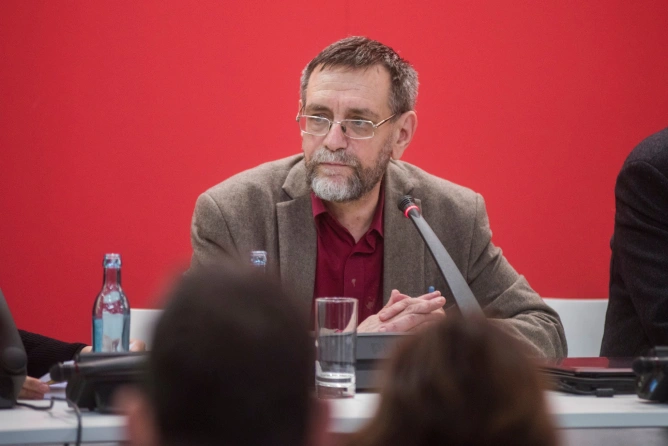
ANALYSIS. The first peace negotiations Ukraine-Russia-USA. What can we expect from the trilateral meeting in Abu Dhabi.


Always see our news on Google
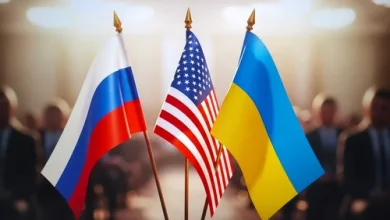
The delegations of Ukraine, Russia, and the USA begin today the first peace negotiations in a trilateral format. This is a diplomatic meeting of crucial importance in Abu Dhabi, United Arab Emirates, as the negotiations open, for the first time in nearly four years of war, a formal framework in which all three key parties sit at the same table, with a clear focus on security and the issue of occupied territories. Expectations are moderate: there are real signals of progress, but the fault line remains the status of the territories controlled by Russia and Ukraine's security architecture. Thus, these discussions generate both hopes and a considerable dose of skepticism, given the complexity of the situation and the deep divergences between the parties.
Negotiations announced by Zelensky after meetings on two fronts
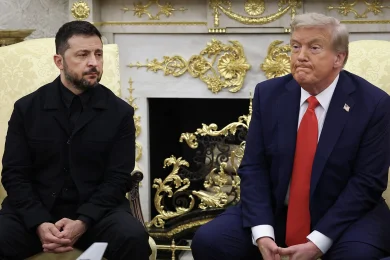
Today's negotiations in Abu Dhabi were announced by Ukrainian President Volodymyr Zelensky, who stated that a technical meeting will take place between the delegations of Ukraine, the USA, and Russia (ProTV News, Adevarul, Ziarul Financiar). The context of the organization is related to the meetings that took place on one side between American President Donald Trump and the Ukrainian leader in Davos, and the discussions held at the Kremlin between Russian President Vladimir Putin, US special envoy Steve Witkoff, and Jared Kushner (Reuters, Newsweek, Axios). The American initiative seems to have opened a window of opportunity, albeit fragile, for the resumption of dialogue. The United Arab Emirates, a country with good relations both with the USA and with Russia, offers a neutral ground for these discussions.
The situation on the front
On the front, the situation remains one of attrition, with intense fighting and limited territorial gains by both parties. Neither party has managed to achieve a decisive victory, and the conflict has entered a phase of strategic stalemate. This military stagnation, combined with increasing human and economic costs, could be a factor pushing the parties to the negotiating table, even if their positions remain rigid. Zelensky's statements in Davos, where he accused Europe of "Groundhog Day" regarding the lack of action, underline the internal and external pressure for finding a solution (Independent).
Overall, Russia maintains the strategic initiative, but without a decisive advance: massive bombings of Ukrainian energy infrastructure have left entire areas without power and have struck cities like Kyiv and Odesa again, with civilian casualties. Western military assessments show that Russia is experiencing consistent losses but still has superior human and industrial reserves compared to Ukraine, while Kyiv relies on Western supplies of ammunition and air defense systems.
When were the last direct peace negotiations for the war in Ukraine?
The last direct negotiations between Ukraine and Russia took place in the early months of the conflict, in the spring of 2022, in Turkey and Belarus. They ended without a concrete agreement, as the major divergences regarding the status of the occupied territories and security guarantees were insurmountable at that time. Since then, direct high-level dialogue has been almost non-existent, making today's trilateral meeting particularly significant.
Russia's conditions
Russia's position has remained firm and intransigent in recent days. The Kremlin has warned that there will be no "lasting peace" in Ukraine without resolving the "territorial issue" (Antena 3, EvZ, Profit.ro, Economica.net). This means that Russia insists on the recognition of the annexation of Crimea and the occupied territories in eastern and southern Ukraine. This condition is, in essence, unacceptable for Ukraine and contravenes international law. Vladimir Putin conveyed to American envoys that a "long-term agreement" is impossible without territorial concessions from Ukraine (EvZ).
What could Russia offer?
Russia signals that it could offer:
the cessation of the offensive and acceptance of an internationally supervised ceasefire regime; a security agreement in which it formally commits to no longer attack Ukraine, with clauses of "automatic punishment" (reintroduction of sanctions) if hostilities resume – clauses that appear in the commented plan variants by experts; opening economic and energy pathways, access to markets, and cooperation in reconstruction, to the extent that sanctions are gradually relaxed by the USA and the EU.
Ukraine's conditions for peace
President Zelensky emphasized that "the Russians must be prepared for compromises" (The Guardian). However, Ukraine's red line has been consistent: territorial integrity and sovereignty. Zelensky stated that "it's all about land" (Standard.co.uk), indicating that Ukraine will not give up its occupied territories. Ukraine also demands solid security guarantees and a complete withdrawal of Russian forces. In his speech in Davos, Zelensky harshly criticized the "fragmentation" of Europe and the "lack of will" in the face of Russian aggression, suggesting that Ukraine needs stronger and more united support to sustain its position at the negotiating table (Daily Mail, Politico.eu).
What security guarantees would Kyiv seek?
Ukraine is seeking a package of guarantees that would make it impossible to repeat the 2014/2022 scenario – that is, promises on paper without effective defense mechanisms. According to Euronews and other European sources, Kyiv's vision of guarantees includes:
a USA-Ukraine security agreement for at least 15 years, with an option for extension, a document that Zelensky says he has "finalized" at the text level with Washington, to be signed after the war ends; a scheme of "coalition of the willing," in which some European states (the UK, France) would install "military hubs" in Ukraine, with troop presence and rapid response capabilities, while Ukrainian forces remain the first line of defense; explicit clauses that a new Russian aggression would automatically trigger a coordinated military response and the reimposition of all global sanctions, including the cancellation of any territorial arrangements gained by Moscow based on the agreement.
US proposals regarding a potential Agreement Although the complete details of the American proposals are not public, statements by Steve Witkoff suggest that the Trump administration has developed a "peace plan" (Axios) and has made "significant progress" in preliminary discussions (Al Jazeera, Reuters). The fact that Witkoff stated that negotiations are "down to one issue" (Al Jazeera) indicates an attempt to simplify and isolate the most difficult point of the negotiations.
It is likely that US proposals will target a ceasefire, a framework for negotiations regarding the status of the territories, and potential security guarantees for Ukraine. President Trump stated that a peace agreement is "reasonably close" (Independent). Trump also stated that Putin will "make concessions" (Independent), which could indicate a certain confidence in his ability to influence the Russian position. However, given the Kremlin's intransigence regarding territories, it is difficult to imagine what kind of "concessions" might be accepted by Russia.
In this context, the USA comes with a "peace plan" that international media reports has already been rejected in a previous form by Moscow and is now being "amended." According to leaks cited by American and British publications, the plan would include:
a verified international ceasefire; a frozen contact line, with still open status of some regions; a phased timetable for lifting some sanctions, correlated with compliance with security clauses and the agreement; security guarantees for Ukraine, without formal NATO membership, but with enhanced bilateral commitments with the USA.
What to expect from these negotiations Officially, the first day of discussions in Abu Dhabi is presented as a "working group meeting on security issues," not a peace conference with claims of a final agreement. Both Kyiv and Moscow declare that there can be no comprehensive agreement as long as the territorial dispute is unresolved, which suggests that, at best, a "framework" and a roadmap may take shape.
Diplomats and American envoy Witkoff speak of "one remaining issue" to be resolved, a formulation that masks the complexity of the territorial issue but indicates that the rest of the elements – ceasefire, some security guarantees, monitoring mechanisms – have already been sketched in previous drafts. A realistic expectation for today is:
clarification of territorial claims lists and "red lines"; testing some "freezing the front" formulas with ambiguous status of some regions; agreement on continuing negotiations in a regular trilateral format.
Foreign policy analysts observe that Washington is trying to balance between the pressure to achieve "a result" and the risk of being perceived as forcing Kyiv to accept a painful compromise that effectively freezes Russia's territorial gains. Hence the very optimistic rhetoric of Trump and Witkoff ("we are closer to an agreement than in recent years"), contrasting with the much more cautious tone of Kyiv and the tough messages from the Kremlin. Eastern European security specialists emphasize that a primary success would be establishing a verifiable ceasefire mechanism, even if the border issue remains open, as it would reduce the risk of escalation and create space for more detailed negotiations. At the same time, there is strong skepticism among experts that a two-day meeting can deliver more than a very general framework agreement, given Moscow's "maximalism" regarding territorial issues and Kyiv's political resistance to any land concession.
In assessments by some specialists, on the other hand, there are warnings about a risk of failure with a radicalization effect. Therefore, the stakes of Friday are less about signing a "deal" and more about demonstrating that, after years of war, the three capitals are willing to seriously test the option of negotiation – even if, for now, "it all comes down to land," as Zelensky summarized the territorial issue.
Synthesis made with the help of a data monitoring flow provided by the media monitoring platform NewsVibe Romania. Analysis made with the help of Perplexity.
Latest News
23:01
22:57
22:53
22:50
22:43
See more news
NEWS ON THE SAME TOPICS




.webp)