ANALYSIS Pakistan–Afghanistan: between the rhetoric of 'open war' and the logic of a controlled escalation



Always see our news on Google
The bombing of Kabul and Kandahar by Pakistan marks the most serious military escalation between Islamabad and the Taliban regime since the takeover of power in Kabul in 2021, but the notion of "open war" remains, for now, more of a political and rhetorical tool than a technical description of a total interstate conflict.
What we know for sure and what remains disputed
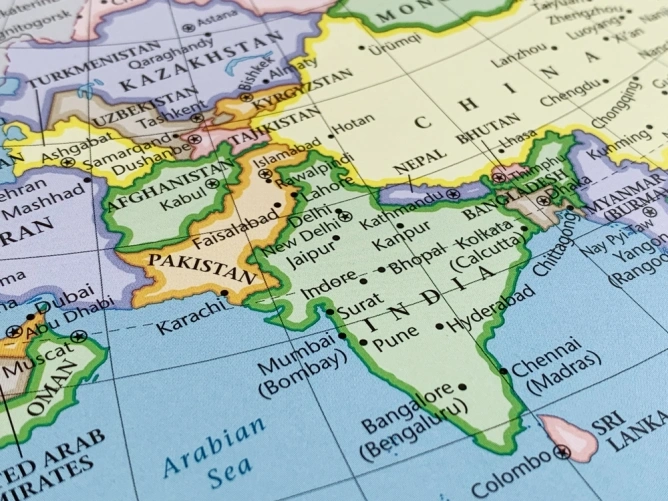
Confirmed facts indicate a clear succession of actions and responses. Pakistan struck militant camps on Afghan territory over the weekend, causing at least 18 deaths, and on the night from Thursday to Friday, there were Taliban attacks on Pakistani border positions, to which Islamabad responded with an air operation called "Ghazab Lil Haqq" ("Righteous Fury"). Pakistani planes bombed targets in Kabul, Paktia, and Kandahar, including Taliban military infrastructure, which represents a shift from the previous pattern when Islamabad claimed to only strike Tehrik-e-Taliban Pakistan (TTP) camps.
The statement by Pakistan's Defense Minister, Khawaja Asif, "Now it is open war between us and you" is well documented and reproduced almost identically by CNN and The Guardian, based on his post on X. In contrast, casualty figures are deeply contradictory: Islamabad claims to have killed 133 Taliban fighters, with over 200 injured, and admits to only two of its own soldiers killed and a few injured. Kabul speaks of 55 Pakistani soldiers killed, eight Taliban fighters dead, 11 injured, and civilians injured in an attack on a hideout in Nangarhar. These figures cannot be independently verified in isolated mountainous areas, and the bombastic differences suggest a strong propaganda element in both narratives.
There are also major divergences regarding the use of drones by the Taliban. Kabul claims to have successfully carried out drone strikes on military targets in Pakistan, while Islamabad says it intercepted devices launched by the TTP on Pakistani territory and that no damage was recorded. Both CNN and The Guardian liveblog explicitly note that these claims cannot be confirmed from independent sources, which necessitates caution in assessing the Taliban's actual air capabilities.
An ambiguous historical relationship: between sponsor and rival
The Pakistan-Afghanistan relationship is marked by an ambivalence structured by the contested border (the Durand Line), the Cold War, and Western interventions. Islamabad was in the 1980s-90s the main channel of support for the mujahideen and later for the first Taliban regime, providing logistical refuge, recruitment space, and funding networks. After 2001, when the Taliban were ousted from power, Pakistan remained an essential sanctuary for the Afghan insurgency leadership, while officially presenting itself as a U.S. ally in the "war on terror."
Paradoxically, the Taliban's victory in 2021, initially perceived in Islamabad as a confirmation of "strategic autonomy" and Pakistani influence, produced, over time, a backlash effect. Data cited by the Pakistani army show a doubling of casualties from attacks on Pakistani territory after 2021, reaching over 1,200 deaths (civilians and military) by 2025, with Islamabad directly blaming the TTP for this wave of violence and implicitly Kabul for harboring militants. Kabul rejects these accusations, but both the shared history of the two groups and the geographical logic of the borders make denials hard to believe for Pakistani decision-makers.
Beyond the current episode, the two countries have recently found themselves in military deadlock: border confrontations last October, resulting in dozens of deaths, were followed by a ceasefire mediated by Qatar and Turkey, but without durable solutions regarding the Durand Line and the border regime. This cyclicality of crises – violence, external mediation, relative calm, then a new escalation – suggests more of an unresolved structural conflict than a punctual crisis generated by an isolated incident.
The Taliban and TTP: ideological convergences, strategic divergences
It is essential to distinguish between the Afghan Taliban, who de facto form the government in Kabul, and Tehreek-e-Taliban Pakistan (TTP), a coalition of jihadist groups seeking to overthrow the constitutional order in Pakistan. The TTP coalesced in 2007 precisely as a result of the radicalization of border groups and the refuge of Afghan Taliban on Pakistani territory after 2001.
Currently, Islamabad insists that the Taliban regime provides refuge and freedom of action to the TTP, while Kabul claims it does not support their fight against Pakistan. Geopolitically, the Taliban's position is difficult: their internal legitimacy is based on an anti-Western and anti-"puppet" discourse in the region, which makes a frontal conflict with the TTP politically costly; on the other hand, tolerating their activities risks attracting repeated reprisals from a superior conventional army – as is happening now.
Pakistan's explicit attack on Taliban defense infrastructure, not just on alleged TTP camps, is interpreted by some analysts cited in the international press as a message of coercion: Kabul must choose between the solidarity of jihadists and the survival interest of the regime. Beyond the rhetoric about "all the terrorists of the world gathering in Afghanistan," the official Pakistani tone indicates a threshold surpassed in the perception of the internal threat posed by the TTP.
The military significance of hitting Kabul and Kandahar
From a military perspective, the bombing of Kabul and Kandahar has more of a symbolic and coercive value than a decisively tactical one. Kabul is the political and administrative center of the Taliban regime, while Kandahar is considered the "spiritual cradle" of the movement, the place where the supreme leader Hibatullah Akhundzada is believed to have his power base. Hitting these cities sends a direct message to the Taliban leadership that geographical immunity and the capital are no longer red lines for Islamabad.
However, there are no indications that Pakistan has sought the systematic destruction of urban infrastructure or a "shock and awe" air campaign. The targets described are presented as military objectives, ammunition depots, defense facilities, and so far, there are no reports of massive civilian casualties or widespread destruction of urban neighborhoods, which distinguishes these strikes from a total air war. Additionally, reports insist on the targeted nature of the "Ghazab Lil Haqq" operation, not on outlining a large-scale ground offensive plan.
The Taliban's ability to respond symmetrically is limited: they do not have comparable functional aviation, mainly using guerrilla tactics, adapted commercial drones, and suicide attacks. An analyst cited by CNN calls the drones "poor man's planes" and anticipates that if the Taliban seek to strike deep into Pakistani territory, they will do so in vulnerable urban areas, amplifying the risk of a cycle of attacks and reprisals that is hard to control. This scenario, while plausible, remains at this moment an analytical warning, not a description of already confirmed operations.
"Open war" or controlled escalation?
Legally and strategically, the use of the phrase "open war" is, for now, more rhetorical. There is no announcement of general mobilization in Pakistan, nor indications that the army is preparing a large-scale ground invasion or a campaign to annihilate the Taliban regime, which would characterize a classic interstate war. In the past, episodes of similar intensity have been followed by de-escalation, mediation, and a return to a "chronic" level of tension.
At the same time, bombing the capital of a neighboring state and the public assumption of "open war" by a defense minister represents a major political move, raising the stakes of the conflict. It may create internal pressures in Islamabad to maintain a hard line and, symmetrically, it may strengthen the positions of the most radical Taliban commanders, who oppose any cooperation with Pakistan against the TTP. The difference between the rhetoric of "war" and the operational reality, so far limited to intense but localized exchanges of fire, remains an area of tension that can either be politically managed or break in favor of escalation.
The internal political dimension in Pakistan and Afghanistan
In Pakistan, the army continues to be the central actor of political life, and the dramatic increase in TTP attacks in recent years has eroded public perception of its ability to provide internal security. Strikes on Afghanistan and the firm discourse about "exporting terrorism" and "harboring all the terrorists of the world" by the Taliban can also be read as an attempt by the military establishment to regain initiative and shift pressure from the internal front to a clearly identified external adversary.
The crisis overlaps with severe economic difficulties and a fragmented political scene in Islamabad, where successive civilian governments have had a reduced margin of maneuver in relation to the army. In this context, a "limited but decisive" military operation against the Taliban can also serve as an instrument of internal cohesion, even if the risks of reprisals and subsequent destabilization are evident.
In Afghanistan, the Taliban manage a collapsed economy, lack of international recognition, and severe sanctions, while also consolidating repressive control over society. Publicly admitting that Pakistan can strike unhindered at the symbolic capitals of the movement without a response would severely affect the regime's prestige; therefore, announcements regarding drone counterattacks and the capture of Pakistani soldiers also have an internal legitimizing function. The lack of independent verifications and the striking disproportionality of the figures advanced by Kabul suggest a strong propaganda filter in official communication.
The interests of regional and international actors
Initial reactions from regional and international actors indicate a pronounced concern for the stability of an already fragile area, but also nuanced positions depending on each one's interests. China, Pakistan's strategic partner through the China-Pakistan Economic Corridor (CPEC), declares itself "deeply concerned" and calls for calm, but admits that it mediates "through its own channels," a sign that it prefers a sufficiently stable Afghanistan not to export chaos into the region, but also a Pakistan that is not absorbed by an asymmetric conflict at the border.
Russia, the only state that has officially recognized the Taliban government, calls for a return to the negotiating table and avoidance of "dangerous confrontation," interested in maintaining a regime in Kabul that blocks the expansion of jihadist organizations into Central Asia, but without provoking a war that would complicate its own strategic calculations. Gulf states, especially Saudi Arabia, appear at this moment in the role of potential mediators, benefiting from historical ties with Pakistan and networks of influence in the Sunni world.
India closely monitors the evolution of the crisis, even if it does not directly engage in equally visible statements. A Pakistan caught in a medium-intensity conflict on the western border may mean lower pressure on the Kashmir front, but also the risk that instability fuels hard-to-control jihadist flows. For the U.S. and Western states, the immediate priority is to limit the risk that the Afghanistan-Pakistan area becomes a training and projection space for terrorist organizations with a global agenda, at a time when strategic attention is already fragmented between Eastern Europe and the Middle East.
The geopolitical and economic impact and the line between rhetoric and operations
Geopolitically, each new escalation in this "arc of instability" reinforces the image of an Afghan-Pakistani border that is impossible to secure, which discourages investments, amplifies insurance costs, and impacts regional infrastructure projects. Transport corridors linking Central Asia to the Indian Ocean pass through areas directly affected by conflict, and the perception of risk can be as important as the actual risk in the eyes of economic actors.
Domestically, both Pakistan and Afghanistan risk an intensification of social pressures and migration. In Afghanistan, each new episode of bombing major cities erodes the already fragile war economy and amplifies exodus; in Pakistan, the continuation of TTP attacks against the backdrop of an "open war" with Kabul may lead to disruptions in transport, investments, and consumption, in an already vulnerable economy.
The fine line between rhetorical escalation and operational escalation will play out in the coming weeks at several key points: the intensity and frequency of Pakistani airstrikes, the possibility of declared ground incursions, the Taliban's ability to strike urban targets within Pakistan, and the degree of concrete involvement of regional mediators. So far, we have one major air operation, maximalist statements, and external pressures for dialogue, not a large-scale campaign suggesting total war.
Conclusion: strategic rupture or limited show of force?
Viewed as a whole, the current crisis indicates a serious and potentially irreversible deterioration of the Pakistan-Taliban relationship, but it does not yet equate to a total strategic rupture in the sense of a long-term interstate conflict. Islamabad has crossed a symbolic threshold by striking the capital and the "heart" of the Taliban and publicly declaring "open war," yet the mode of operation remains, for now, that of a calibrated show of force, aimed at forcing a change in Kabul's behavior towards the TTP, rather than overthrowing the regime.
At the same time, the Taliban's dependence on Pakistan, economically, logistically, and even familially, makes a complete divorce unlikely in the short term, even though the distrust between the two parties seems deeply eroded. The fact that previous escalations have been followed by external mediations and fragile ceasefires suggests a repetitive scenario: intense violence, maximalist rhetoric, diplomatic intervention, temporary freezing of the conflict, without resolving the structural causes – TTP, the Durand Line, the status of the Taliban regime.
To the extent that the coming days do not bring a compositional expansion of operations, massive mobilization, troop entry, successive air campaigns against urban centers, the current episode can be interpreted as a limited show of force, but with the potential to establish a new level of hostility between Islamabad and Kabul in the long term. A strategic rupture is not inevitable, but the window for a de-escalation solution through concerted pressure from China, Russia, Gulf states, and Western actors is rapidly narrowing, as the rhetoric of "open war" creates its own political constraints on both sides of the border.
Synthesis made with the help of a data monitoring flow provided by the media monitoring platform NewsVibe Romania. The analysis presented has been enhanced with the help of Machine Learning and Artificial Intelligence tools.
Latest News
15:47
15:41
15:39
15:32
15:25
See more news
NEWS ON THE SAME TOPICS