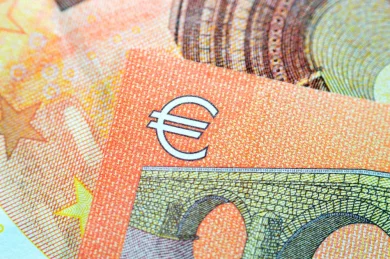
Analysis. How will Bulgaria be affected by the transition to the euro




Always see our news on Google
Bulgaria joined the eurozone on January 1, 2026, and the estimated effects on the economy are mainly positive: lower financing costs, more investments, and deeper economic integration, with a limited and temporary impact on inflation if there are good price controls.
For 2026, official forecasts and independent analyses indicate a period of technical adjustment (currency change, dual display of prices) and economic benefits that materialize gradually, not an immediate "shock".
Context: the calendar and technical steps
The European Commission concluded in the 2025 Convergence Report that Bulgaria meets the criteria to adopt the euro on January 1, 2026, and the EU Council adopted the corresponding decisions in July 2025.
The ECB specifies that adopting the euro means full integration into the Eurosystem, and Bulgaria participates in monetary policy decisions for the entire eurozone.
In practice, there will be a period of dual price display (BGN and EUR) and a one-month period of dual circulation in January 2026, after which only the euro remains the legal means of payment.
Expected economic effects in general
The European Commission and the ECB emphasize benefits such as: the disappearance of exchange rate risk, lower transaction costs, increased trade with eurozone partners, and greater attractiveness for foreign investments.
Think-tank analyses note that Bulgaria will have similar benefits to other Central and Eastern European states that joined the eurozone: increased lending under more stable conditions, cheaper access to capital, and gradual convergence of real incomes.
Inflation and prices: what studies and Bulgarian authorities show
The Bulgarian Fiscal Council analyzed the experience of Estonia, Latvia, Lithuania, Slovakia, and Croatia and concluded that, in these cases, the effect of adopting the euro on inflation was weak and transitory; the main factors for price increases were global shocks (energy, supply chains).
In these states, price increases associated with the conversion were limited and disappeared after a few months, especially when there were strict controls and transparency of prices.
The Bulgarian authorities explicitly use these conclusions to convey that, in 2026, no explosion of prices caused by the euro is expected, but rather occasional adjustments in some services, with a limited impact on the overall index.
Other expected effects for Bulgaria in 2026
Official speeches (e.g., Kristalina Georgieva – IMF and Christine Lagarde – ECB) link entry into the eurozone to: increased macroeconomic credibility, reduced risk premiums on loans, supporting economic growth and job creation in the medium term.
A study from the Martens Centre in 2026 emphasizes that the effects are not only economic but also political and social: Bulgaria gains a larger role in European decisions and a stronger anchoring against internal macroeconomic deviations.
Forecasts for 2026
European authorities: The Commission and the ECB expect a gradual positive impact, with price stability ensured by the eurozone's monetary policy framework, as long as Bulgaria maintains prudent fiscal policies.
The Bulgarian Fiscal Council: the effect on inflation in 2026 should be "insignificant" and temporary, if price abuses are prevented and clear communication with the population is maintained.
Independent analyses (like Martens Centre, Fintua): for 2026, the focus is on technical adjustment (currency change, contract adaptation, IT, payment systems), and growth and investment gains are expected to become clearer from 2027 onwards.
Analysis conducted with the support of NewsVibe and Perplexity Comet
Latest News
14:06
14:02
13:55
13:54
13:49
See more news
NEWS ON THE SAME TOPICS