Victor Negrescu presents the budget increases for the Republic of Moldova, cybersecurity, and the eastern flank ahead of the vote on the EU budget for 2027



Always see our news on Google
The conciliation text provides additional funding for Moldova, cybersecurity, and military mobility. Parliament’s final vote is scheduled for 25 November.
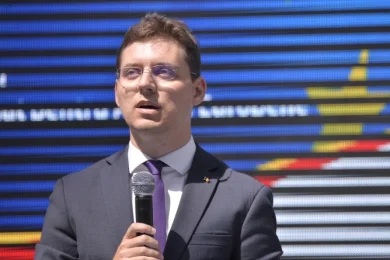
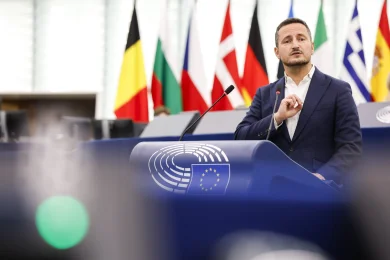
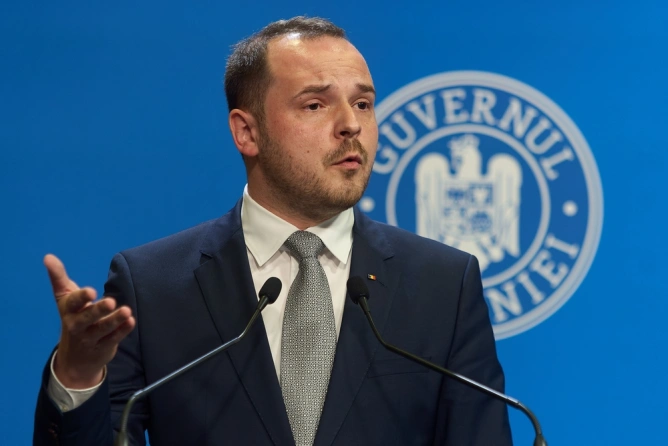
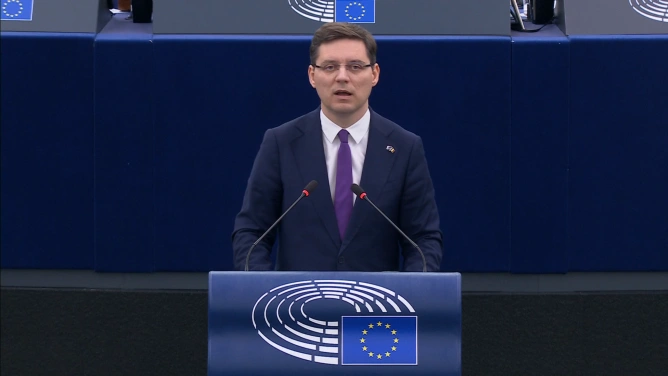
Vice-President of the European Parliament Victor Negrescu, a Romanian MEP from the Progressive Alliance of Socialists and Democrats (S&D) Group, presented the results of the negotiations on the European Union budget for 2027 in plenary, emphasizing security in the Black Sea, funding for the Republic of Moldova, and the strengthening of European cybersecurity capabilities. The conciliation documents confirm additional budget allocations for several of these priorities, including the European Cybersecurity Competence Centre in Bucharest. Negrescu also called for accelerated investment and avoiding a European austerity policy ahead of the final vote on the budget, scheduled for 25 November.
Key points
1.The Reform and Growth Facility for the Republic of Moldova receives, in the conciliation text, commitment appropriations of 82.5 million euros, one million more than in the Commission proposal. Payment appropriations remain at 77.9 million euros.
2.The budget line for the European Cybersecurity Competence Centre in Bucharest increases from 91.79 million to 92.79 million euros in commitments. Payment appropriations remain at 112.8 million euros.
3.Military mobility receives an additional ten million euros in commitments and 2.5 million euros in payments, while funding for the eastern neighbourhood receives an additional 13 million euros in commitments.
4.Negrescu also mentioned the maritime security centre in the Black Sea. The Commission had already announced support of up to 50 million euros for the joint Romanian-Bulgarian project, with the objective of making it operational in 2027; the amount does not represent new funding announced in this debate.
5.The Council approved the common text on 23 November. The budget, which provides for approximately 199.7 billion euros in commitments and 211.5 billion in payments, still requires approval by the European Parliament.
Negrescu spoke in the debate on the final annual budget under the 2021–2027 multiannual financial framework. The parliamentary report confirms his participation in the delegation that negotiated the agreement of 11 November. The rapporteurs for the 2027 budget are Nils Ušakovs, for the Commission section, and Michalis Hadjipantela, for the other institutions.
For the European Cybersecurity Competence Centre in Bucharest, the agreement provides for 92.79 million euros in commitments, compared with 91.79 million in the Commission proposal. Payments remain at 112.8 million euros. All comparisons use the Commission proposal as amended by the amending letter for the 2027 budget.
Commitments allow financial obligations to be entered into, without meaning that the entire amount is paid in the same year. The Centre contributes to the cybersecurity components of the Digital Europe and Horizon Europe programmes and to cooperation with national coordination centres. Its funding serves European objectives and is not reserved entirely for beneficiaries in Romania.
For the Reform and Growth Facility for the Republic of Moldova, the compromise sets commitments at 82.5 million euros, one million more than in the Commission proposal. Payments remain at 77.9 million euros. The Facility supports reforms and investments on the Republic of Moldova’s agenda; the budget increase does not automatically represent a larger tranche paid to Chișinău.
The eastern neighbourhood receives an additional 13 million euros in commitments: the total increases from approximately 253.24 million to 266.24 million euros. Payments remain at approximately 228.02 million euros.
The budget line finances activities in the partner countries of the eastern neighbourhood, including Armenia, Azerbaijan, Belarus, Georgia, the Republic of Moldova, and Ukraine, as well as regional cooperation projects. The budget documents include cooperation in the Black Sea region among the objectives that may benefit from support through this component of the Neighbourhood, Development and International Cooperation Instrument, Global Europe (NDICI – Global Europe). However, the additional 13 million euros is not reserved exclusively for the Republic of Moldova or projects in the Black Sea region.
Negrescu also mentioned the development of the maritime security centre in the Black Sea, a project for which he had previously supported parliamentary initiatives. At the beginning of November, European Commission President Ursula von der Leyen announced European support to accelerate the development of the joint Romanian-Bulgarian project. The Commission later specified that funding could reach 50 million euros and that the objective is for the centre to become operational in 2027. This amount concerns the joint project of Romania and Bulgaria, not two separate national allocations. Support of up to 50 million euros had been announced before the budget debate. It should not be confused with the separate increases entered in the conciliation text.
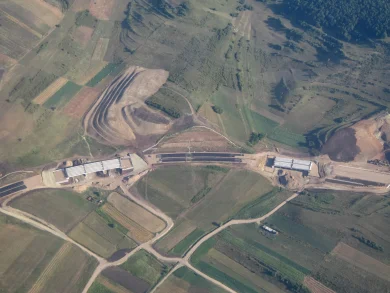
For military mobility, commitments increase from approximately 254.32 million to 264.32 million euros, while payments increase from 150 million to 152.5 million euros. The funds support the adaptation of transport infrastructure for civilian and military uses and connections in the trans-European transport network.
The funding is also relevant for the eastern flank, including Romania, but the increase is not reserved entirely for projects in the region. Individual projects are selected through work programmes and calls for proposals. The four lines presented increase together by 25 million euros in commitments and 2.5 million in payments compared with the Commission’s amended proposal, according to the calculation based on the conciliation table.
In his plenary intervention, Victor Negrescu also called for European investment to be coordinated with the national budgets that Member States are preparing for the following year. He advocated accelerating project implementation in the final year of the current multiannual financial framework, simplifying procedures for accessing European funds, and making reimbursements and payments on time. The MEP also supported granting Member States greater budgetary flexibility, arguing that the Union must respond to economic and security challenges without reducing its investment capacity. These requests represent political positions expressed in the parliamentary debate. They do not, by themselves, modify the European rules on economic governance, programme implementation deadlines, or the conditions for granting funding.
The agreement also includes additional funding for Horizon Europe, Erasmus+, civil protection, and transport and energy infrastructure. An analysis by the Parliament’s Research Service shows that parliamentary priorities receive increases of more than 300 million euros compared with the Commission proposal.
The Council approved the common text on 23 November. Parliament’s vote is also required for the definitive adoption of the budget.
The 2027 budget provides for commitment appropriations of 199,707.5 million euros and payment appropriations of 211,525.8 million euros. Parliament’s final vote is scheduled for 25 November. If the common text is approved and the procedure provided for in Article 314 of the Treaty on the Functioning of the European Union is completed, the budget will become applicable from 1 January 2027.
Latest News
13:34
13:19
13:19
13:19
13:13
See more news
NEWS ON THE SAME TOPICS