The European Parliament calls for up to 10% of the budgets of relevant EU instruments to be earmarked for eastern regions after 2027




Always see our news on Google
The resolution was adopted with 414 votes in favor, 79 against and 90 abstentions. MEPs are calling for additional resources, higher co-financing and the inclusion of regions bordering Moldova or having access to the Black Sea. The request does not automatically reserve money for Romania and does not change the current funding rules.
The European Parliament is calling for additional funding for regions on the Union’s eastern border in the 2028–2034 budget, including earmarked allocations of up to 10% of the budgets of relevant European instruments. The resolution adopted on 22 October with 414 votes in favor, 79 against and 90 abstentions also includes regions bordering the Republic of Moldova or having access to the Black Sea. The requests are directly relevant to Romania, but do not constitute allocations already approved for authorities, companies or projects.
In brief
1. Parliament adopted the resolution on eastern border regions with 414 votes in favor, 79 against and 90 abstentions.
2. MEPs are calling for allocations of up to 10% of the budgets of relevant EU instruments in 2028–2034. This does not mean 10% of the entire European budget or a sum guaranteed to Romania.
3. The requested resources should be additional, without reducing other cohesion priorities, and should primarily support education, skills and youth entrepreneurship.
4. The proposed definition concerns NUTS 2 regions on the borders with Russia, Belarus, Ukraine or Moldova, including regions with access to the Black Sea; it does not automatically grant funding to counties.
5. Parliament is calling for co-financing of up to 95%, the possibility of financing up to 100% of eligible costs for projects relevant to security, resilience or critical infrastructure, and pre-financing of 30%.
6. The targeted investments include transport, energy, border crossing points and public services. The €5.6 billion already reallocated in eastern regions belongs to the current budgetary period.
7. The resolution does not create a fund or funding rights. The requests must be incorporated into the budget and rules of future European programs.
MEPs want support to go beyond cohesion policy and include instruments such as the common agricultural policy, the European Competitiveness Fund and the Connecting Europe Facility. The share of up to 10% refers to the budgets of relevant instruments, not to the entire EU budget and not to an amount reserved for Romania. The requested allocations should be added to available national and regional resources, without reducing funds intended for other cohesion priorities or less-developed regions.
The resolution proposes a geographical definition at the level of NUTS 2 statistical regions. This includes regions with at least 5 kilometers of land border or 30 kilometers of maritime border with Russia or Belarus, as well as those with a land or maritime border with Ukraine or the Republic of Moldova or access to the Black Sea. For Romania, the clarification brings into discussion both the borders with Ukraine and Moldova and the Black Sea area. It does not establish a list of counties that automatically receive funding.
To ease beneficiaries’ financial contribution, Parliament is calling for European co-financing of up to 95% for projects in eastern regions and the possibility of covering up to 100% of eligible costs for projects relevant to security, resilience or critical infrastructure. MEPs are also calling for 30% pre-financing, simpler procedures and dedicated technical assistance. These conditions would be provided for in future instruments; they are not rights that applicants can already invoke.
Priority investments include road and rail links, ports, energy networks and the modernization of border crossing points with Ukraine and Moldova. Parliament is calling for infrastructure with civilian and military use to also improve everyday transport, access to services and local economic activity. The text also supports cross-border cooperation in healthcare, education, civil protection and digital connectivity.
The earmarked funding should primarily support education, skills and youth entrepreneurship, including in agriculture, food production, digital technologies, cybersecurity and civil preparedness. The aim is to preserve jobs and limit population outflow. The resolution warns that investments in security must be accompanied by public services and economic development so that border regions remain attractive to residents and companies.
Parliament distinguishes these requests for the period after 2027 from the reallocations already made in the current budget. The resolution mentions approximately €34.6 billion redirected toward new priorities in 25 Member States, of which around €5.6 billion is in eastern regions for military mobility, critical technologies and the defense industry. Separately, the threshold of at least 10% for reprogramming funds as part of the review of the current cohesion policy has a different role from the allocations of up to 10% requested for the future.
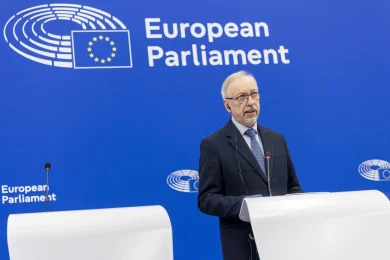
The report was prepared by Jacek Protas, a Polish MEP from the EPP, in the Committee on Regional Development. The plenary vote represents a new stage compared with the commission proposals previously presented by 2EU. As an own-initiative resolution, the document formulates political requests to the Commission and the Member States: it does not itself create a fund and does not amend the funding regulations. Implementation depends on agreement on the 2028–2034 EU budget and on the rules of the programs to be adopted.
Latest News
21:56
21:29
21:25
20:49
20:17
See more news
NEWS ON THE SAME TOPICS