Victor Negrescu calls for coordinated European action on energy and security in the Black Sea



Always see our news on Google
The message conveyed at the parliamentary Summit of the Three Seas Initiative links energy price control to regional security and positions the Black Sea as a strategic space for the competitiveness and resilience of the European Union.
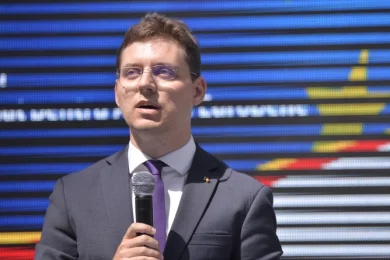
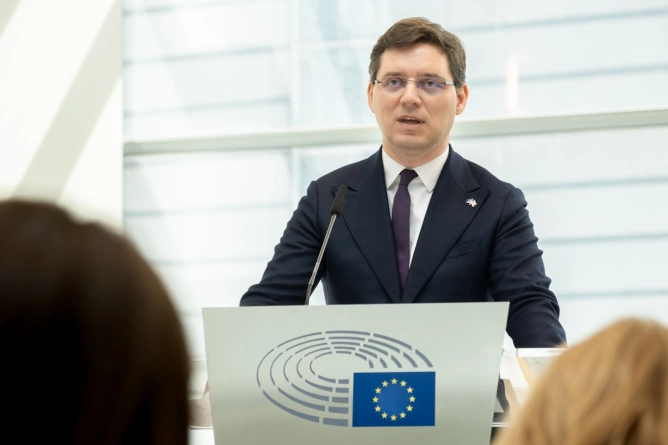
The European Commission and member states must act quickly and in a coordinated manner in the face of pressures on energy prices and new security risks, stated Vice President of the European Parliament Victor Negrescu at the parliamentary Summit of the Three Seas Initiative. His intervention linked two central themes, protecting citizens and the European economy from high energy and fuel costs, and the idea of creating a European maritime security hub in the Black Sea.
In short 1. Victor Negrescu called for a rapid and coordinated European response to current challenges.
2. The MEP advocated for keeping energy and fuel prices under control.
3. He reiterated the proposal for the creation of a European maritime security hub in the Black Sea.
4. His message links regional security to the protection of trade routes and the competitiveness of the European Union.
5. On the margins of the summit, Negrescu discussed with the Prime Minister of Croatia about cooperation within the framework of the Three Seas Initiative and investments in infrastructure.
At the parliamentary Summit of the Three Seas Initiative, Victor Negrescu presented the current European context as one that requires common and accelerated responses. His message was built around the idea that economic pressures and security vulnerabilities can no longer be treated separately, especially in a region at the intersection of trade routes, energy infrastructure, and new geopolitical risks.
In the economic component of his intervention, Negrescu emphasized the need to keep energy and fuel prices under control. He placed this issue within the logic of protecting citizens and the European economy, in a context marked by instability and rapidly rising costs. The message indicates a concern for the direct effects that energy volatility has on households, economic competitiveness, and the functioning of the European market.
At the same time, the Vice President of the European Parliament reiterated one of his strategic priorities, the creation of a European maritime security hub in the Black Sea. According to the position expressed at the summit, this initiative would play a role in strengthening regional security, protecting trade routes, and increasing Europe's capacity to respond to emerging risks. The formulation places the Black Sea not only in the realm of border security but also in that of the economic and logistical resilience of the European Union.
Negrescu also stated that discussions at the summit confirmed the growing importance of the region for the security and competitiveness of the European Union. This formulation indicates an expansion of the political role attributed to the Three Seas Initiative, beyond classical regional cooperation, towards a strategic positioning function for Central and Eastern Europe in the broader European architecture.
On the margins of the meeting, Victor Negrescu also had a bilateral meeting with the Prime Minister of Croatia. According to his statement, the discussion focused on strengthening cooperation within the framework of the Three Seas Initiative, investments in infrastructure, and the strategic role of the region in the European architecture. The reference to infrastructure complements the security and energy dimension, suggesting continuity between connectivity, investments, and the region's capacity to function as a strategic space for the European Union.
The political message conveyed at the summit was summarized by Negrescu through the idea that Europe needs concrete solutions built together. In the economy of the statement, this conclusion brings together the three main axes of his intervention: European coordination, control of energy pressures, and strengthening regional security through a clearer anchoring of the Black Sea in European priorities.
The Three Seas Initiative brings together states from Central and Eastern Europe and is primarily associated with connectivity, infrastructure, energy, and regional cooperation projects. Politically, its meetings also provide a framework for articulating regional priorities in relation to the broader agenda of the European Union.
Victor Negrescu's statement suggests an emphasis on the strategic dimension of this regional format. In this reading, the Three Seas Initiative appears not only as a forum for cooperation but also as a tool through which the region defines its place in European debates on energy, infrastructure, security, and competitiveness.
Sources

Latest News
17:36
17:36
17:32
17:30
17:21
See more news
NEWS ON THE SAME TOPICS

.webp)