Victor Negrescu calls for European support for Romania’s recovery and criticizes austerity policies



Always see our news on Google
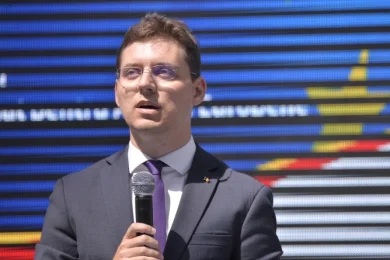
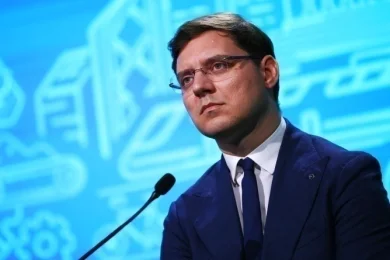
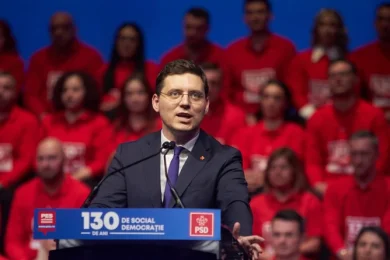
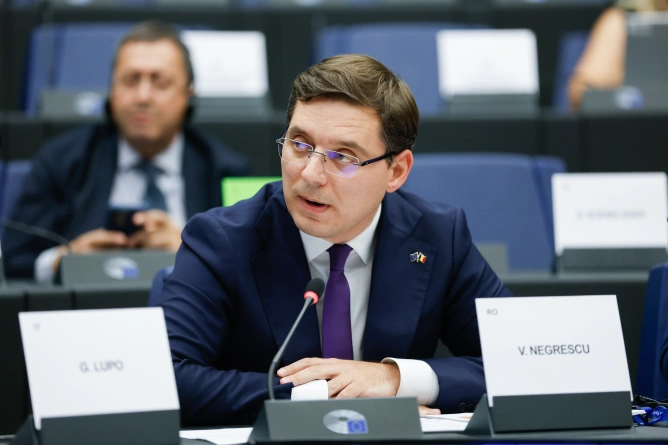
Romania needs European support to overcome its economic difficulties through investment, the use of European Union funds, and the completion of the accession process to the Organisation for Economic Co-operation and Development (OECD), Victor Negrescu, Vice-President of the European Parliament and PSD MEP from the Socialists and Democrats (S&D) group, said on Monday, 19 October 2026. In an intervention during the plenary session in Strasbourg, he criticised austerity policies, which he considers responsible for worsening the economic situation, and drew attention to the social consequences for families, pensioners and young people.
In brief
1. Victor Negrescu called on European partners to support Romania’s recovery through investment, European funds and the completion of its accession to the OECD.
2. The MEP criticised austerity policies and cited public debt, recession and declining foreign investment as the main signs of the economic difficulties.
3. According to the Eurostat release of 21 July, public debt stood at 60.1% of GDP at the end of the first quarter of 2026. The NBR estimates net foreign direct investment at €2.122 billion in January–August, compared with €5.657 billion in the same period of 2025: a decrease of approximately 62.5%.
4. The intervention took place ahead of the investiture vote on the government proposed by Luca Niculescu, scheduled for 20 October, amid pressure to reduce the budget deficit and relaunch the economy.
5. Negrescu emphasised the impact of the economic difficulties on people and called for political responsibility, cooperation and avoiding leaving vulnerable people behind.
Victor Negrescu presented Romania’s economic situation as a problem requiring both domestic measures and European solidarity. In his intervention, the Social Democrat MEP argued that austerity policies had contributed to the deterioration of the economy and listed rising public debt, recession and declining foreign investment among the difficulties facing the country.
“Public debt has exceeded 60% of GDP, the country is in recession, foreign investment has declined, and many families are finding it increasingly difficult to make ends meet from one month to the next,” Negrescu said.
Statistical data confirm the increase in debt and the decline in foreign direct investment, but they do not demonstrate that austerity is the sole cause of these developments. This connection represents the MEP’s political assessment. His statement about recession should also be read in the context of the latest data from the National Institute of Statistics, which indicate stagnation in the second quarter.
According to the Eurostat release of 21 July 2026, Romania’s public debt stood at 60.1% of GDP at the end of the first quarter of 2026, compared with 59.3% at the end of 2025 and 55.8% at the end of the first quarter of 2025. This is the consolidated gross debt of general government, calculated according to the European methodology; the figure for the first quarter is provisional. It does not represent a measurement of debt on 19 October or the final result for 2026.
The INS series revised on 9 October shows quarterly contractions of 1.7% in the fourth quarter of 2025 and 0.1% in the first quarter of 2026, followed by stagnation in the second quarter, based on seasonally and working-day adjusted data. Romania had therefore experienced a technical recession, but the latest available quarter no longer indicated a new decline compared with the previous one. In the first half of 2026, GDP was 0.6% lower than in the same period of 2025 on the unadjusted series and 1.6% lower on the seasonally adjusted series.
According to estimates published by the NBR on 15 October, direct investment by non-residents totalled €2.122 billion in January–August 2026, compared with €5.657 billion in the same period of 2025. The decrease calculated on the basis of these figures is approximately 62.5%. Equity investments, including reinvested profit, amounted to €2.220 billion, while intra-group loans recorded a negative net value of €98 million. These are estimated net flows, subject to revision; the indicator does not measure only new projects and does not represent all investment in the economy.
In its spring forecast published on 21 May, the European Commission estimated that fiscal consolidation measures, inflation and higher energy prices would affect disposable income and household consumption. For Romania, it forecast real GDP growth of 0.1% in 2026 and 2.3% in 2027. These are forecasts made in May, not observed annual results. The forecast also highlights the role of EU-financed investment in supporting economic activity and the need to correct budgetary imbalances.
Negrescu’s intervention focused on the social consequences of these developments. The MEP said that economic indicators must also be interpreted through their effects on everyday life, from families’ difficulties in covering expenses to pensioners’ insecurity and the limited prospects perceived by some young people.
“And behind these figures there are people. Parents who worry about their children’s future, pensioners who calculate every expense, young people who wonder whether they still have a future at home,” said the Vice-President of the European Parliament.
The social message was accompanied by an appeal for political responsibility. Negrescu spoke about listening and cooperation, rejecting the idea of miraculous solutions to economic problems.
“There are no miraculous solutions, but there is a responsibility to listen, to build and not to leave anyone behind,” he said.
The MEP called on European partners to contribute to Romania’s recovery by supporting investment and using European funds. These instruments represent an important component of public investment financing, including infrastructure, economic modernisation and regional development projects. The European Commission estimates that EU-financed investment will contribute positively to economic activity in 2026, even if domestic demand remains affected by fiscal consolidation.
Another priority cited by Negrescu is completing Romania’s accession to the OECD. The process officially began in 2022 and involves the organisation’s specialised committees assessing national legislation and policies in areas such as investment, competition, public administration, taxation, education and social protection.
Accession to the OECD involves technical assessments and a unanimous decision by the organisation’s Council to invite the state to become a member, followed by an accession agreement and internal procedures. Membership is acquired upon deposit of the instrument of accession. Negrescu’s appeal is a political request for support and does not replace these stages.
In March 2026, the OECD published an economic survey dedicated to Romania, calling for stronger fiscal sustainability, improved competitiveness and increased employment. The report acknowledged Romania’s economic progress over the past two decades, but stressed that structural reforms and budgetary discipline remain necessary to maintain economic growth.
In Bucharest, Prime Minister-designate Luca Niculescu submitted the cabinet list and government programme to Parliament on 15 October. According to AGERPRES, the investiture vote is scheduled for 20 October, and the PSD, Victor Negrescu’s party, approved participation in the proposed formula. At the time of the intervention, the cabinet had not yet received the vote of confidence.
The proposed cabinet’s programme provides for the continuation of PNRR investments and support for vulnerable people, according to the AGERPRES report. These are objectives of a government programme, whose implementation depends on investiture, subsequent legislation and budgetary resources.
At the end of his intervention, Negrescu argued that Romania’s recovery cannot be assigned to the responsibility of a single political formation. He emphasised the country’s economic potential and the need for joint action, in which European support would complement the efforts of the national authorities.
“I believe in the potential of my country; Romanians are not asking for the impossible, but for that we must work together, because responsibility belongs to the entire political class,” the MEP said.
The intervention represents a political appeal to support economic recovery, as the future government will have to find a balance between reducing the budget deficit, continuing investment and protecting living standards.

Latest News
15:47
15:30
15:09
14:54
14:46
See more news
NEWS ON THE SAME TOPICS