Black Sea: Cooperation Begins with Energy


Always see our news on Google
I start from a simple idea, which I have repeatedly stated at various specialist conferences: in the Black Sea, energy is no longer merely a commodity. It is a geopolitical and geoeconomic weapon, but also the strongest bond of regional cooperation.
The Black Sea plays an essential role in the region’s transport and energy connectivity. The war in Ukraine has increased Romania’s importance through our geographical position, transport infrastructure, and contribution to diversifying Europe’s energy sources. In recent years, the energy dimension of the Black Sea has become increasingly important. The region has existing production, projects under development, and new exploration activities. This development comes at a time when Europe is seeking the most diversified portfolio possible: domestic production, regional sources, interconnections, and imports from multiple directions.
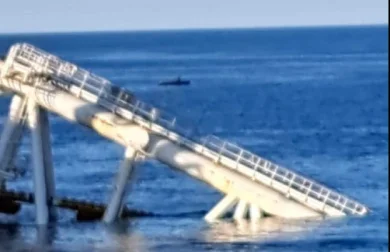
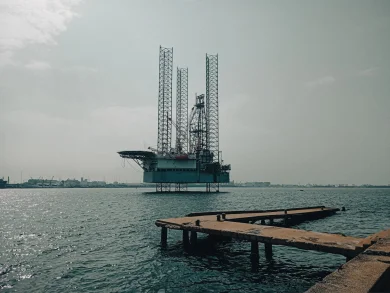
Let us be realistic: no region and no resource can single-handedly resolve Europe’s energy security. The value of the Black Sea lies in diversification and in increasing the number of available options. And Romania is by no means starting from zero. OMV Petrom has been producing crude oil and offshore gas through Petromar for over 40 years, with operational experience that few states in the region possess. The Midia project, operated by BSOG, is the second project in production, with the Ana and Doina fields coming on stream in 2022–2023. Next comes Neptun Deep, the largest gas project under development in the European Union. We are talking about investments of approximately 4 billion euros. First production is estimated for the first half of 2027, while plateau production is expected to be reached by the end of the third quarter of 2027, at approximately 8 billion cubic meters per year, or roughly twice Romania’s current gas production. The project is advancing according to plan: the production platform and the pipeline to shore have been installed, while drilling of the production wells continues.
The world is witnessing a reconfiguration of supply sources. Europe rapidly reconfigured its supplies after 2022. According to the IEA, Russian gas deliveries through pipelines to the EU fell by approximately 90% between 2021 and 2025, and the Union decided to phase out imports of Russian gas by November 2027 at the latest. But the response was not identical everywhere. Some states increased their use of LNG, others built interconnections or turned to Azerbaijani gas, while states with resources focused on domestic production. Bulgaria, historically almost entirely dependent on Russian gas, has diversified its supplies through interconnectors, but its own production remains limited. The example shows how important it is to have regional resources close to import routes.
In this context, Black Sea gas can complement an architecture that needs greater resilience and stability. Every cubic meter produced and transported regionally is one cubic meter that can no longer be used as an instrument of pressure by autocratic suppliers. And for Ukraine’s reconstruction, the relevance of the Black Sea extends beyond energy. A functional and connected sea means the movement of goods, access to ports, investment, and the resilience of regional supply chains.
Energy enters the equation as a factor of economic stability. Diversified sources, functional infrastructure, and connected regional markets create a safer environment for investment and reconstruction. Romania can contribute through its geography, infrastructure, production, and integration into the European market, but our contribution is part of a broader regional and European effort, not an isolated project.
However, none of this works without safety and security. The economic and energy development of the Black Sea depends on at least four things: protecting critical infrastructure, from platforms and pipelines to subsea cables and terminals; maintaining freedom and safety of navigation; the resilience of ports and logistics infrastructure; and the continuity of trade and energy corridors.
Here, cooperation among the littoral states, NATO, the European Union, and industry is not optional. The energy business community is ready to invest. But for this, it needs legislative predictability, clear incentives, protection of critical infrastructure, and close coordination among states, European institutions, and Euro-Atlantic partners. In other words, the real economy needs to genuinely feel that it has the state’s backing.
Europe’s energy security is also being built in the Black Sea. And Romania, together with its partners, can and must be the cornerstone of this construction.
Latest News
17:32
17:11
17:00
16:52
16:50
See more news
NEWS ON THE SAME TOPICS