Ukraine holds 26 of the 34 critical raw materials of the EU, but extraction will not eliminate Europe's dependencies.
2eu.brussels


EU
Credit foto: shutterstock.com

Always see our news on Google
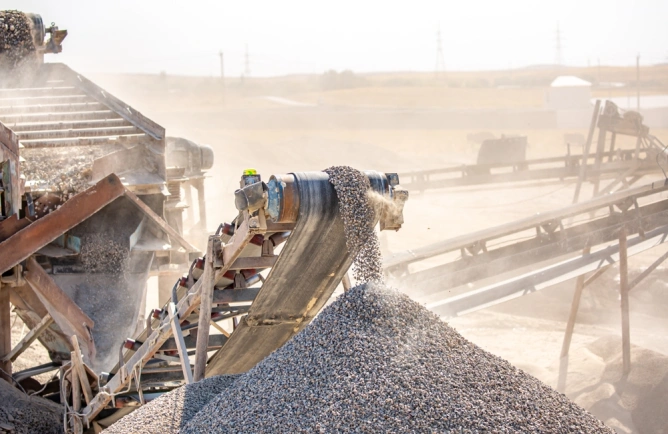
A study by the European Union Institute for Security Studies shows that Ukraine and the Western Balkans can contribute to diversifying Europe's supply of lithium, graphite, titanium, copper, and other strategic resources. The authors warn that projects focused solely on mining can provoke local opposition and do not solve the dependence on external refining and processing capacities.
Ukraine has deposits for 26 of the 34 raw materials considered critical by the European Union, while countries in the Western Balkans hold significant reserves of lithium, copper, boron, cobalt, nickel, and other minerals necessary for batteries, digital technologies, and the defense industry. A study by the European Union Institute for Security Studies supports that EU expansion can help reduce external dependencies, but only if projects include local processing, industrial production, recycling, and credible guarantees for the environment and communities.
In short
Ukraine has graphite, titanium, and manganese deposits described as the largest in Europe, along with lithium, cobalt, nickel, magnesium, barite, and rare earths, but the size and commercial viability of some resources are not yet sufficiently confirmed.
Serbia holds significant reserves of copper, boron, and lithium, while Bosnia and Herzegovina, North Macedonia, and Albania have deposits of bauxite, aluminum, cobalt, copper, manganese, nickel, antimony, and other raw materials.
The Jadar lithium and boron project in Serbia and the Balakhivka graphite deposit in Ukraine have been recognized as strategic projects under the European Act on Critical Raw Materials.
Opposition to lithium mining in Serbia has increased from 55.5% in mid-2024 to 63.5% in March 2025, amid concerns about water, agricultural land, biodiversity, transparency, and governance.
The authors recommend that the EU invest in local value chains, from extraction and refining to components, advanced industry, and recycling, as opening new mines takes an average of over 16 years globally.
The technologies used for the energy transition, digitalization, and rearmament depend on a limited group of raw materials whose extraction or processing is concentrated in a few countries. Approximately 98% of the EU's boron needs come from Turkey, and over 90% of the rare earths used globally for permanent magnets are refined in China, according to data compiled in the study published by the European Union Institute for Security Studies.
Batteries, wind turbines, semiconductors, and advanced weapon systems use minerals for which rapid substitution or diversification of suppliers is difficult. The European Act on Critical Raw Materials, adopted in 2024, aims to reduce these vulnerabilities by expanding supply sources, strengthening value chains, and developing strategic partnerships.
The authors of the study, EUISS chief analyst Ondrej Ditrych and analyst Bojana Zorić, believe that candidate states and other partners in the enlargement process can play an important role in this strategy. They warn, however, that the existence of a deposit does not automatically mean it can be exploited profitably, quickly, or with the acceptance of local communities.
Ukraine holds resources of graphite, titanium, and manganese described in the study as the largest European deposits for these three raw materials. Its territory also includes lithium, cobalt, nickel, magnesium, barite, and rare earths, and in total, 26 of the 34 raw materials included on the EU's critical list are present.
Some assessments remain incomplete. The available information does not always establish with sufficient precision the depth of deposits, the concentration of the mineral in ore, the secondary products that can be recovered, and the costs necessary for exploitation. The war triggered by Russia and the occupation of some Ukrainian territories limit access to some of the most important resources.
The Balakhivka graphite deposit in Ukraine has been recognized as a strategic project under the Critical Raw Materials Act. This status can facilitate the coordination of support for financing and commercial partnerships, as graphite is used in production chains for batteries and other clean technologies.
In the Western Balkans, Serbia has significant reserves of copper and boron, as well as lithium. Bosnia and Herzegovina and North Macedonia hold deposits of bauxite, aluminum, cobalt, copper, manganese, nickel, and antimony, while Albania has additional resources of copper, cobalt, feldspar, and nickel.
The Jadar project in Serbia, developed by Rio Tinto, is designed for an annual production of approximately 58,000 tons of lithium carbonate for batteries, alongside boron. Its size places it among the largest European lithium projects, and the EU has granted it strategic project status.
The development of the project has faced public opposition. Surveys conducted between 2024 and 2025 indicated that the proportion of people opposing lithium mining increased from 55.5% to 63.5%. Among the concerns mentioned are the impact on water resources, agricultural land, and biodiversity.
The controversy does not solely concern environmental consequences. Civil society organizations and part of the population contest the transparency of decisions, the relationship between authorities and investors, and the influence of external actors on national policies. Some organizations have warned that advancing the project may reduce public trust in the European integration process.
Rio Tinto has temporarily placed the Jadar project in a phase of conservation and maintenance. This decision does not mean the definitive closure of the project, but it limits activity until the company or authorities decide on the resumption of development.
Resistance to mining projects is also present in Bosnia and Herzegovina. In the Majevica region around the locality of Lopare, local authorities, residents, and environmental organizations have opposed lithium exploration since 2023. In the areas of Vareš, Olovo, and Zavidovići, requests have been made to halt concessions regarding the exploration and exploitation of chromium.
Environmental organizations in the Tuzla Canton contest plans that could allow for the future extraction of lithium, nickel, cobalt, and other minerals. These conflicts show that associating a project with European economic security objectives is not sufficient to gain acceptance from affected communities.
The study warns of an "extraction trap," in which the EU could pursue access to resources without creating sufficient economic value in partner countries. Such an approach may fuel the perception that enlargement is used to obtain raw materials, while social and environmental costs remain in local communities.
The risk is higher in countries with weak institutions, limited administrative capacity, and low public trust. Regulations and formal commitments regarding environmental protection may exist, but their enforcement can be affected by a lack of resources, political influence, or insufficient oversight.
The Ukrainian strategy for critical minerals, published in June 2026, includes a standards-based approach. The EUISS authors note, however, that environmental and community protection is presented largely as a condition for attracting investments and access to external markets, rather than as a separate public policy objective.
In Ukraine, competition for access to resources also involves the United States. The Ukrainian government agreed in April 2025 to a memorandum that reconfirms Ukraine's ownership of the minerals but grants American companies preferential rights for development and production takeover. Other countries may not receive more favorable conditions.
The authors warn that the lack of coordination between the EU and the United States in the reconstruction of Ukraine may affect the predictability of the investment environment. Competition for projects could pressure the Union to lower social, environmental, or governance standards to secure access to resources.
China already has a significant presence in mining in the Western Balkans. Zijin Mining controls the Čukaru Peki mine and the Bor mining complex in Serbia, which includes some of the country's most important copper deposits. The United States is also expanding its involvement in Ukraine, including through the concession granted for the Dobra lithium project.
In this context, abandoning standards would not necessarily provide the EU with a competitive advantage. The authors argue that norms regarding environmental protection, community rights, transparency, and corporate conduct can represent a strategic advantage when alternatives are exploitation models focused on short-term gains.
The central recommendation is the development of value chains in partner countries. Investments should not be limited to ore extraction and export to factories in other regions but should include refining, processing, component manufacturing, and recycling.
In Ukraine, this model could support battery production, the defense industry, and the processing of chemical products or secondary materials. In the Western Balkans, the same approach would transform mining projects from raw material suppliers into components of broader industrial development.
The EU-Ukraine strategic partnership on raw materials, initiated in 2021, already provided for the development of integrated value chains. The study recommends that the Union place greater importance on locating value-added stages so that partner states and communities can obtain greater economic benefits.
Processing is also essential for reducing real dependencies. Increasing extraction in Europe or its neighborhood does not eliminate vulnerability if ores still need to be sent to countries that control refining and component manufacturing.
European public funding will be necessary for some projects, according to the authors. Investments should also be supported by reforms regarding the rule of law, regulatory capacity, transparency, democratic participation, and the application of environmental standards at the national and local levels.
Enlargement cannot provide an immediate solution for the supply of critical raw materials. Globally, developing a new mine takes an average of over 16 years from project identification to the start of production. The effects on European economic security must be assessed in the long term.
The European Union Institute for Security Studies is the EU agency that provides analyses on foreign policy, security, and defense. The study signed by Ondrej Ditrych and Bojana Zorić formulates policy recommendations and does not represent a decision of the Council, the European Commission, or the governments of partner states.
The European Act on Critical Raw Materials establishes objectives for diversifying supply, strengthening internal capacities, and reducing excessive dependence on a single supplier. Recognizing a project as strategic can facilitate administrative coordination, financing, and attracting partners, without replacing environmental permits and other necessary procedures.
Candidate states are not EU members, and including their resources in European chains depends on agreements, investments, and national decisions. Raw materials belong to states and rights holders under applicable legislation, and the enlargement process does not automatically transfer control over deposits to the Union.
Ukraine has deposits for 26 of the 34 raw materials considered critical by the European Union, while countries in the Western Balkans hold significant reserves of lithium, copper, boron, cobalt, nickel, and other minerals necessary for batteries, digital technologies, and the defense industry. A study by the European Union Institute for Security Studies supports that EU expansion can help reduce external dependencies, but only if projects include local processing, industrial production, recycling, and credible guarantees for the environment and communities.
In short
Ukraine has graphite, titanium, and manganese deposits described as the largest in Europe, along with lithium, cobalt, nickel, magnesium, barite, and rare earths, but the size and commercial viability of some resources are not yet sufficiently confirmed.
Serbia holds significant reserves of copper, boron, and lithium, while Bosnia and Herzegovina, North Macedonia, and Albania have deposits of bauxite, aluminum, cobalt, copper, manganese, nickel, antimony, and other raw materials.
The Jadar lithium and boron project in Serbia and the Balakhivka graphite deposit in Ukraine have been recognized as strategic projects under the European Act on Critical Raw Materials.
Opposition to lithium mining in Serbia has increased from 55.5% in mid-2024 to 63.5% in March 2025, amid concerns about water, agricultural land, biodiversity, transparency, and governance.
The authors recommend that the EU invest in local value chains, from extraction and refining to components, advanced industry, and recycling, as opening new mines takes an average of over 16 years globally.
The technologies used for the energy transition, digitalization, and rearmament depend on a limited group of raw materials whose extraction or processing is concentrated in a few countries. Approximately 98% of the EU's boron needs come from Turkey, and over 90% of the rare earths used globally for permanent magnets are refined in China, according to data compiled in the study published by the European Union Institute for Security Studies.
Batteries, wind turbines, semiconductors, and advanced weapon systems use minerals for which rapid substitution or diversification of suppliers is difficult. The European Act on Critical Raw Materials, adopted in 2024, aims to reduce these vulnerabilities by expanding supply sources, strengthening value chains, and developing strategic partnerships.
The authors of the study, EUISS chief analyst Ondrej Ditrych and analyst Bojana Zorić, believe that candidate states and other partners in the enlargement process can play an important role in this strategy. They warn, however, that the existence of a deposit does not automatically mean it can be exploited profitably, quickly, or with the acceptance of local communities.
Ukraine holds resources of graphite, titanium, and manganese described in the study as the largest European deposits for these three raw materials. Its territory also includes lithium, cobalt, nickel, magnesium, barite, and rare earths, and in total, 26 of the 34 raw materials included on the EU's critical list are present.
Some assessments remain incomplete. The available information does not always establish with sufficient precision the depth of deposits, the concentration of the mineral in ore, the secondary products that can be recovered, and the costs necessary for exploitation. The war triggered by Russia and the occupation of some Ukrainian territories limit access to some of the most important resources.
The Balakhivka graphite deposit in Ukraine has been recognized as a strategic project under the Critical Raw Materials Act. This status can facilitate the coordination of support for financing and commercial partnerships, as graphite is used in production chains for batteries and other clean technologies.
In the Western Balkans, Serbia has significant reserves of copper and boron, as well as lithium. Bosnia and Herzegovina and North Macedonia hold deposits of bauxite, aluminum, cobalt, copper, manganese, nickel, and antimony, while Albania has additional resources of copper, cobalt, feldspar, and nickel.
The Jadar project in Serbia, developed by Rio Tinto, is designed for an annual production of approximately 58,000 tons of lithium carbonate for batteries, alongside boron. Its size places it among the largest European lithium projects, and the EU has granted it strategic project status.
The development of the project has faced public opposition. Surveys conducted between 2024 and 2025 indicated that the proportion of people opposing lithium mining increased from 55.5% to 63.5%. Among the concerns mentioned are the impact on water resources, agricultural land, and biodiversity.
The controversy does not solely concern environmental consequences. Civil society organizations and part of the population contest the transparency of decisions, the relationship between authorities and investors, and the influence of external actors on national policies. Some organizations have warned that advancing the project may reduce public trust in the European integration process.
Rio Tinto has temporarily placed the Jadar project in a phase of conservation and maintenance. This decision does not mean the definitive closure of the project, but it limits activity until the company or authorities decide on the resumption of development.
Resistance to mining projects is also present in Bosnia and Herzegovina. In the Majevica region around the locality of Lopare, local authorities, residents, and environmental organizations have opposed lithium exploration since 2023. In the areas of Vareš, Olovo, and Zavidovići, requests have been made to halt concessions regarding the exploration and exploitation of chromium.
Environmental organizations in the Tuzla Canton contest plans that could allow for the future extraction of lithium, nickel, cobalt, and other minerals. These conflicts show that associating a project with European economic security objectives is not sufficient to gain acceptance from affected communities.
The study warns of an "extraction trap," in which the EU could pursue access to resources without creating sufficient economic value in partner countries. Such an approach may fuel the perception that enlargement is used to obtain raw materials, while social and environmental costs remain in local communities.
The risk is higher in countries with weak institutions, limited administrative capacity, and low public trust. Regulations and formal commitments regarding environmental protection may exist, but their enforcement can be affected by a lack of resources, political influence, or insufficient oversight.
The Ukrainian strategy for critical minerals, published in June 2026, includes a standards-based approach. The EUISS authors note, however, that environmental and community protection is presented largely as a condition for attracting investments and access to external markets, rather than as a separate public policy objective.
In Ukraine, competition for access to resources also involves the United States. The Ukrainian government agreed in April 2025 to a memorandum that reconfirms Ukraine's ownership of the minerals but grants American companies preferential rights for development and production takeover. Other countries may not receive more favorable conditions.
The authors warn that the lack of coordination between the EU and the United States in the reconstruction of Ukraine may affect the predictability of the investment environment. Competition for projects could pressure the Union to lower social, environmental, or governance standards to secure access to resources.
China already has a significant presence in mining in the Western Balkans. Zijin Mining controls the Čukaru Peki mine and the Bor mining complex in Serbia, which includes some of the country's most important copper deposits. The United States is also expanding its involvement in Ukraine, including through the concession granted for the Dobra lithium project.
In this context, abandoning standards would not necessarily provide the EU with a competitive advantage. The authors argue that norms regarding environmental protection, community rights, transparency, and corporate conduct can represent a strategic advantage when alternatives are exploitation models focused on short-term gains.
The central recommendation is the development of value chains in partner countries. Investments should not be limited to ore extraction and export to factories in other regions but should include refining, processing, component manufacturing, and recycling.
In Ukraine, this model could support battery production, the defense industry, and the processing of chemical products or secondary materials. In the Western Balkans, the same approach would transform mining projects from raw material suppliers into components of broader industrial development.
The EU-Ukraine strategic partnership on raw materials, initiated in 2021, already provided for the development of integrated value chains. The study recommends that the Union place greater importance on locating value-added stages so that partner states and communities can obtain greater economic benefits.
Processing is also essential for reducing real dependencies. Increasing extraction in Europe or its neighborhood does not eliminate vulnerability if ores still need to be sent to countries that control refining and component manufacturing.
European public funding will be necessary for some projects, according to the authors. Investments should also be supported by reforms regarding the rule of law, regulatory capacity, transparency, democratic participation, and the application of environmental standards at the national and local levels.
Enlargement cannot provide an immediate solution for the supply of critical raw materials. Globally, developing a new mine takes an average of over 16 years from project identification to the start of production. The effects on European economic security must be assessed in the long term.
The European Union Institute for Security Studies is the EU agency that provides analyses on foreign policy, security, and defense. The study signed by Ondrej Ditrych and Bojana Zorić formulates policy recommendations and does not represent a decision of the Council, the European Commission, or the governments of partner states.
The European Act on Critical Raw Materials establishes objectives for diversifying supply, strengthening internal capacities, and reducing excessive dependence on a single supplier. Recognizing a project as strategic can facilitate administrative coordination, financing, and attracting partners, without replacing environmental permits and other necessary procedures.
Candidate states are not EU members, and including their resources in European chains depends on agreements, investments, and national decisions. Raw materials belong to states and rights holders under applicable legislation, and the enlargement process does not automatically transfer control over deposits to the Union.
Latest News
23:06
Emmanuel Macron condemns violence at protests in France and promises punishment for those who attacked institutions
22:52
Republican leaders criticize Donald Trump for exempting Russia from the new sanctions adopted by Congress
22:09
Adrian Veștea criticizes the PNL for supporting the Luca Niculescu government and warns of the party’s political decline.
21:32
A self-driving Tesla car hit a police vehicle in California / Two officers were injured
20:59
Petre Florin Manole announces the priorities for the Ministry of Labor: pension indexation and the removal of CASS for mothers and veterans
See more news
NEWS ON THE SAME TOPICS
.webp)



Personalized news feed, AI-powered search, and notifications in a more interactive experience.