The land border between Spain and Gibraltar opens without routine checks for the 15,000 people who cross it daily.
Liviu Brăteanu



EU
Foto: Pixabay

Always see our news on Google
The approximately 15,000 people who cross the border between Spain and Gibraltar daily will no longer go through the routine checks that caused queues and uncertainty after Brexit. The agreement signed by the European Union and the United Kingdom moves entry checks into the Schengen area to the airport and port of Gibraltar and creates a separate system for the circulation of goods.
In short, the agreement will provisionally apply from July 15, 2026, and eliminates the usual checks and physical barriers at the land border between Gibraltar and Spain. People arriving from outside the area will be checked at Gibraltar's airport and, when necessary, at the port. After the check, they will be able to travel between Gibraltar, Spain, and the rest of the Schengen area without a new check at the land border. Most goods destined for Gibraltar will be cleared by European authorities in Spain. The agreement eliminates customs duties and quotas for goods circulating between Gibraltar and the EU, but Gibraltar will not introduce VAT. Approximately 15,000 people cross the border daily, many of whom live in Spain and work in Gibraltar. The agreement establishes rules for their professional rights and the coordination of contributions and social benefits. Gibraltar remains outside the European Union and the Schengen area, and the agreement does not change the issue of sovereignty. Final implementation requires the consent of the European Parliament and a new decision from the EU Council.
The agreement concludes over four years of negotiations regarding the last important unresolved part of the relationship between the European Union and the United Kingdom after Brexit. Gibraltar was not included in the EU-UK Trade and Cooperation Agreement, signed in 2020 and applied from 2021.
The British territory is located at the southern tip of the Iberian Peninsula and has its only land border with Spain. Its economy is closely connected with the surrounding Spanish localities, and approximately 15,000 people cross the border every day for work, business, shopping, or services.
In the absence of a separate agreement, this border was an external border of the Schengen area. Checks carried out by Spanish authorities could cause delays, and their tightening would directly affect cross-border workers and businesses on both sides.
The new system eliminates routine immigration checks and the physical control infrastructure at the land border. Gibraltar does not formally enter the European Union or the Schengen area, but will implement an adapted arrangement whereby necessary checks to protect the Schengen area will take place at its entry points from outside. (GOV.UK)
At the airport, arriving individuals will go through checks carried out successively by the authorities of Gibraltar and the Spanish authorities responsible for the Schengen border. Similar checks may be organized at the port when the situation requires.
After completing these checks, travelers will be able to reach Spain and other Schengen states without a new stop at the land border. The system includes rules regarding control points, the order of checks, the use of automated equipment, and procedures for additional checks.
The agreement also contains rules regarding travel without visas and residence permits issued to individuals living in Gibraltar. Permits that provide access to the Schengen area will need to be granted through coordinated procedures and in compliance with European conditions regarding public safety.
Relevant military personnel benefit from separate rules. The British Royal Air Force base at the airport is not subject to the provisions regarding commercial aviation, and the United Kingdom retains its military operational autonomy. (GOV.UK)
The change also concerns goods. The EU Council describes the objective as the elimination of physical barriers for both people and goods circulating between Spain and Gibraltar, while protecting the single market and the European customs union. (Consilium)
The agreement creates a special customs model, without customs duties, quotas, or quantitative restrictions for goods circulating between Gibraltar and the EU. Most goods destined for Gibraltar will be presented and cleared at European customs offices in Spain, so they can then cross the border without a new systematic check.
Gibraltar will not introduce VAT or a general sales tax. However, the territory will align some of its indirect tax rates with European levels to limit differences that could encourage smuggling or diversion of trade. (GOV.UK)
The agreement includes rules regarding state aid, taxation, labor standards, environmental protection, and combating climate change. Gibraltar must create an independent regime for controlling aid granted to companies, while maintaining its own legal and tax system.
Another effect is the possibility of resuming direct flights between Gibraltar Airport and EU states. These connections have been largely suspended for several decades due to a dispute over the use of the airport.
Gibraltar and Spain will create a joint company that will select through bidding and oversee the commercial operator responsible for the daily management of the airport. Gibraltar will introduce a limited number of European rules regarding civil aviation into its legislation. (GOV.UK)
For workers who live on one side of the border and work on the other, the agreement establishes a framework regarding treatment in the workplace, social contributions, and access to benefits. The aim is for the elimination of checks to be accompanied by legal continuity for people who depend daily on the cross-border labor market.
A common financial mechanism is also foreseen to reduce the differences between Gibraltar and the neighboring Spanish region. The funds will be able to finance projects such as education and vocational training, but public documents do not specify the total value or the contribution of each party.
The agreement does not change sovereignty over Gibraltar. The text specifies that neither the agreement nor the measures adopted for its implementation affect the status of the territory. The United Kingdom maintains that British military and administrative autonomy is preserved, and the Government of Gibraltar was part of the British negotiating team. (GOV.UK)
Implementation will be overseen by a Cooperation Council and three specialized committees. Any disputes will first go through consultations and may reach an independent arbitration tribunal.
Monitoring, evaluation, and temporary suspension mechanisms for certain obligations in the case of serious violations or threats to security are also provided. Gibraltar will apply European rules through its own institutions and courts, with which it must align its legislation.
The European Commission and the United Kingdom signed the agreement on July 14, and provisional application begins on July 15. The EU Council authorized the signing and temporary application on July 1.
The European procedure is not yet completed. The European Parliament must give its consent before the Council can adopt the final decision to conclude the agreement. The Parliament previously indicated December 2026 as a target date for the vote. (European Parliament)
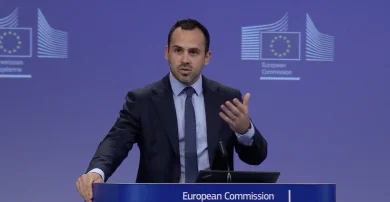
The European Commissioner for Trade and Economic Security, Maroš Šefčovič, stated that the agreement means "the removal of the barrier" for the approximately 15,000 people who cross the border daily. Its concrete implementation will depend on the functioning of checks at the airport and port, the new customs system, and cooperation between the authorities of Gibraltar and those of Spain.
In short, the agreement will provisionally apply from July 15, 2026, and eliminates the usual checks and physical barriers at the land border between Gibraltar and Spain. People arriving from outside the area will be checked at Gibraltar's airport and, when necessary, at the port. After the check, they will be able to travel between Gibraltar, Spain, and the rest of the Schengen area without a new check at the land border. Most goods destined for Gibraltar will be cleared by European authorities in Spain. The agreement eliminates customs duties and quotas for goods circulating between Gibraltar and the EU, but Gibraltar will not introduce VAT. Approximately 15,000 people cross the border daily, many of whom live in Spain and work in Gibraltar. The agreement establishes rules for their professional rights and the coordination of contributions and social benefits. Gibraltar remains outside the European Union and the Schengen area, and the agreement does not change the issue of sovereignty. Final implementation requires the consent of the European Parliament and a new decision from the EU Council.
The agreement concludes over four years of negotiations regarding the last important unresolved part of the relationship between the European Union and the United Kingdom after Brexit. Gibraltar was not included in the EU-UK Trade and Cooperation Agreement, signed in 2020 and applied from 2021.
The British territory is located at the southern tip of the Iberian Peninsula and has its only land border with Spain. Its economy is closely connected with the surrounding Spanish localities, and approximately 15,000 people cross the border every day for work, business, shopping, or services.
In the absence of a separate agreement, this border was an external border of the Schengen area. Checks carried out by Spanish authorities could cause delays, and their tightening would directly affect cross-border workers and businesses on both sides.
The new system eliminates routine immigration checks and the physical control infrastructure at the land border. Gibraltar does not formally enter the European Union or the Schengen area, but will implement an adapted arrangement whereby necessary checks to protect the Schengen area will take place at its entry points from outside. (GOV.UK)
At the airport, arriving individuals will go through checks carried out successively by the authorities of Gibraltar and the Spanish authorities responsible for the Schengen border. Similar checks may be organized at the port when the situation requires.
After completing these checks, travelers will be able to reach Spain and other Schengen states without a new stop at the land border. The system includes rules regarding control points, the order of checks, the use of automated equipment, and procedures for additional checks.
The agreement also contains rules regarding travel without visas and residence permits issued to individuals living in Gibraltar. Permits that provide access to the Schengen area will need to be granted through coordinated procedures and in compliance with European conditions regarding public safety.
Relevant military personnel benefit from separate rules. The British Royal Air Force base at the airport is not subject to the provisions regarding commercial aviation, and the United Kingdom retains its military operational autonomy. (GOV.UK)
The change also concerns goods. The EU Council describes the objective as the elimination of physical barriers for both people and goods circulating between Spain and Gibraltar, while protecting the single market and the European customs union. (Consilium)
The agreement creates a special customs model, without customs duties, quotas, or quantitative restrictions for goods circulating between Gibraltar and the EU. Most goods destined for Gibraltar will be presented and cleared at European customs offices in Spain, so they can then cross the border without a new systematic check.
Gibraltar will not introduce VAT or a general sales tax. However, the territory will align some of its indirect tax rates with European levels to limit differences that could encourage smuggling or diversion of trade. (GOV.UK)
The agreement includes rules regarding state aid, taxation, labor standards, environmental protection, and combating climate change. Gibraltar must create an independent regime for controlling aid granted to companies, while maintaining its own legal and tax system.
Another effect is the possibility of resuming direct flights between Gibraltar Airport and EU states. These connections have been largely suspended for several decades due to a dispute over the use of the airport.
Gibraltar and Spain will create a joint company that will select through bidding and oversee the commercial operator responsible for the daily management of the airport. Gibraltar will introduce a limited number of European rules regarding civil aviation into its legislation. (GOV.UK)
For workers who live on one side of the border and work on the other, the agreement establishes a framework regarding treatment in the workplace, social contributions, and access to benefits. The aim is for the elimination of checks to be accompanied by legal continuity for people who depend daily on the cross-border labor market.
A common financial mechanism is also foreseen to reduce the differences between Gibraltar and the neighboring Spanish region. The funds will be able to finance projects such as education and vocational training, but public documents do not specify the total value or the contribution of each party.
The agreement does not change sovereignty over Gibraltar. The text specifies that neither the agreement nor the measures adopted for its implementation affect the status of the territory. The United Kingdom maintains that British military and administrative autonomy is preserved, and the Government of Gibraltar was part of the British negotiating team. (GOV.UK)
Implementation will be overseen by a Cooperation Council and three specialized committees. Any disputes will first go through consultations and may reach an independent arbitration tribunal.
Monitoring, evaluation, and temporary suspension mechanisms for certain obligations in the case of serious violations or threats to security are also provided. Gibraltar will apply European rules through its own institutions and courts, with which it must align its legislation.
The European Commission and the United Kingdom signed the agreement on July 14, and provisional application begins on July 15. The EU Council authorized the signing and temporary application on July 1.
The European procedure is not yet completed. The European Parliament must give its consent before the Council can adopt the final decision to conclude the agreement. The Parliament previously indicated December 2026 as a target date for the vote. (European Parliament)
The European Commissioner for Trade and Economic Security, Maroš Šefčovič, stated that the agreement means "the removal of the barrier" for the approximately 15,000 people who cross the border daily. Its concrete implementation will depend on the functioning of checks at the airport and port, the new customs system, and cooperation between the authorities of Gibraltar and those of Spain.

Latest News
19:42
Bulgaria will join NATO's drone defense initiative by the end of October, following attacks on commercial vessels in the Black Sea
19:33
The Romanian College of Physicians asks Prime Minister-designate Luca Niculescu to update on-call pay and improve safety in hospitals
19:28
Sorin Grindeanu announces PSD's entry into government / The list of the 11 Social Democratic ministers to be sent to Victoria Palace
19:20
Character.AI files for bankruptcy and accepts Disney’s $20 million offer
19:16
Mark Rutte warns: NATO will defend itself if Russia is “stupid enough” to attack allied territories
See more news
NEWS ON THE SAME TOPICS

.webp)



Personalized news feed, AI-powered search, and notifications in a more interactive experience.