



The Commission says that over 70,000 people have entered Ceuta in a few hours and is preparing additional measures for the EU borders.
Liviu Brăteanu



EU
Foto: Pixabay

Always see our news on Google
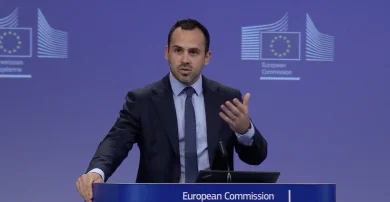
Over 70,000 people entered Ceuta in a few hours, and 75 lost their lives during the events at the border between Spanish territory and Morocco, according to information presented by the European Commission after an informal meeting of interior ministers. The Commission states that almost all the people who entered have returned, that no one has reached mainland Spain, and that the Schengen area has not been affected, but it is preparing additional measures for Frontex, combating trafficking networks, and early identification of disinformation campaigns.
In short, the Commission says that over 70,000 people crossed the border towards Ceuta in a few hours, against the backdrop of the activity of illegal migrant smuggling networks and false information distributed through social platforms. According to the European Commissioner for Home Affairs and Migration, Magnus Brunner, 75 people have died, but the document does not provide information about the identity of the victims, the exact location of the deaths, or the results of investigations. The Spanish government informed ministers that almost all the people who had entered Ceuta had returned and that no one had moved towards mainland Spain or other Schengen area states. The Commission is providing emergency financial assistance, Frontex is present on the ground, and the European Union Agency for Asylum and Europol are ready to support the Spanish authorities. The EU is preparing a new mandate for Frontex, early warning systems for online campaigns, broader use of rapid return procedures, and a global sanctions regime against individuals involved in the illegal smuggling of migrants.
Ceuta is a Spanish territory located on the North African coast and represents an external border of the European Union. People entering from Morocco reach the territory of a member state, but do not automatically enter the mainland of Spain or other Schengen area states.
The Commission states that the events represented a test for the security of external borders and for the ability of member states to respond together to a large-scale movement occurring in a very short time.
According to the European Commissioner for Home Affairs and Migration, Magnus Brunner, over 70,000 people crossed into Ceuta "in a few hours." He associated the movement with the activity of criminal networks that organize illegal crossings and with the false information spread on social platforms.
The document does not specify the points through which people entered, the number of maritime and land crossings, the exact period covered by the total figure, or how Spanish authorities verified each entry.
The Commission also does not provide detailed information about the messages distributed online. Accounts, platforms, authors, or specific claims that would have prompted people to head towards the border are not identified.
The link between false information and the movement of people is presented as a conclusion of the European authorities, without publishing in the document the analysis on which this was established.
Brunner stated that 75 people lost their lives and attributed the tragedy to the actions of criminal networks that would have sent them on dangerous journeys. The communication does not describe the individual circumstances of the deaths and does not indicate whether all victims died in the same place or at the same stage of the journey.
The figure must be differentiated from the number of people who managed to enter Ceuta. The document does not present information about the injured, missing persons, unaccompanied minors, or medical interventions carried out during the events.
The Spanish government informed interior ministers that the situation is under control. Almost all the people who had entered Ceuta would have returned, and no one would have continued their journey towards mainland Spain.
The Commission presents this result as the effect of cooperation between Spain, Morocco, and European institutions. The authorities in Ceuta have restored order, and cooperation with Morocco has allowed for the rapid execution of returns.
The material does not indicate the exact number of people returned, how many left voluntarily, and how many were subject to an administrative decision. The phrasing "almost all" indicates that some people remained, but their number and legal situation are not specified.
It is also not explained how any requests for international protection were assessed. The return of a person and the examination of an asylum request are distinct procedures, and access to protection must be analyzed individually according to applicable rules.
The Commission states that the Schengen area has not been affected because people did not cross from Ceuta into mainland Spain. This clarification aims to differentiate entry into a territory at the external border from subsequent movement without controls between Schengen states.
The situation does not mean that the border has not been subjected to severe pressure. The Commission acknowledges that the scale and speed of crossings have put pressure on the integrity of the external border and required the rapid mobilization of authorities.
The institution has provided financial and operational support from the outset. Emergency financial assistance is intended to strengthen border protection in Ceuta, support returns, and prevent further movements towards the Union.
The document does not specify the value of this funding, the budget source, the covered period, or the exact expenses that will be eligible.
Funds may be used, depending on the final decision, for personnel, equipment, infrastructure, transport, registration, reception, return procedures, or other activities necessary for border management. The communication does not provide a breakdown among these categories.
Frontex is on the ground and is prepared to provide and expand support. The agency can provide officers, equipment, risk analysis, and assistance for organizing operations at external borders.
The European Union Agency for Asylum is ready to support the registration and examination of protection requests, organizing reception systems, and other asylum-related activities.
Europol can contribute through information exchange, analysis of criminal networks, and supporting investigations regarding the illegal smuggling of migrants and coordinated campaigns.
The presence of these agencies does not automatically transfer the responsibility for border management from Spain to the European Union. Spanish authorities retain operational and legal competencies, and the agencies provide support within the framework of the mandate and established agreements.
The Commission links the response to the application of the reformed Common European Asylum System. According to the statement, the new rules regarding border checks and accelerated procedures have been in effect since June 12.
The initial check aims to establish identity, register data, conduct security and health checks, and direct the person to the appropriate procedure.
The border procedure allows for faster examination of some asylum requests near the external border, without the applicant automatically receiving access to the rest of the territory during the evaluation period.
The Commission emphasizes the use of rapid procedures especially for individuals coming from countries included on the European list of safe countries of origin. Morocco is mentioned as such a country.
Classifying a country as safe does not allow for the automatic rejection of all requests made by its citizens. The person must be able to present individual reasons for not benefiting from protection in the country of origin.
The Commission also calls for broader use of the concept of safe third country. This could allow a protection request to be examined in a country outside the Union, if the conditions regarding the safety of the person, protection against return to persecution, and their connection to that country are met.
Brunner presented the possibility of conducting asylum procedures outside the EU as a tool to discourage irregular migration. However, the concrete application depends on legal conditions, agreements with third countries, and the existence of effective guarantees.
The Commission has not announced that all individuals arriving in Ceuta will be transferred to a third country. The statement concerns the general direction in which member states should use the tools of the European reform.
The European response is organized around five directions. The first is to prevent departures and irregular crossings through stronger cooperation with partner and neighboring countries.
The Commission calls this approach "migration diplomacy" and proposes more effective use of development assistance, visa policy, and trade in relations with the countries from which or through which people travel.
This approach can link access to funding, trade facilitation, or political cooperation to commitments regarding border control, combating networks, and accepting returned individuals.
The Commission is negotiating a strategic and comprehensive partnership with Morocco, and migration is one of the central elements of the future agreement.
The document does not indicate the value of the package, trade concessions, visa commitments, or the specific conditions that the two parties are negotiating.
Cooperation with Morocco is essential for Ceuta as the Spanish territory has a direct border with this country. The capacity of Moroccan authorities to prevent movements and to quickly accept returned individuals influences the situation at the border.
The partnership must also be analyzed in terms of respect for fundamental rights. The Commission's communication emphasizes security, prevention, and returns, without providing information about monitoring the treatment of individuals after their return to Morocco.
The second direction concerns rapid returns. The Commission calls for the application of the new European framework for individuals who do not receive residence or protection rights.
A quick decision does not eliminate the right to an individual assessment and the appeal routes provided by legislation. Return can only be carried out if there is an enforceable decision and the destination state accepts the person.
The efficiency of the system depends on identification, obtaining travel documents, cooperation from the country of origin, and the availability of transport. The lack of any of these elements can delay execution.
The third direction is strengthening external borders. The Commission is preparing a new mandate for Frontex, which is expected to be adopted after the summer break.
The document does not specify whether "adoption" refers to the presentation of a proposal by the Commission or the completion of the entire legislative procedure. Any change to the agency's mandate that requires legislative change must be analyzed by the European Parliament and the Council.
The Commission wants Frontex to provide more support both at EU borders and in third countries. This may involve expanding operational cooperation, deploying personnel, and exchanging information outside the territory of the Union.
Border measures also include closer monitoring and, where deemed necessary, physical infrastructure at critical points.
The Commission does not define the type of infrastructure. This may include fences, barriers, patrol roads, surveillance systems, lighting, or other elements built for controlling crossings.
The use of physical infrastructure must continue to allow access to points where a person can request protection. Border control cannot eliminate the obligation to respect the right to asylum and the principle of non-refoulement to persecution or inhumane treatment.
The fourth direction concerns early warning in the case of false information distributed on social platforms. The Commission wants to strengthen the capacity to monitor online trends together with Europol and other agencies.
A warning system can analyze the sudden increase in messages promising the opening of the border, safe transport, documents, job opportunities, or lack of controls.
Authorities can use the information to warn exposed individuals, prepare resources at the border, and investigate accounts associated with criminal networks.
Monitoring must be differentiated from the general removal of opinions or reports about migration. Intervention must target illegal content, fraud, network activity, and concrete risks, while respecting freedom of expression and data protection rules.
The Commission has not presented the structure of the system, the indicators used, the institution that will issue warnings, or how platforms will participate.
The fifth direction is dismantling networks that organize the illegal smuggling of migrants. The Commission calls for the urgent adoption of a global European sanctions regime proposed at the beginning of July.
Such a regime would allow the EU to target individuals and entities involved in networks, including through asset freezing and travel restrictions, if the criteria to be adopted are met.
Sanctions do not replace investigations and criminal proceedings. They represent a separate tool used to limit the resources, movements, and international activity of designated individuals.
The document does not specify when the regime could be adopted, what actions would justify inclusion on the list, or whether there will be immediate designations after its entry into force.
The Commission also mentions the Global Alliance against the Illegal Smuggling of Migrants, launched three years ago, as a framework for cooperation with states and international organizations.
Interior ministers agreed that work on the five directions must advance before the Justice and Home Affairs Council meeting in October.
This sets a political deadline, without guaranteeing that all legislative proposals, agreements, and operations will be finalized by then.
The Commission uses the events in Ceuta to present a broader decrease in irregular migration. According to the figures communicated, illegal crossings at the external borders of the EU have decreased by 55% in the last two years and by another 37% since the beginning of 2026.
Over 49,000 people would have crossed the external borders of the Union illegally since the beginning of the year. The Commission compares this figure with the number of arrivals recorded on the Greek islands in a single week in October 2015.
These data concern detected crossings, not all movements that have occurred. The same person may be recorded multiple times if they attempt to cross the border at different times.
The decrease in the number of crossings does not mean that pressure is uniform across all routes. A reduced number at the European level can coexist with a rapid increase at a point like Ceuta.
The Commission states that the reduction in crossings has also contributed to a decrease in asylum requests. In Germany, these would have dropped by more than a third in 2026.
Sweden would have recorded 8,485 requests in the previous year, the lowest level in the last four decades, while Denmark 1,835 until the end of November, a historic low.
Some of the periods mentioned in the speech are not fully explained. The document is dated August 2026, but the figure for Denmark is presented as being recorded "until the end of November," without explicitly indicating the year.
The data is used by the Commission to support that the EU exercises the highest level of control over irregular migration in the last decade. However, the events in Ceuta show that a large-scale local situation can arise even when the overall trend is downward.
The statements of the commissioner present the position of the Commission after the information provided by the Spanish government and the discussion among ministers. The material does not include operational reports, data from Moroccan authorities, or conclusions from independent investigations.
Figures regarding crossings, deaths, and returns must be understood in this context. They are officially communicated information from the Commission, not a detailed inventory of each case.
Ceuta and Melilla are Spanish territories located in North Africa and form the only direct land borders between the European Union and the African continent. Pressure at these borders depends on the relationship between Spain and Morocco, the activity of trafficking networks, the situation in countries of origin, and the information circulating about the possibility of entering the EU.
The response presented by the Commission combines immediate measures for Spain with a broader European agenda: rapid border procedures, returns, an extended mandate for Frontex, cooperation with third countries, monitoring online campaigns, and sanctions against criminal networks.
In short, the Commission says that over 70,000 people crossed the border towards Ceuta in a few hours, against the backdrop of the activity of illegal migrant smuggling networks and false information distributed through social platforms. According to the European Commissioner for Home Affairs and Migration, Magnus Brunner, 75 people have died, but the document does not provide information about the identity of the victims, the exact location of the deaths, or the results of investigations. The Spanish government informed ministers that almost all the people who had entered Ceuta had returned and that no one had moved towards mainland Spain or other Schengen area states. The Commission is providing emergency financial assistance, Frontex is present on the ground, and the European Union Agency for Asylum and Europol are ready to support the Spanish authorities. The EU is preparing a new mandate for Frontex, early warning systems for online campaigns, broader use of rapid return procedures, and a global sanctions regime against individuals involved in the illegal smuggling of migrants.
Ceuta is a Spanish territory located on the North African coast and represents an external border of the European Union. People entering from Morocco reach the territory of a member state, but do not automatically enter the mainland of Spain or other Schengen area states.
The Commission states that the events represented a test for the security of external borders and for the ability of member states to respond together to a large-scale movement occurring in a very short time.
According to the European Commissioner for Home Affairs and Migration, Magnus Brunner, over 70,000 people crossed into Ceuta "in a few hours." He associated the movement with the activity of criminal networks that organize illegal crossings and with the false information spread on social platforms.
The document does not specify the points through which people entered, the number of maritime and land crossings, the exact period covered by the total figure, or how Spanish authorities verified each entry.
The Commission also does not provide detailed information about the messages distributed online. Accounts, platforms, authors, or specific claims that would have prompted people to head towards the border are not identified.
The link between false information and the movement of people is presented as a conclusion of the European authorities, without publishing in the document the analysis on which this was established.
Brunner stated that 75 people lost their lives and attributed the tragedy to the actions of criminal networks that would have sent them on dangerous journeys. The communication does not describe the individual circumstances of the deaths and does not indicate whether all victims died in the same place or at the same stage of the journey.
The figure must be differentiated from the number of people who managed to enter Ceuta. The document does not present information about the injured, missing persons, unaccompanied minors, or medical interventions carried out during the events.
The Spanish government informed interior ministers that the situation is under control. Almost all the people who had entered Ceuta would have returned, and no one would have continued their journey towards mainland Spain.
The Commission presents this result as the effect of cooperation between Spain, Morocco, and European institutions. The authorities in Ceuta have restored order, and cooperation with Morocco has allowed for the rapid execution of returns.
The material does not indicate the exact number of people returned, how many left voluntarily, and how many were subject to an administrative decision. The phrasing "almost all" indicates that some people remained, but their number and legal situation are not specified.
It is also not explained how any requests for international protection were assessed. The return of a person and the examination of an asylum request are distinct procedures, and access to protection must be analyzed individually according to applicable rules.
The Commission states that the Schengen area has not been affected because people did not cross from Ceuta into mainland Spain. This clarification aims to differentiate entry into a territory at the external border from subsequent movement without controls between Schengen states.
The situation does not mean that the border has not been subjected to severe pressure. The Commission acknowledges that the scale and speed of crossings have put pressure on the integrity of the external border and required the rapid mobilization of authorities.
The institution has provided financial and operational support from the outset. Emergency financial assistance is intended to strengthen border protection in Ceuta, support returns, and prevent further movements towards the Union.
The document does not specify the value of this funding, the budget source, the covered period, or the exact expenses that will be eligible.
Funds may be used, depending on the final decision, for personnel, equipment, infrastructure, transport, registration, reception, return procedures, or other activities necessary for border management. The communication does not provide a breakdown among these categories.
Frontex is on the ground and is prepared to provide and expand support. The agency can provide officers, equipment, risk analysis, and assistance for organizing operations at external borders.
The European Union Agency for Asylum is ready to support the registration and examination of protection requests, organizing reception systems, and other asylum-related activities.
Europol can contribute through information exchange, analysis of criminal networks, and supporting investigations regarding the illegal smuggling of migrants and coordinated campaigns.
The presence of these agencies does not automatically transfer the responsibility for border management from Spain to the European Union. Spanish authorities retain operational and legal competencies, and the agencies provide support within the framework of the mandate and established agreements.
The Commission links the response to the application of the reformed Common European Asylum System. According to the statement, the new rules regarding border checks and accelerated procedures have been in effect since June 12.
The initial check aims to establish identity, register data, conduct security and health checks, and direct the person to the appropriate procedure.
The border procedure allows for faster examination of some asylum requests near the external border, without the applicant automatically receiving access to the rest of the territory during the evaluation period.
The Commission emphasizes the use of rapid procedures especially for individuals coming from countries included on the European list of safe countries of origin. Morocco is mentioned as such a country.
Classifying a country as safe does not allow for the automatic rejection of all requests made by its citizens. The person must be able to present individual reasons for not benefiting from protection in the country of origin.
The Commission also calls for broader use of the concept of safe third country. This could allow a protection request to be examined in a country outside the Union, if the conditions regarding the safety of the person, protection against return to persecution, and their connection to that country are met.
Brunner presented the possibility of conducting asylum procedures outside the EU as a tool to discourage irregular migration. However, the concrete application depends on legal conditions, agreements with third countries, and the existence of effective guarantees.
The Commission has not announced that all individuals arriving in Ceuta will be transferred to a third country. The statement concerns the general direction in which member states should use the tools of the European reform.
The European response is organized around five directions. The first is to prevent departures and irregular crossings through stronger cooperation with partner and neighboring countries.
The Commission calls this approach "migration diplomacy" and proposes more effective use of development assistance, visa policy, and trade in relations with the countries from which or through which people travel.
This approach can link access to funding, trade facilitation, or political cooperation to commitments regarding border control, combating networks, and accepting returned individuals.
The Commission is negotiating a strategic and comprehensive partnership with Morocco, and migration is one of the central elements of the future agreement.
The document does not indicate the value of the package, trade concessions, visa commitments, or the specific conditions that the two parties are negotiating.
Cooperation with Morocco is essential for Ceuta as the Spanish territory has a direct border with this country. The capacity of Moroccan authorities to prevent movements and to quickly accept returned individuals influences the situation at the border.
The partnership must also be analyzed in terms of respect for fundamental rights. The Commission's communication emphasizes security, prevention, and returns, without providing information about monitoring the treatment of individuals after their return to Morocco.
The second direction concerns rapid returns. The Commission calls for the application of the new European framework for individuals who do not receive residence or protection rights.
A quick decision does not eliminate the right to an individual assessment and the appeal routes provided by legislation. Return can only be carried out if there is an enforceable decision and the destination state accepts the person.
The efficiency of the system depends on identification, obtaining travel documents, cooperation from the country of origin, and the availability of transport. The lack of any of these elements can delay execution.
The third direction is strengthening external borders. The Commission is preparing a new mandate for Frontex, which is expected to be adopted after the summer break.
The document does not specify whether "adoption" refers to the presentation of a proposal by the Commission or the completion of the entire legislative procedure. Any change to the agency's mandate that requires legislative change must be analyzed by the European Parliament and the Council.
The Commission wants Frontex to provide more support both at EU borders and in third countries. This may involve expanding operational cooperation, deploying personnel, and exchanging information outside the territory of the Union.
Border measures also include closer monitoring and, where deemed necessary, physical infrastructure at critical points.
The Commission does not define the type of infrastructure. This may include fences, barriers, patrol roads, surveillance systems, lighting, or other elements built for controlling crossings.
The use of physical infrastructure must continue to allow access to points where a person can request protection. Border control cannot eliminate the obligation to respect the right to asylum and the principle of non-refoulement to persecution or inhumane treatment.
The fourth direction concerns early warning in the case of false information distributed on social platforms. The Commission wants to strengthen the capacity to monitor online trends together with Europol and other agencies.
A warning system can analyze the sudden increase in messages promising the opening of the border, safe transport, documents, job opportunities, or lack of controls.
Authorities can use the information to warn exposed individuals, prepare resources at the border, and investigate accounts associated with criminal networks.
Monitoring must be differentiated from the general removal of opinions or reports about migration. Intervention must target illegal content, fraud, network activity, and concrete risks, while respecting freedom of expression and data protection rules.
The Commission has not presented the structure of the system, the indicators used, the institution that will issue warnings, or how platforms will participate.
The fifth direction is dismantling networks that organize the illegal smuggling of migrants. The Commission calls for the urgent adoption of a global European sanctions regime proposed at the beginning of July.
Such a regime would allow the EU to target individuals and entities involved in networks, including through asset freezing and travel restrictions, if the criteria to be adopted are met.
Sanctions do not replace investigations and criminal proceedings. They represent a separate tool used to limit the resources, movements, and international activity of designated individuals.
The document does not specify when the regime could be adopted, what actions would justify inclusion on the list, or whether there will be immediate designations after its entry into force.
The Commission also mentions the Global Alliance against the Illegal Smuggling of Migrants, launched three years ago, as a framework for cooperation with states and international organizations.
Interior ministers agreed that work on the five directions must advance before the Justice and Home Affairs Council meeting in October.
This sets a political deadline, without guaranteeing that all legislative proposals, agreements, and operations will be finalized by then.
The Commission uses the events in Ceuta to present a broader decrease in irregular migration. According to the figures communicated, illegal crossings at the external borders of the EU have decreased by 55% in the last two years and by another 37% since the beginning of 2026.
Over 49,000 people would have crossed the external borders of the Union illegally since the beginning of the year. The Commission compares this figure with the number of arrivals recorded on the Greek islands in a single week in October 2015.
These data concern detected crossings, not all movements that have occurred. The same person may be recorded multiple times if they attempt to cross the border at different times.
The decrease in the number of crossings does not mean that pressure is uniform across all routes. A reduced number at the European level can coexist with a rapid increase at a point like Ceuta.
The Commission states that the reduction in crossings has also contributed to a decrease in asylum requests. In Germany, these would have dropped by more than a third in 2026.
Sweden would have recorded 8,485 requests in the previous year, the lowest level in the last four decades, while Denmark 1,835 until the end of November, a historic low.
Some of the periods mentioned in the speech are not fully explained. The document is dated August 2026, but the figure for Denmark is presented as being recorded "until the end of November," without explicitly indicating the year.
The data is used by the Commission to support that the EU exercises the highest level of control over irregular migration in the last decade. However, the events in Ceuta show that a large-scale local situation can arise even when the overall trend is downward.
The statements of the commissioner present the position of the Commission after the information provided by the Spanish government and the discussion among ministers. The material does not include operational reports, data from Moroccan authorities, or conclusions from independent investigations.
Figures regarding crossings, deaths, and returns must be understood in this context. They are officially communicated information from the Commission, not a detailed inventory of each case.
Ceuta and Melilla are Spanish territories located in North Africa and form the only direct land borders between the European Union and the African continent. Pressure at these borders depends on the relationship between Spain and Morocco, the activity of trafficking networks, the situation in countries of origin, and the information circulating about the possibility of entering the EU.
The response presented by the Commission combines immediate measures for Spain with a broader European agenda: rapid border procedures, returns, an extended mandate for Frontex, cooperation with third countries, monitoring online campaigns, and sanctions against criminal networks.

Latest News
12:43
Camera Deputaților a adoptat proiectul / Motocicletele și mopedele vor putea circula pe benzile destinate transportului public, în anumite condiții
12:43
Autoritățile din Salonic, chemate să îndepărteze sute de obuze găsite pe fundul mării
12:37
De ziua lui Putin, armata Rusiei a ucis 11 ucraineni și alți 30 au fost răniți
12:36
Gianni Infantino is at the center of a disciplinary controversy concerning the Democratic Republic of the Congo goalkeeper at the 2026 World Cup
12:26
Porsche changes its strategy/ Reduces production, costs, and 9,000 jobs by 2030
See more news
NEWS ON THE SAME TOPICS


.webp)

Personalized news feed, AI-powered search, and notifications in a more interactive experience.







.webp)


