



ECFR calls for a common EU response after the entry of approximately 60,000 migrants in Ceuta
Liviu Brăteanu


.webp)
EU
Foto: Pixabay

Always see our news on Google
The European Union should treat the entry of approximately 60,000 migrants from Morocco into Ceuta as a common problem at its external border and avoid concentrating responsibility on Spain, argues the European Council on Foreign Relations. The analysis center warns that the lack of solidarity among member states can encourage the use of migration as a tool for political pressure.
In short, approximately 50,000–60,000 people entered Ceuta from Morocco between July 30 and 31, 2026, in a flow that exceeded the capacity of local authorities and caused casualties, the intervention of security forces, and the subsequent return of the majority of those who arrived. Moroccan authorities attributed the movement to false information spread online and the activities of human trafficking networks. ECFR believes that the scale and timing of the crisis justify examining the possibility that the relaxation of Moroccan controls may have contributed to the crossings, without presenting this hypothesis as an established fact. European reactions have been divided. Italy temporarily introduced controls for people traveling from Spain, and politicians from several states called for measures against Madrid. Other governments requested solidarity with Spain. ECFR recommends that the EU convey to Morocco that any deliberate use of migration for political pressure would have consequences for relations with the entire Union, not just with Spain. The analysis center also proposes suspending negotiations for deepening the EU-Morocco partnership if it is confirmed that Moroccan authorities intentionally allowed the crossings.
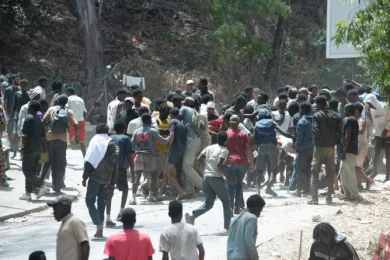
Between July 30 and 31, tens of thousands of people crossed from Morocco into Ceuta, a Spanish territory on the North African coast and part of the external border of the European Union. Public estimates place the number of those who entered within a period of approximately 24 hours between 50,000 and 60,000.
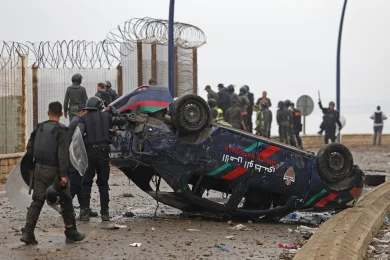
Some individuals crossed by swimming, while others passed through points where border control was exceeded. The flow was equivalent to a large part of the city's population and created immediate problems regarding sea rescue, public order, sheltering, and registering those who arrived.
At least several dozen people died during the crossings and the crowding at the border. Public tolls published in the first days continued to be updated as authorities recovered victims from the sea and verified deaths on both sides of the border.
Most of the people who entered later returned to Morocco, some voluntarily. Spanish authorities deployed additional forces, strengthened border control, and managed the transfer or return of individuals who did not remain in Ceuta.
The exact cause of the movement has not been publicly established. The Moroccan Ministry of Interior indicated the spread on social media of false information and its exploitation by networks involved in migrant trafficking.
The information would have been related to the interpretation of a recent ruling by the Spanish Supreme Court regarding the automatic return of individuals intercepted while attempting to reach the sea in Ceuta or Melilla. According to the Moroccan explanation, the messages distributed online created the impression that arrival by swimming would prevent immediate return.
The Spanish government indicated in turn the role of networks that encouraged the movement and exploited the confusion regarding the court ruling. Prime Minister Pedro Sánchez described the massive crossing as a violation of Spanish sovereignty and defended the intervention of the authorities.
The article published by the European Council on Foreign Relations formulates a different or complementary hypothesis. The author, the director of the ECFR office in Madrid, Carla Hobbs, believes that the scale of the crossings raises questions about the effectiveness of Moroccan controls and the possibility that they may have been deliberately relaxed.
ECFR does not present direct evidence that the Moroccan government ordered the opening of the border. The analysis is based on the unusual size of the flow, the political timing, and the precedents in relations between Morocco and Spain.
The crisis erupted about ten days after a visit by the Spanish prime minister to Algeria. Sánchez announced then the opening of a new phase in relations between the two states.
Algeria and Morocco are regional rivals and have tense diplomatic relations. Their positions differ especially on Western Sahara, a disputed territory over which Rabat supports a plan for autonomy under Moroccan sovereignty.
The ECFR analysis considers that the rapprochement between Spain and Algeria may be relevant for understanding the timing of the crisis. This connection remains, however, an interpretation, in the absence of confirmation that the crossings were organized or tolerated by Moroccan authorities for political purposes.
The reaction of European states has been marked by disputes over responsibility. Italy's Prime Minister, Giorgia Meloni, criticized the Sánchez government's migration policy and called for measures regarding Spain's participation in the Schengen area.
Italy temporarily introduced controls for certain travelers from Spain, citing security risks and the need to manage secondary movements. The Italian government presented the measure as limited and compatible with the willingness to support Spain in managing the crisis.
Madrid rejected the criticisms and summoned the Italian ambassador. The Spanish government accused Rome of using the situation for an internal and European political confrontation.
Finnish Interior Minister Mari Rantanen supported the idea of Schengen measures against Spain. The President of the European People's Party, Manfred Weber, called on the Commission to examine the Sánchez government's responsibility for protecting the external border.
France temporarily strengthened controls at the border with Spain. French reactions also included calls for European solidarity, and the positions expressed by governments and parties were not uniform.
ECFR believes that directing the main criticisms towards Spain sends a wrong message to neighboring states of the Union. According to the analysis, a state that would allow the use of migration as a means of pressure would bear a lower cost if EU members accuse each other instead of formulating a common response.
The analysis center calls on European leaders to treat migratory pressure on a member state as a problem that affects the integrity of the external border of the entire Union.
This approach would not eliminate Spain's obligation to manage the border and comply with asylum, migration, and return regulations. However, ECFR argues that the evaluation of Spanish policy must be separated from the response to a possible deliberate use of migration by a third state.
The first recommendation is to publicly express solidarity with Spain. The Union should convey that a deliberately facilitated flow to obtain political concessions would affect Morocco's relations with all 27 member states.
The second recommendation concerns the use of European economic influence. Approximately two-thirds of Morocco's exports are destined for the EU market, and the Union represents the main source of foreign investment in this country.
ECFR proposes that Brussels be prepared to suspend negotiations regarding the deepening of the partnership with Rabat. Such a measure should depend on the assessment of the facts and the decision of institutions and member states; the analysis center does not support that suspension has already been decided.
The EU-Morocco partnership covers trade, investments, migration, security, energy, and other areas. Cooperation in border control represents an important component of the relationship, and European authorities have funded Moroccan capacities for managing migration.
This mutual dependence gives Morocco a central role in reducing departures to Spain. It also creates the risk that European policy may depend on decisions made by authorities in transit states.
ECFR appreciates that European relations with North Africa are too often organized through bilateral agreements. In the absence of a common policy, states like Spain, Italy, or Greece negotiate separately with countries of origin and transit.
A bilateral agreement can produce rapid cooperation and can respond to the particularities of each route. However, it can leave the member state exposed when the external partner conditions migration control on concessions in other areas.
The relationship between Spain and Morocco provides an important precedent. In May 2021, approximately 6,000 people entered Ceuta in a single day amid a diplomatic dispute related to Western Sahara.
The crisis followed the reception in Spain, for medical treatment, of the leader of the Polisario Front, a movement that claims independence for Western Sahara. Morocco protested against Madrid's decision.
In 2022, the Spanish government abandoned its traditional neutrality and supported the Moroccan proposal for autonomy for Western Sahara as the most serious and realistic basis for resolving the dispute.
Several analysts have linked the change to the 2021 crisis and the need to restore Moroccan cooperation in the field of migration. The Spanish government presented the new position as part of a more stable bilateral relationship.
The current crisis shows the limits of this understanding, according to ECFR. Even after diplomatic rapprochement, Ceuta remains vulnerable to rapid variations in control exercised on the Moroccan side of the border.
Morocco rejects the idea that it organized the crossings in July 2026. The official explanation emphasizes disinformation, criminal networks, and the very large number of people mobilized in a short period.
The assessment of responsibility must distinguish between temporary incapacity to control the crowd, uncoordinated relaxation of oversight, and a deliberate political decision. The ECFR document raises the last possibility but does not prove it.
The crisis also has a distinct humanitarian dimension separate from the diplomatic dispute. Individuals who attempted to cross the border were exposed to drowning, crushing in crowds, injury, and unsuitable conditions after entering Ceuta.
Unaccompanied minors must be identified and protected separately, and any return procedure must respect individual assessment and the prohibition of collective expulsions.
Individuals seeking international protection must be able to access the asylum procedure. The existence of a possible political facilitation of the movement does not eliminate the individual rights of those who crossed the border.
At the same time, organizing or encouraging a massive crossing can directly endanger people's lives. The European response must combine border control, rescue operations, combating trafficking networks, and respecting fundamental rights.
The ECFR document is an analysis and recommendation material, not an official position of the European Union. The organization specifies that its publications express the opinions of the authors and that it does not adopt collective positions.
Ceuta is one of the two Spanish territories located on the North African coast, alongside Melilla. Both are part of the European Union and form the only land borders of the EU with Africa.
Morocco claims sovereignty over both territories, while Spain considers them integral parts of its state. The territorial dispute overlaps with economic, security, and migration cooperation between Madrid and Rabat.
The Schengen area normally allows free movement without systematic checks at internal borders. States can temporarily reintroduce controls when they identify a serious threat to public order or internal security, but measures must be necessary and proportionate.
Mass entry into Ceuta does not automatically suspend Spain from Schengen. Such a sanction cannot be unilaterally decided by another state simply by making a political request.
The ECFR material was published on July 31, during the unfolding of the crisis, before all information regarding casualties, returns, and explanations from the authorities was available. Some figures and developments have been updated subsequently.
The novelty of the analysis lies in the recommendation that the Union treat any actions of pressure through migration as a European challenge and use the common economic and diplomatic relationship with Morocco, instead of leaving the response exclusively to Spain.
In short, approximately 50,000–60,000 people entered Ceuta from Morocco between July 30 and 31, 2026, in a flow that exceeded the capacity of local authorities and caused casualties, the intervention of security forces, and the subsequent return of the majority of those who arrived. Moroccan authorities attributed the movement to false information spread online and the activities of human trafficking networks. ECFR believes that the scale and timing of the crisis justify examining the possibility that the relaxation of Moroccan controls may have contributed to the crossings, without presenting this hypothesis as an established fact. European reactions have been divided. Italy temporarily introduced controls for people traveling from Spain, and politicians from several states called for measures against Madrid. Other governments requested solidarity with Spain. ECFR recommends that the EU convey to Morocco that any deliberate use of migration for political pressure would have consequences for relations with the entire Union, not just with Spain. The analysis center also proposes suspending negotiations for deepening the EU-Morocco partnership if it is confirmed that Moroccan authorities intentionally allowed the crossings.
Between July 30 and 31, tens of thousands of people crossed from Morocco into Ceuta, a Spanish territory on the North African coast and part of the external border of the European Union. Public estimates place the number of those who entered within a period of approximately 24 hours between 50,000 and 60,000.
Some individuals crossed by swimming, while others passed through points where border control was exceeded. The flow was equivalent to a large part of the city's population and created immediate problems regarding sea rescue, public order, sheltering, and registering those who arrived.
At least several dozen people died during the crossings and the crowding at the border. Public tolls published in the first days continued to be updated as authorities recovered victims from the sea and verified deaths on both sides of the border.
Most of the people who entered later returned to Morocco, some voluntarily. Spanish authorities deployed additional forces, strengthened border control, and managed the transfer or return of individuals who did not remain in Ceuta.
The exact cause of the movement has not been publicly established. The Moroccan Ministry of Interior indicated the spread on social media of false information and its exploitation by networks involved in migrant trafficking.
The information would have been related to the interpretation of a recent ruling by the Spanish Supreme Court regarding the automatic return of individuals intercepted while attempting to reach the sea in Ceuta or Melilla. According to the Moroccan explanation, the messages distributed online created the impression that arrival by swimming would prevent immediate return.
The Spanish government indicated in turn the role of networks that encouraged the movement and exploited the confusion regarding the court ruling. Prime Minister Pedro Sánchez described the massive crossing as a violation of Spanish sovereignty and defended the intervention of the authorities.
The article published by the European Council on Foreign Relations formulates a different or complementary hypothesis. The author, the director of the ECFR office in Madrid, Carla Hobbs, believes that the scale of the crossings raises questions about the effectiveness of Moroccan controls and the possibility that they may have been deliberately relaxed.
ECFR does not present direct evidence that the Moroccan government ordered the opening of the border. The analysis is based on the unusual size of the flow, the political timing, and the precedents in relations between Morocco and Spain.
The crisis erupted about ten days after a visit by the Spanish prime minister to Algeria. Sánchez announced then the opening of a new phase in relations between the two states.
Algeria and Morocco are regional rivals and have tense diplomatic relations. Their positions differ especially on Western Sahara, a disputed territory over which Rabat supports a plan for autonomy under Moroccan sovereignty.
The ECFR analysis considers that the rapprochement between Spain and Algeria may be relevant for understanding the timing of the crisis. This connection remains, however, an interpretation, in the absence of confirmation that the crossings were organized or tolerated by Moroccan authorities for political purposes.
The reaction of European states has been marked by disputes over responsibility. Italy's Prime Minister, Giorgia Meloni, criticized the Sánchez government's migration policy and called for measures regarding Spain's participation in the Schengen area.
Italy temporarily introduced controls for certain travelers from Spain, citing security risks and the need to manage secondary movements. The Italian government presented the measure as limited and compatible with the willingness to support Spain in managing the crisis.
Madrid rejected the criticisms and summoned the Italian ambassador. The Spanish government accused Rome of using the situation for an internal and European political confrontation.
Finnish Interior Minister Mari Rantanen supported the idea of Schengen measures against Spain. The President of the European People's Party, Manfred Weber, called on the Commission to examine the Sánchez government's responsibility for protecting the external border.
France temporarily strengthened controls at the border with Spain. French reactions also included calls for European solidarity, and the positions expressed by governments and parties were not uniform.
ECFR believes that directing the main criticisms towards Spain sends a wrong message to neighboring states of the Union. According to the analysis, a state that would allow the use of migration as a means of pressure would bear a lower cost if EU members accuse each other instead of formulating a common response.
The analysis center calls on European leaders to treat migratory pressure on a member state as a problem that affects the integrity of the external border of the entire Union.
This approach would not eliminate Spain's obligation to manage the border and comply with asylum, migration, and return regulations. However, ECFR argues that the evaluation of Spanish policy must be separated from the response to a possible deliberate use of migration by a third state.
The first recommendation is to publicly express solidarity with Spain. The Union should convey that a deliberately facilitated flow to obtain political concessions would affect Morocco's relations with all 27 member states.
The second recommendation concerns the use of European economic influence. Approximately two-thirds of Morocco's exports are destined for the EU market, and the Union represents the main source of foreign investment in this country.
ECFR proposes that Brussels be prepared to suspend negotiations regarding the deepening of the partnership with Rabat. Such a measure should depend on the assessment of the facts and the decision of institutions and member states; the analysis center does not support that suspension has already been decided.
The EU-Morocco partnership covers trade, investments, migration, security, energy, and other areas. Cooperation in border control represents an important component of the relationship, and European authorities have funded Moroccan capacities for managing migration.
This mutual dependence gives Morocco a central role in reducing departures to Spain. It also creates the risk that European policy may depend on decisions made by authorities in transit states.
ECFR appreciates that European relations with North Africa are too often organized through bilateral agreements. In the absence of a common policy, states like Spain, Italy, or Greece negotiate separately with countries of origin and transit.
A bilateral agreement can produce rapid cooperation and can respond to the particularities of each route. However, it can leave the member state exposed when the external partner conditions migration control on concessions in other areas.
The relationship between Spain and Morocco provides an important precedent. In May 2021, approximately 6,000 people entered Ceuta in a single day amid a diplomatic dispute related to Western Sahara.
The crisis followed the reception in Spain, for medical treatment, of the leader of the Polisario Front, a movement that claims independence for Western Sahara. Morocco protested against Madrid's decision.
In 2022, the Spanish government abandoned its traditional neutrality and supported the Moroccan proposal for autonomy for Western Sahara as the most serious and realistic basis for resolving the dispute.
Several analysts have linked the change to the 2021 crisis and the need to restore Moroccan cooperation in the field of migration. The Spanish government presented the new position as part of a more stable bilateral relationship.
The current crisis shows the limits of this understanding, according to ECFR. Even after diplomatic rapprochement, Ceuta remains vulnerable to rapid variations in control exercised on the Moroccan side of the border.
Morocco rejects the idea that it organized the crossings in July 2026. The official explanation emphasizes disinformation, criminal networks, and the very large number of people mobilized in a short period.
The assessment of responsibility must distinguish between temporary incapacity to control the crowd, uncoordinated relaxation of oversight, and a deliberate political decision. The ECFR document raises the last possibility but does not prove it.
The crisis also has a distinct humanitarian dimension separate from the diplomatic dispute. Individuals who attempted to cross the border were exposed to drowning, crushing in crowds, injury, and unsuitable conditions after entering Ceuta.
Unaccompanied minors must be identified and protected separately, and any return procedure must respect individual assessment and the prohibition of collective expulsions.
Individuals seeking international protection must be able to access the asylum procedure. The existence of a possible political facilitation of the movement does not eliminate the individual rights of those who crossed the border.
At the same time, organizing or encouraging a massive crossing can directly endanger people's lives. The European response must combine border control, rescue operations, combating trafficking networks, and respecting fundamental rights.
The ECFR document is an analysis and recommendation material, not an official position of the European Union. The organization specifies that its publications express the opinions of the authors and that it does not adopt collective positions.
Ceuta is one of the two Spanish territories located on the North African coast, alongside Melilla. Both are part of the European Union and form the only land borders of the EU with Africa.
Morocco claims sovereignty over both territories, while Spain considers them integral parts of its state. The territorial dispute overlaps with economic, security, and migration cooperation between Madrid and Rabat.
The Schengen area normally allows free movement without systematic checks at internal borders. States can temporarily reintroduce controls when they identify a serious threat to public order or internal security, but measures must be necessary and proportionate.
Mass entry into Ceuta does not automatically suspend Spain from Schengen. Such a sanction cannot be unilaterally decided by another state simply by making a political request.
The ECFR material was published on July 31, during the unfolding of the crisis, before all information regarding casualties, returns, and explanations from the authorities was available. Some figures and developments have been updated subsequently.
The novelty of the analysis lies in the recommendation that the Union treat any actions of pressure through migration as a European challenge and use the common economic and diplomatic relationship with Morocco, instead of leaving the response exclusively to Spain.
Sources

Latest News
12:02
The European Commission has approved Temu’s proposed action plan to remedy violations of the Digital Services Act
11:54
Prime Minister Luca Niculescu strongly condemns the acts of sabotage attributed to the Russian Federation following the dismantling of a network targeting the Carfil arms factory
11:39
Nicușor Dan, after the SRI uncovered a Russian sabotage network involved in starting the fire at Carfil / “Such actions are unacceptable and constitute a serious violation of our country’s sovereignty and security”
11:35
Turceni Power Plant shut down again after a failure at Unit 5
11:28
A federal judge suspends Donald Trump’s Washington golf course renovation project until further notice
See more news
NEWS ON THE SAME TOPICS

EU
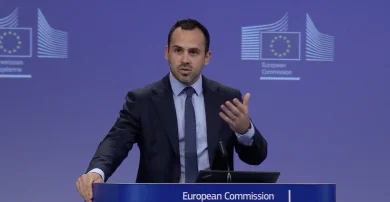
European Commission: persons without residence rights who entered Ceuta illegally must be returned

International
Calls for the exclusion of Spain from the Schengen area have intensified due to the massive influx of migrants in Ceuta.


Personalized news feed, AI-powered search, and notifications in a more interactive experience.


.webp)

.webp)


