European Commission: persons without residence rights who entered Ceuta illegally must be returned




Always see our news on Google
Brussels says that Spain and Morocco are cooperating to return individuals who do not have the right to remain and do not apply for asylum, while Frontex and the EU Asylum Agency are ready to increase support. A technical mission from the Commission is in Ceuta to assess needs, and Spain is benefiting from approximately one billion euros from EU funds for internal affairs during the period 2021–2027.
Individuals who have entered Ceuta illegally, do not have the right to remain in the European Union, and do not apply for asylum must be returned through existing procedures, said the European Commission, which states that Spain and Morocco are cooperating to manage the situation. The European executive has sent a technical mission to Ceuta to directly assess the needs of the Spanish authorities, while Frontex and the EU Asylum Agency are ready to increase their activities. Brussels specifies that the rules of the Pact on migration and asylum also apply in the current crisis.
In short
1. The Commission says that individuals without residence rights who do not apply for asylum must be returned according to applicable procedures.
2. Spain and Morocco are cooperating for returns, and the Commission states that a large part of the targeted individuals have already been returned to Morocco.
3. A technical mission from the Commission is in Ceuta to directly assess needs and any additional forms of European support.
4. Frontex and the EU Asylum Agency are involved or ready to increase support, while the Commission maintains daily contacts with Spain, Morocco, and organizations active on the ground.
5. Spain is benefiting from approximately one billion euros from EU funds for internal affairs for the period 2021–2027, and the Commission says that part of the funding is already allocated to Ceuta.
The European Commission has reaffirmed that the status of individuals who have entered Ceuta must be established individually, and those who do not have the right to remain and do not apply for international protection must be returned according to existing procedures. This clarification came after questions regarding the situation of individuals of nationalities other than Moroccan and the possibility that they may remain in Ceuta until the procedures are completed. Brussels has avoided presenting return as an automatic right for anyone who crossed the border and has linked the obligation to the lack of residence rights and the fact that the person does not apply for asylum.
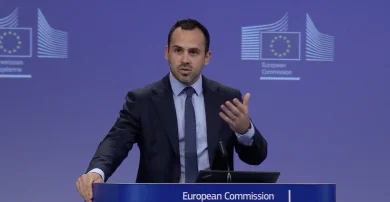
"There are rules that apply to all those who do not have the right to remain. If these individuals do not apply for asylum, they must be returned through the usual return procedures," said a spokesperson for the Commission. He specified that the current Pact on migration and asylum provides the necessary framework for managing asylum requests and the other stages of the procedures carried out in Ceuta.
The Commission says that Spain and Morocco are closely cooperating for the return of individuals who have crossed the border illegally and who meet the conditions for return. The European executive states that, according to information received from the Spanish authorities, illegal movement further towards mainland Spain has been prevented so far. Brussels added that it expects return procedures to continue for individuals who do not have the right to remain.
In a subsequent response regarding cooperation between Madrid and Rabat, the Commission stated that "a large majority" of the targeted individuals has already been returned to Morocco and that operations must continue. However, the European executive did not provide an exact figure or a breakdown by nationality or legal status, so the exact scope of returns cannot be established from the briefing. Bilateral discussions between Spain and Morocco regarding agreements between the two countries have not been commented on by the Commission.
The situation is also managed through the support of European agencies. Frontex and the EU Asylum Agency are ready to increase their contribution, and the Commission states that it has provided support to the Spanish authorities since the beginning of the crisis. Brussels says that EU agencies have been involved on the ground since the early stages, and contacts with Spain, Morocco, and active non-governmental organizations in Ceuta take place daily.
A technical mission from the Commission's services is in Ceuta to discuss directly with the Spanish authorities and identify needs that cannot be adequately assessed from a distance. The visit was agreed with Madrid and takes place at a stage where Brussels is trying to establish what additional support can be offered. The Commission rejected the idea that European intervention would have only begun with this mission and insisted that dialogue and the offer of support have existed since the beginning of the events.
"Our experts are on the ground to directly understand what the needs are and to see how the EU can further support the Spanish authorities. Frontex and the EU Asylum Agency are ready to increase efforts on the ground," said a representative of the Commission. He specified that the technical mission must take stock of the situation and contribute to establishing the next steps.
Brussels has linked the response to the crisis to the application of the Pact on migration and asylum. The Commission reminded that the new framework is in force and that it is working with the Spanish authorities for its implementation, including regarding the management of asylum requests. The Pact does not eliminate the obligation to individually assess the situation of individuals requesting protection nor the applicable rules for returning those who do not have the right to remain.
The Commission also indicated the financial dimension of European support, specifying that Spain is benefiting from approximately one billion euros from EU funds for internal affairs during the period 2021–2027. The representative of the European executive said that funding is already allocated in this context for Ceuta, without specifying the exact amount allocated to the autonomous city. Brussels says it is ready to analyze the need for additional support after the assessment carried out by the mission on the ground.
The Commission did not confirm information presented by journalists regarding the number of people on the street, alleged assaults, cases of communicable diseases, or clandestine transports to the continental coast of Spain. Official responses have been limited to confirming the monitoring of the situation, cooperation with authorities and European agencies, and the application of asylum and return procedures. These statements presented in response to journalists' questions should not be treated as confirmed facts by the Commission.
Regarding possible new border crossings around August 15, the Commission said it is monitoring available information but is not building its response around a single date. Brussels says that borders must be protected and the capacity for return maintained every day, as such events can occur at any moment. Cooperation with the Spanish and Moroccan authorities continues for this purpose.
Ceuta is a Spanish territory located on the North African coast and represents one of the external land borders of the European Union. Managing individuals who cross this border involves both Spanish legislation and European asylum, border control, and return norms.
The Commission says that the current response combines the application of the procedures provided by the Pact on migration and asylum, cooperation with Morocco, support from European agencies, and funding available through EU funds for internal affairs.
Latest News
11:20
11:16
11:12
11:10
11:07
See more news
NEWS ON THE SAME TOPICS
.webp)

.webp)