The European Commission is preparing the rules for the deduction of the carbon price paid outside the EU under the CBAM.




Always see our news on Google
The synthesis report published by the Commission shows that the consulted actors request clear rules regarding recognized carbon pricing schemes, the treatment of reductions and compensations, proof of payment, currency conversion, and independent verifiers. The implementing act for the final phase of the CBAM was published in May 2026 for four weeks of public feedback.
The European Commission published the synthesis report of the consultation on the carbon price paid in third countries and opened for public feedback the implementing act that will establish how these costs can reduce CBAM obligations in the final phase of the mechanism.
In short
1. The Commission published in May 2026 the implementing act regarding the carbon price paid in third countries, for four weeks of public feedback.
2. The consultation launched on August 28, 2025, focused on how carbon costs from outside the EU can be transformed into a reduction of the CBAM obligation.
3. The Commission evaluated 158 responses, of which 76% came from companies and business associations.
4. The main themes were the eligibility of carbon pricing schemes, the treatment of compensations, proof of payment, currency conversion, and the accreditation of verifiers.
5. Respondents requested predictable and verifiable rules but had differing positions regarding the inclusion of voluntary credits, climate taxes, and national systems from third countries.
The European Commission is preparing one of the technical acts necessary for the final phase of the Carbon Border Adjustment Mechanism. The act will establish how a carbon price paid in a third country can be deducted from the CBAM obligation due upon import into the European Union.
The public consultation was launched on August 28, 2025, together with two other calls for contributions regarding the methodology for calculating emissions and the adjustment for free allocation from the EU ETS. The consultation analyzed in the report published by the Commission focused on the technical and administrative aspects of recognizing carbon costs paid outside the EU.
The Commission specifically pursued three practical themes: proof of payment of the carbon price in the country of origin, conversion of costs into euros, and the eligibility of foreign verifiers who can certify the information used for deduction from the CBAM obligation.
The synthesis report evaluated 158 responses. Of these, 145 were direct contributions to the consultation regarding the carbon price paid in third countries, while the rest were relevant responses from related consultations regarding free allocations and the methodology for calculating emissions.
Companies and business associations represented 76% of the contributions. The responses were almost evenly split between actors from the EU, 54%, and actors from outside the Union, 46%. Among the respondents from third countries, significant contributions came from China, Turkey, and the United Kingdom.
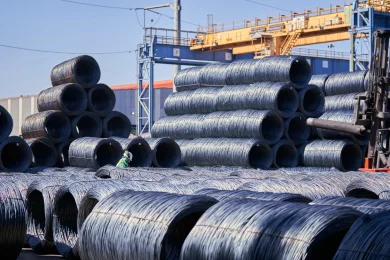
The majority of sectoral contributions came from the area of industries affected by the CBAM in general, followed by iron and steel, electricity, aluminum, and chemicals-hydrogen. The iron and steel sector had 36 responses, while electricity had 15.
The first major theme was the eligibility of carbon pricing instruments. Respondents generally supported the recognition of robust systems from third countries, such as the UK ETS and China's national ETS, but requested clear rules regarding equivalence and the treatment of taxes, excise duties, credits, or other climate instruments.
Many respondents argued that only actual, explicit, and verifiable carbon costs should be deductible. They warned that including taxes not directly related to carbon or costs compensated through subsidies could undermine the CBAM objective.
Other actors called for a broader definition of the carbon price, which should include climate costs incurred under regimes outside the EU, including certain fuel or electricity taxes, carbon credits, or voluntary instruments. This position was particularly supported by some respondents from third countries.
Voluntary credits and mechanisms provided for in Article 6 of the Paris Agreement generated differing opinions. Some respondents supported their inclusion if they are nationally regulated, verified, and based on internationally recognized standards. Others warned about the risks of double counting, uncertain credit quality, and lack of climate integrity.
The second major theme was the treatment of reductions, compensations, and subsidies. Respondents largely agreed that reductions should not undermine the objectives of the CBAM. Many called for explicit rules so that any rebate, compensation, or exemption granted in a third country should be taken into account when determining the net carbon price paid.
The report shows a difference between respondents from the EU and those from outside the Union. EU actors more frequently supported the strict exclusion of rebates from the calculation of the recognized price. More respondents from third countries called for the complete deduction of carbon costs paid outside the EU.
The third theme was defining the effective price paid. Respondents discussed whether this concept should be interpreted narrowly, i.e., only for direct instruments such as ETS and carbon taxes, or more broadly, to include indirect measures, upstream costs, or compensations.
Many actors called for aligning the methodology with the principles of the EU ETS and publishing transparent reference prices. The electricity sector drew attention to the difficulty of demonstrating the carbon price in electricity transactions, where energy is traded anonymously on exchanges and cannot be physically tracked after entering the grid.
Proof of payment was another central theme. Respondents called for practical, credible, and harmonized requirements. Among the documents mentioned as possible evidence are receipts issued by public authorities, utility bills, and recognized certificates.
Many actors warned that overly complex standards could increase the administrative burden without improving accuracy, especially for small and medium-sized enterprises and for supply chains with many suppliers. Proposals included using digital templates, uploading documents once in the CBAM portal, and reusing them for subsequent declarations.
Currency conversion was treated as a necessary element for the uniform application of deductions. Respondents called for a standardized methodology, with clear rules regarding exchange rates, relevant periods, and regular publication of applicable rates.
Another theme was the accreditation and independence of verifiers. Respondents supported strict but proportionate requirements based on international standards such as ISO 14064 and the GHG Protocol. Many called for foreign verifiers to be recognized if they meet international standards, to avoid excessive costs and trade barriers.
The report notes concerns about a possible limitation of recognition only to accredited bodies in the EU. Several respondents supported mutual recognition agreements and the use of existing national accreditation structures, provided that clear criteria are met.
The issue of national verification systems was raised mainly by respondents from the United Kingdom, Thailand, Egypt, Japan, Serbia, and Singapore. They called for an inclusive international approach, so that accredited verification bodies in the country of origin can be accepted if they meet recognized standards.
Respondents also discussed the risks of fraud, misclassification, and evasion. Some contributions mentioned possible inconsistencies between customs codes and economic classifications, as well as the risk of deliberate fragmentation of imports to avoid CBAM obligations.
The Commission also identified coordinated responses. Among these, electricity transport operators from the EU, the United Kingdom, and Ireland called for connecting the EU ETS and UK ETS and a possible temporary exemption for electricity imports from the United Kingdom. EUROFER supported a conservative and verifiable approach for deducting carbon prices paid outside the EU and called for direct or indirect reductions to be fully taken into account.
The synthesis report does not establish the final form of the rules but centralizes the positions of the consulted actors. The implementing act published in May 2026 for four weeks of public feedback represents the next step in preparing for the final phase of the CBAM.
CBAM is the mechanism through which the EU seeks to apply a carbon cost on certain imports, to reflect the climate costs borne by European producers under the EU ETS and to reduce the risk of carbon leakage.
The final phase of the CBAM will require technical rules for calculating embedded emissions, adjusting based on free allocations from the EU ETS, and recognizing any carbon price paid in the country of origin.
Rules regarding the carbon price paid in third countries are important to avoid double taxation, but also to prevent deductions that would weaken the effect of the CBAM. Therefore, the methodology must establish which instruments are eligible, how payment is demonstrated, how reductions and subsidies are deducted, and who can verify the information provided.
Latest News
22:57
22:53
22:42
22:30
22:28
See more news
NEWS ON THE SAME TOPICS