The EU develops robots with biological sensors for monitoring aquatic biodiversity.



Always see our news on Google
A project funded by the European Union combines living organisms, artificial intelligence, and robotics to monitor water quality and the impact of climate change on ecosystems in real time.
A project funded by the European Union develops a new generation of biohybrid robots that use living organisms as sensors to monitor aquatic biodiversity and water quality, providing an alternative to traditional analysis methods. The initiative, called BioDiMoBot, combines biology, engineering, and artificial intelligence to observe in real time how ecosystems react to environmental and climate changes.
In short 1. The BioDiMoBot project develops biohybrid robots that use living organisms as sensors.
2. The systems monitor biodiversity and water quality in real time.
3. The technology combines artificial intelligence, optical sensors, and biological reactions.
4. The method offers a cheaper and more continuous alternative to classical monitoring.
5. Tests have been conducted in real conditions in Europe and in Arctic regions.
The project addresses the limitations of current methods for monitoring aquatic ecosystems, which mainly rely on technical sensors and laboratory chemical analyses, conducted sporadically and at high costs. These methods provide precise data for individual parameters but do not always capture the complex biological reactions that reflect the true state of ecosystems.
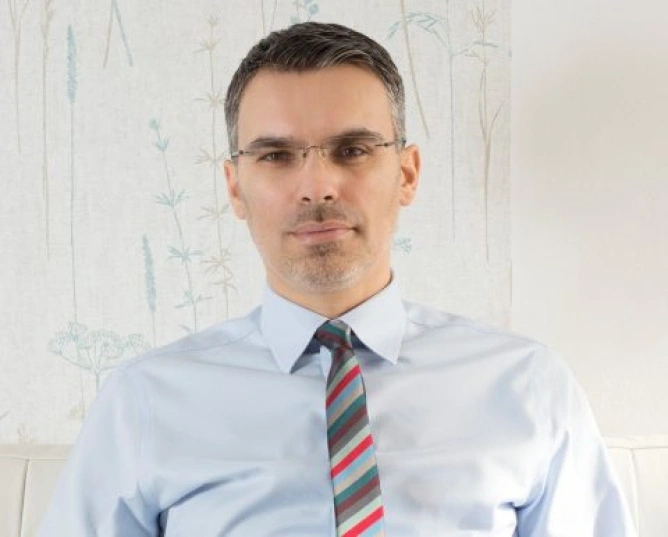
BioDiMoBot proposes a different approach, where living organisms are directly integrated into monitoring systems. "BioDiMoBot was designed to address these limitations by developing biohybrid systems that use living organisms as detection elements, complementing existing technologies with biologically integrated, cost-effective, and scalable solutions," said project co-coordinator, biologist Wiktoria Teresa Rajewicz.
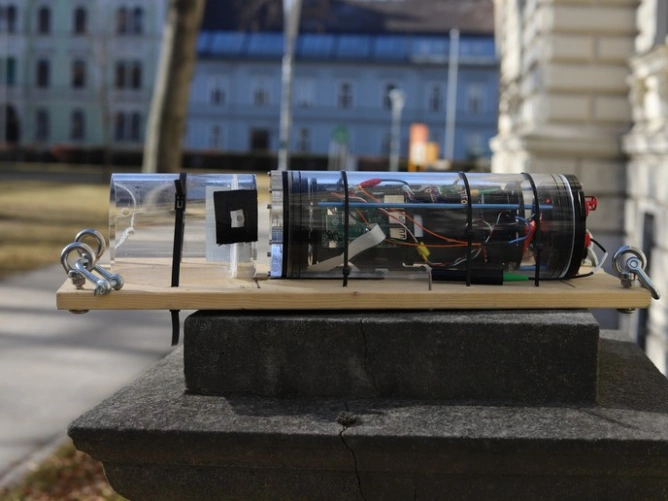
The developed technology combines optical and electronic sensors with aquatic organisms that react to environmental changes. "Biohybrid sensors combine the sensitivity of living organisms with the robustness of electronic systems," explained Rajewicz. "Paired with optical and electronic reading units, they allow us to automatically record behavioral and physiological reactions to multiple stress factors and transmit them in real time as digital data."
A concrete example is the module based on Daphnia, small aquatic organisms known as water fleas. The system includes a chamber where these organisms are exposed to water flow, while a camera and a computer analyze their swimming behavior. Changes in movement patterns provide information about water quality and the combined effects of environmental substances.
The developed systems can generate continuous data streams that identify early signals of ecosystem degradation and highlight long-term ecological trends. According to researchers, this data can contribute to assessing the impact of climate change, developing adaptive management strategies, and guiding conservation policies.
The project has been tested both in controlled laboratory conditions and in natural environments, including lakes in Austria, local ponds, and coastal areas in Greenland. Preliminary results show that biohybrid systems can operate reliably over extended periods and can capture relevant biological reactions to environmental variations.
Researchers emphasize that the major advantage of this approach is the ability to observe ecosystems continuously and integratively, without frequent human intervention. "By enabling continuous observation, in real time, without frequent intervention, autonomous biohybrid systems provide a more holistic and better-calibrated understanding of the health of ecosystems and aquatic biodiversity," said Rajewicz.
The BioDiMoBot project aligns with the European Union's efforts to develop advanced technologies for environmental monitoring and to support policies on climate change and biodiversity. Traditional monitoring approaches are gradually being complemented by solutions based on artificial intelligence, automation, and the integration of biological data.
Integrating living organisms into technological systems reflects an emerging direction in European research, where technology not only measures the environment but also attempts to replicate how it is perceived by the organisms living within it. In this context, projects like BioDiMoBot can contribute to the development of more precise and efficient systems for protecting ecosystems and adapting to climate change.
Latest News
10:49
10:45
10:33
10:22
10:21
See more news
NEWS ON THE SAME TOPICS