Study for Parliament: EU faced 41 episodes of economic pressure, including from China and the US


Always see our news on Google
The European Union has faced 41 episodes of economic pressure exerted by third countries, according to a study commissioned by the European Parliament’s Committee on International Trade and presented to MEPs on 2 September. The authors of the research, Lucia Tajoli and Matteo Villa, analysed the cases from the perspective of the EU’s economic vulnerabilities and the Union’s capacity to respond through its economic security instruments.
In brief The study identifies 41 episodes of economic pressure against the EU and shows that their frequency has increased in recent years. China emerges as one of the main actors, but the authors also highlight significant pressure from the United States and Russia. The pressure does not always consist of isolated incidents, but can accumulate over time and reflect a broader strategy by the state exerting it. The study analyses in detail China’s restrictions on rare earths, US pressure concerning European digital regulation, and Indonesia’s measures against certain European products. The authors recommend a better European monitoring system, including an “economic pressure dashboard” and a solidarity mechanism among Member States.
The research starts from a broader shift in international trade relations. Economic interdependencies that were built to increase efficiency and trade can also be used to exert pressure on other states when access to certain markets, products, resources or technologies becomes essential.
The authors say that the EU is increasingly exposed to this type of pressure and that the number of cases has risen visibly in recent years. Rather than being treated separately, some episodes need to be assessed together, because one measure may remain in force while other restrictions are subsequently added.
China is one of the main sources identified in the study. The case analysed in detail concerns restrictions on rare earths, materials essential for European industries such as automobiles, renewable energy, electronics and defence. When access to such resources is concentrated in a single country, export restrictions can produce rapid economic effects and increase political pressure on the EU.
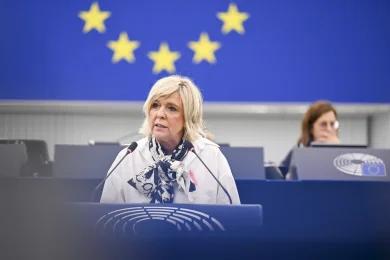
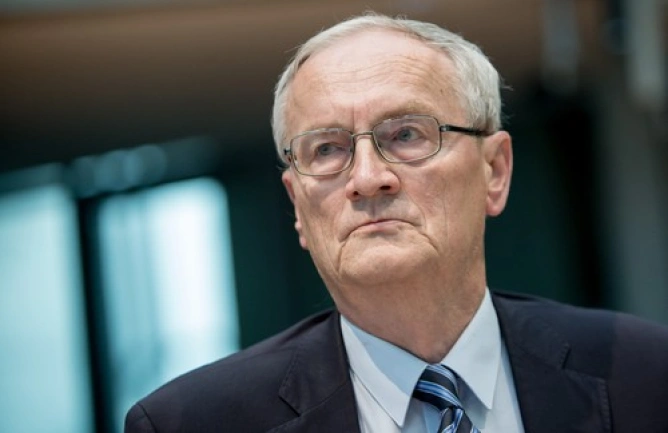
Lucia Tajoli said in INTA that “a large number of cases are coming from China”, but stressed that the pressure does not come exclusively from states considered rivals. The United States also appears among the main actors identified, including through pressure concerning European digital legislation.
This element is important because it shows that European economic security cannot be reduced to the relationship with China or Russia. A close strategic and commercial partner can also exert pressure when economic or regulatory interests diverge.
Russia appears mainly in connection with energy and the economic consequences of sanctions adopted after the invasion of Ukraine. However, the study also shows that pressure is not reserved for major powers. Medium-sized economies can use access to certain products or markets to obtain concessions.
Indonesia is one of the examples used by the researchers. The case concerns restrictions that affected European products in the dairy and alcoholic beverages sectors. The authors use it to show that vulnerability can also arise in less obvious trade relationships and that risks must be identified by sector, not only by country.
A central point of the study is the difficulty of determining when a trade measure becomes economic coercion in the legal sense. Not every restriction on imports, exports or investment automatically constitutes an attempt to force the EU to change a decision. The intention, context and connection between the economic measure and the political objective must be analysed separately.
The European Commission insisted on the same distinction in the INTA debate. The Commission representative explained that some restrictive measures may reflect industrial policy objectives, the protection of a domestic industry or a strategy to reduce dependencies, without meeting the legal conditions to be considered coercion.
For the authors, it is precisely this grey area that makes a permanent European monitoring capacity necessary. The study recommends developing an “economic pressure dashboard” through which information on trade restrictions, threats and effects on European companies can be systematically collected and compared.
Companies are considered important in this system because they can identify the first signs before the pressure becomes visible at the political level. A company may notice unusual customs delays, new administrative requirements, access limitations or pressure on suppliers before national authorities have a complete picture.
The study also proposes a “solidarity playbook” for cases in which pressure is concentrated on a single Member State. Such a mechanism should reduce the risk of that state bearing the costs of an economic conflict alone and increase the likelihood of a common European response.
The authors also draw attention to the fact that reducing dependencies has its own costs. Diversifying suppliers can increase resilience, but maintaining alternative sources of supply is more expensive than relying on a small number of suppliers. Consequently, economic security involves trade-offs that must be assessed at the European level, not only at the level of a company or a Member State.
The study was commissioned by the INTA Committee in the context of the broader debate on the EU’s economic security and the use of trade as a geopolitical instrument. It examines both cases of economic pressure and the ability of the Anti-Coercion Instrument and the other European trade instruments to respond.
The 41 cases identified show that the issue concerns not only the existence of legal instruments, but also the EU’s capacity to detect pressure quickly, assess the costs and respond in a coordinated manner.

Latest News
20:40
20:34
20:30
20:21
20:04
See more news
NEWS ON THE SAME TOPICS