



Simplifying pesticide rules divides experts and MEPs over safety re assessments and access to alternatives



Always see our news on Google
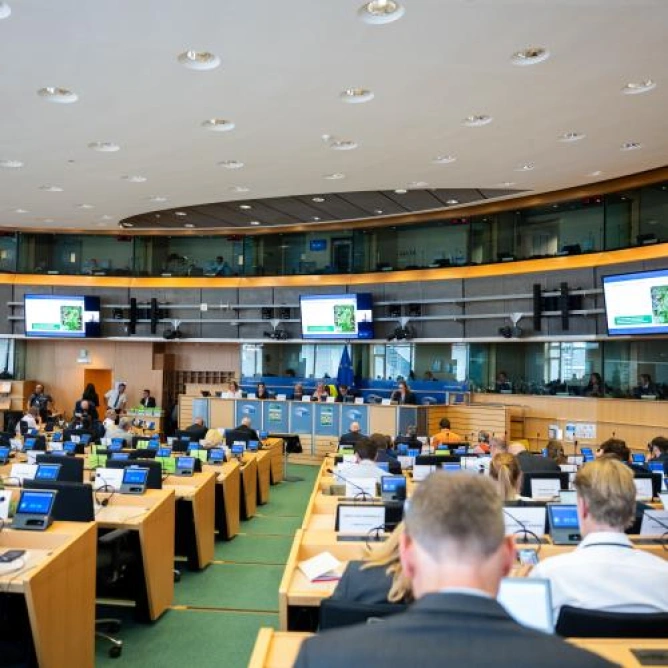
Reducing delays in pesticide authorisation and maintaining checks capable of identifying new risks caused disagreements among researchers, agricultural representatives and MEPs at the joint AGRI–ENVI meeting on 2 September 2026. The European Commission argued that the proposed simplification would allow resources to be focused on substances requiring the greatest attention, but rejected the extension of certain derogations and amendments that, in its assessment, would once again allow emergency authorisations for neonicotinoids.
In brief Assessments take longer than the timelines presented by EFSA. The initial assessment carried out by the rapporteur Member State takes approximately 36 months on average, compared with the 18 months provided for, while EFSA’s examination for renewals takes around 14 months, compared with 11. The lack of alternatives is a concern for crop protection. Participants described difficulties in combating diseases and pests, resistance problems and the repeated use of emergency authorisations. The duration of approvals remains controversial. The Commission proposes approvals without a fixed time limit for certain active substances and risk-oriented reassessments. National authorisations for products would remain time-limited. The Commission challenges some amendments. The objections concern neonicotinoids, the automatic recognition of emergency authorisations and the export of seeds treated with unauthorised pesticides. Negotiations continue. The hearing and examination of the amendments did not constitute adoption of the reform; the rapporteurs announced that they were preparing compromises between the political groups.
The European Food Safety Authority, EFSA, explained that the assessment of an active substance involves two main stages. A rapporteur Member State prepares the initial analysis, after which EFSA coordinates the examination together with the Member States and submits the scientific conclusions to the Commission. The delays presented at the hearing concern these stages of the risk assessment and do not include the entire process of researching, developing and commercially introducing a product.
According to EFSA, the stage under the responsibility of the rapporteur Member State takes approximately 36 months on average, twice the 18-month period presented at the meeting. For renewals, the examination coordinated by EFSA takes approximately 14 months, three months longer than the 11-month period. The Authority identified a lack of adequate resources at national level as one of the main causes of delays and indicated that strengthening Member States’ capacity could reduce the overall assessment time.
Pavel Minář, a representative of the Czech authority responsible for assessing plant protection products, described an increase in the complexity of the work. Assessments must take account of developments in scientific knowledge, effects on bees, endocrine disruption and formulation components. He presented estimates according to which the volume of scientific work required for assessment has increased by approximately 70–130% compared with 2011, while staffing has not increased to the same extent.
Minář supported extending approval periods together with reassessment programmes focused on priority substances. His argument was that authorities need the capacity to analyse relevant issues and new scientific evidence. EFSA, for its part, welcomed the proposed efficiency measures and additional resources, particularly for assessing biological control solutions.
From the perspective of crop protection, Anne-Katrin Mahlein and Rita Milvia De Miccolis Angelini described the difficulties caused by the withdrawal of certain substances without sufficiently effective alternatives, the emergence of resistance and pressure from diseases and pests. The interventions highlighted the need for research, integrated pest management and faster access to new solutions. De Miccolis Angelini also addressed the authorisation costs for minor uses, where the smaller market may limit interest in developing and registering products.
Cédric Benoist, representing the cereals sector of Copa-Cogeca, presented farmers’ difficulties in combating weeds and the time required to develop new solutions. Robert Wiedmer, from the advisory service for fruit growing and viticulture in South Tyrol, explained why permanent crops need treatment options and the rotation of substances to limit resistance. He showed that emergency authorisations do not provide the stability needed for long-term planning.
Martina G. Vijver, a professor at Leiden University, warned that eliminating periodic reassessment could delay the identification of effects that become known after authorisation. In her written presentation for the hearing, she expressed the principle as follows: “The regulatory system must remain capable of correcting yesterday’s decisions on the basis of tomorrow’s knowledge”. Vijver called for post-authorisation monitoring, the integration of independent research and dedicated procedures for biological alternatives, together with sufficient staff, digitalisation and higher-quality dossiers.
The Commission defended the move from fixed-term approvals to a more risk-oriented approach for certain active substances. The DG SANTE representative stated that the proposal excludes from approvals without a time limit substances that raise health or environmental concerns and that authorisations granted by Member States for products will remain time-limited. The approximately 200 renewal procedures currently under way would be completed.
In the Commission’s explanation, the new system would allow reassessment programmes for groups of substances, targeted checks when new knowledge or methods emerge and the continued use of the possibility of re-examining an approval at any time. The Commission maintains that this combination would free up resources for issues requiring intervention. Critics of exclusively risk-oriented reassessments have questioned the system’s ability to identify in time precisely those problems that were unknown at the time of approval.
For biological control, the Commission presented priority assessments, provisional authorisations and additional resources for EFSA. It also supported facilitating the use of drones for more precise applications in appropriate situations, while maintaining protection requirements. In cases without reasonable alternatives, the proposal would allow certain derogations and longer grace periods, subject to individual analysis; the Commission specified that these periods are maximum periods that Member States may grant, not mandatory time limits in all cases.
The dispute extended to amendments tabled by MEPs. The Commission considered that the automatic recognition of emergency authorisations between states in the same zone would contradict their restrictive use. It also challenged proposals that would once again allow such authorisations for neonicotinoids, citing the judgment of the Court of Justice of the European Union and the protection of bees. Objections concerning the export of seeds treated with unauthorised pesticides focused on safety, enforcement of the rules and the consistency of the authorisation system.
Regarding residues in food and feed, the Commission supported reducing limits to the technical zero level for the most dangerous substances covered by the proposal. However, it warned that extending this rule to all substances not approved in the EU would raise problems in relation to international trade obligations. Herbert Dorfmann announced at the end that work on compromises was beginning, in a dossier that must reconcile the availability of solutions for farmers with the protection of health and the environment.

Latest News
16:42
16:37
16:26
16:19
16:09
See more news
NEWS ON THE SAME TOPICS








.webp)

.webp)


