Coffee, grapes, and citrus fruits could feel the most impact from stricter EU rules on imported pesticides.



Always see our news on Google
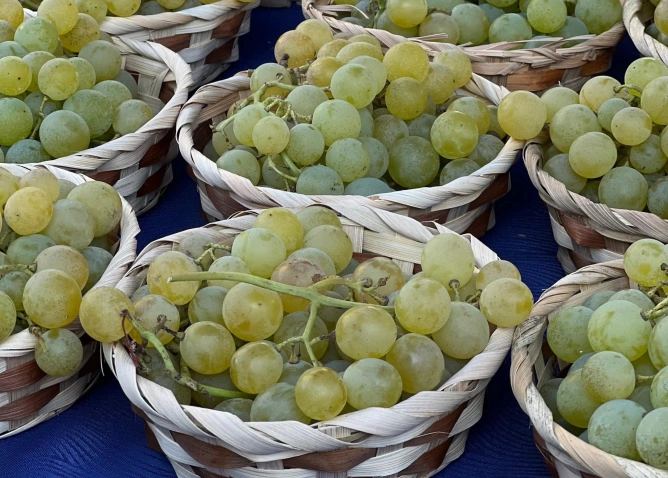
Coffee, table grapes, and citrus fruits are among the products for which European consumers could experience the highest price increases if the EU imposes almost zero limits on the residues of the most dangerous banned pesticides in the Union, according to a preliminary study by the Joint Research Centre. In the intermediate scenario analyzed by researchers, prices increase by 6.5% for table grapes, 6% for coffee, and 5.6% for citrus fruits, but the effects drop below 1% for all products in a scenario where exporters adapt more easily.
In short
The JRC analyzed three scenarios for the situation in which the EU would reduce the quantifiable limits of the residues of the most dangerous banned pesticides in the Union, without presenting any of the scenarios as a forecast.
In the intermediate scenario, total agricultural imports of the EU decrease by 8%, and the highest price increases for consumers are 6.5% for table grapes, 6% for coffee, and 5.6% for citrus fruits.
If the adaptation of exporters costs less and only the production for which residues have been detected is affected, imports decrease by 0.4%, and all price increases remain below 1%.
An extreme scenario in which producers from third countries do not adapt results in much larger increases, including 332% for coffee, but the JRC uses it as an upper limit for assessment, not as an expected outcome.
The Commission has not yet decided to simultaneously introduce the new limits. The study will contribute to the impact assessment that must precede any potential measures.
The impact on prices depends on a succession of market reactions. If a producer outside the EU uses a substance targeted by the new rules, they can change the pesticide, modify the timing of treatment to avoid residues, separate production intended for the European market, or abandon exports to the EU.
Each option has different costs. If the producer adapts, the product can continue to reach the European market, but the additional costs may be partially reflected in the price. If they do not adapt, imports must be replaced by European production or by suppliers from other countries.
The JRC study attempts to capture this uncertainty through three scenarios designed to provide a range of possible outcomes. Researchers warn that these do not represent three alternative forecasts and that the uniformly applied assumptions cannot reproduce the situation of each crop, substance, and exporting country.
The intermediate scenario assumes that producers decide whether to adapt based on the profitability of access to the European market. For those who continue to export, the model assumes an additional adaptation cost of 20% for the part of production considered affected.
Exposure is estimated using both the residues observed in European controls and information regarding pesticide authorization in exporting countries.
In this situation, total agricultural imports of the EU decrease by approximately 8%. The effect on prices is concentrated in a few product categories.
Table grapes register the highest price increase for consumers, of approximately 6.5%. Coffee follows with 6%, and citrus fruits with 5.6%.
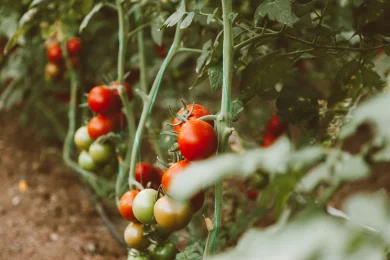
For tomatoes, the model estimates an increase of approximately 3.1%. Soybean meal could become about 2% more expensive, and rapeseed by 1.7%.
Estimated increases for soybean oil and apples are approximately 1.6%, and for rapeseed meal 1.3%. For soybeans, the difference is about 1%.
These results reflect the importance of affected suppliers for the European market and the possibility of replacing them. A product may be exposed to a large number of targeted pesticides, but the effect on the consumer remains low if there are sufficient alternative sources.
The opposite situation occurs when a large part of European imports comes from suppliers who would need to change their practices and when alternative supply is limited.
Coffee is one of the clearest examples. The EU is almost entirely dependent on imports for this raw material, and a significant part of the supply comes from countries where there is information regarding the use or detection of substances included in the analysis.
Researchers identify cyproconazole and glufosinate among the substances relevant to the analyzed coffee flows. The model shows that reducing imports from affected suppliers can lead to a redistribution of trade to other countries, but these do not always fully compensate for the lost volumes.
Citrus fruits are exposed in a similar way. In the intermediate scenario, total citrus imports of the EU decrease by approximately 26%, even though a significant number of unaffected exporters increase their sales to the European market.
European producers react to the reduction in imports. In the same scenario, EU citrus production increases by approximately 3.3%, one of the largest estimated increases for European agriculture.
This additional production mitigates the effect on consumers, but does not completely eliminate the reduction in external supply, which explains the estimated increase of approximately 5.6% in citrus prices from the model.
Table grapes present the largest effect on price in the intermediate scenario. Total imports decrease by approximately 20%, and European production increases by approximately 2.2%.
The model thus indicates that internal supply and the redistribution of imports fail to fully compensate for the disruption of affected suppliers, resulting in the estimated increase of 6.5% for consumers.
Tomatoes provide an example in which European production can compensate for a larger part of the reduction in imports. Morocco accounts for over 70% of the tomato imports analyzed in the detailed study.
In the intermediate scenario, Moroccan tomato exports to the EU decrease by approximately 60%. Total production from Morocco remains largely constant, as some of the volumes are redirected to other markets.
European tomato production increases by approximately 3%, and the price for EU consumers also by approximately 3%. Some of the European production that would have been exported is redirected to the domestic market.
The same mechanism does not work the same for products where the EU has a reduced production capacity. Coffee cannot be substituted by expanding European agriculture in the same way that tomatoes or citrus fruits can.
Alternative imports thus become more important. The study analyzes for several products whether the EU can buy from other countries that do not show detections or information regarding the use of targeted substances.
For most products analyzed separately, alternatives exist. However, researchers estimate that changing suppliers may involve prices that are approximately 2–9% higher in certain cases.
The situation is not uniform. For almonds, avocados, cherries, figs, hazelnuts, kiwis, melons, and other products, the average prices of alternative suppliers analyzed are currently lower than those of the countries where there are detections or authorizations of targeted pesticides.
For bananas, pulses, millet, peas, sorghum, and nuts, alternative suppliers appear in data with higher average prices. Nuts present one of the largest differences in this direction.
The capacity to diversify imports is thus as important as the existence of residues. The EU is heavily dependent on imports for some products, but can buy from numerous countries, reducing the risk of a major disruption.
For other categories, sources are more concentrated. The study identifies hazelnuts among the products for which dependence on imports is high and alternatives are less diversified.
The JRC also separately analyzes the scenario in which producer adaptation is cheaper. In this case, only the part of production corresponding to the residues observed in controls is considered directly affected, and the additional adaptation cost is set at 5%.
The result changes radically. Total agricultural imports of the EU decrease by only 0.4%, and European agricultural production remains almost unchanged.
No analyzed product registers a consumer price increase greater than 1%. Table grapes remain the most affected, with approximately 0.9%.
For citrus fruits, the increase is 0.5%, for soybeans 0.4%, and for tomatoes and apples approximately 0.3%. Most of the other products remain very close to the baseline level.
The difference between the intermediate scenario and the lower one comes from two assumptions. In the first case, researchers assume that the use of a pesticide may exist even where it is authorized, even if it has not been detected in European tests, and that adaptation is relatively costly.
In the second, only actual detections are taken into account, and producers can make the necessary changes at a lower cost.
The study also includes a scenario without adaptation, designed to show the upper limit of the effect. All producers considered exposed continue to use the substances and lose access to the EU market.
In this case, total agricultural imports decrease by 41%, and some prices rise to extreme levels. Coffee reaches a modeled increase of 332%, soybean meal 105%, citrus fruits 85%, table grapes 83%, soybeans 63%, and soybean oil 55%.
These values do not constitute a central estimate from the JRC. The authors repeatedly explain that the scenario deliberately assumes the absence of any adaptation and is used to delineate the upper limit of the possible impact.
The actual behavior of producers could be much more varied. Some may abandon the respective substance, others may change the timing of application, and farms that do not use the pesticide may be separated in the supply chains for export to the EU.
Some exporters may decide that the European market does not justify the additional investments and may redirect production to other countries. Their ability to do so depends on competitiveness, market diversification, and domestic demand.
The JRC identifies 18 active substances at the center of the analysis, after examining pesticides not approved in the Union and classified among the most dangerous. These are associated with 235 products and 86 countries for which there are either detections of residues or information regarding the authorization of use.
The study does not claim that all these products contain residues or that all exports from the 86 countries will be affected. It identifies the area in which effects may occur if current limits are reduced.
The European Commission has not yet decided to simultaneously introduce these restrictions. The JRC study represents a preliminary stage in analyzing the principle that the most dangerous banned pesticides should not reach the EU through imported food and feed.
Currently, maximum residue limits in food are set based on risk assessment for consumers. Some pesticides that can no longer be used by farmers in the EU may still have residue limits above the quantification limit in imported products if those levels have been deemed safe.
The Commission has announced in the Vision for Agriculture and Food the intention to analyze greater reciprocity between the standards applied to European producers and imports. For the category of the most dangerous substances, limits could be reduced even in the absence of a newly identified food risk, based on the health and environmental reasons that led to their ban in the EU.
The JRC report analyzes only the economic implications and does not represent a complete impact assessment. It does not include social and environmental dimensions and does not establish which option should be chosen by the Commission
Latest News
23:01
22:57
22:53
22:50
22:43
See more news
NEWS ON THE SAME TOPICS






.webp)