Schengen airports can receive Frontex support and can temporarily suspend biometrics when the new EES system causes long queues.



Always see our news on Google
The European Commission says that the new Schengen entry and exit system, EES, is functioning at the majority of the more than 1,500 border crossing points, but acknowledges problems at some airports, where staff shortages, insufficient space, infrastructure, and technical capacity can increase waiting times. Frontex is ready to send personnel at the request of member states, and national authorities can temporarily suspend the registration of fingerprints and facial images in exceptional pressure situations, without suspending border controls.
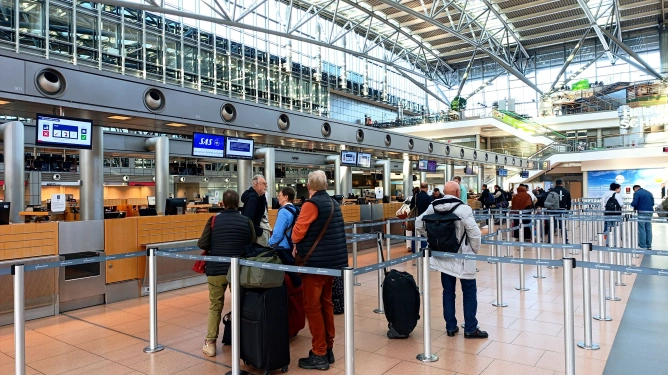
The busiest Schengen airports can receive Frontex support, and national authorities can temporarily suspend biometric registration when the new Entry/Exit System, EES, creates exceptional pressure at the border. However, the European Commission states that the suspension of biometrics does not mean stopping controls: travelers will continue to be checked, but fingerprints and facial images can be registered later or at another time, to reduce bottlenecks during peak traffic.
In short
EES is the new digital Schengen system that registers non-EU citizens upon entry and exit from the European Union.
The system applies to citizens from outside the EU, not to citizens of the European Union.
The Commission says that EES is functioning at over 1,500 border crossing points in 29 countries.
Nearly 110 million entries and exits have already been recorded, which is over 2 million per week.
Frontex is ready to send personnel to busy airports, but only at the request of member states.
The new Entry/Exit System is the digital system through which the Schengen Area is gradually replacing passport stamps with electronic registrations. The system records the entries and exits of non-EU citizens and uses biometric data, including facial images and fingerprints, to verify individuals' identities and the duration of their stay in the European space. The Commission clarified in a briefing that the system does not apply to EU citizens.
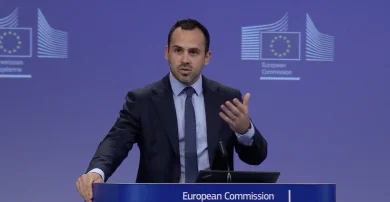
The Commission presents EES as a security tool, not just as an administrative change at border counters. Spokesperson Markus Lammert stated that the system has already allowed the identification of individuals considered security risks and claimed that over 1,000 individuals did not enter the EU as a result of checks. He explained that this type of biometric control was not possible under the old system based on paper stamps.
The data presented by the Commission shows the scale of the operation. EES is applied at over 1,500 border crossing points in 29 countries, and the system has recorded nearly 110 million entries and exits. The Commission stated that the volume exceeds 2 million entries and exits each week.
Problems reported by the aviation industry arise ahead of the first summer in which EES operates on a large scale. The question in the briefing stemmed from a letter from the aviation industry and concerns about very long delays, including the possibility that the new system could add up to five hours in some situations. The Commission did not confirm this estimate as its own assessment and stated that the impact is limited at most airports, but acknowledged the existence of challenges at certain border points.
The Commission will have a technical meeting with the aviation industry and says that support for member states will continue. Commissioner Magnus Brunner is intensifying discussions with ministers from relevant member states to identify the exact type of support needed.
Some of the difficulties are not directly attributed to EES. The Commission says that many of the problems encountered at some airports stem from existing structural challenges that existed before the new system: the number of employees, available space, infrastructure, technical capacity, and overall airport capacity.
Frontex can intervene, but not on its own initiative. The Commission stated that the agency is prepared to send personnel to the busiest airports and assist in using pre-registration tools. Subsequently, Markus Lammert clarified that the deployment of Frontex personnel operates, as usual, based on a request from the member state.
A central element is the flexibility provided in legislation for the first summer of operation. When a border point is under exceptional pressure, national authorities can temporarily suspend the registration of biometric data. This concerns facial images and fingerprints, which is the most time-consuming step during a traveler's first entry into the system.
The Commission insisted that this flexibility does not allow for passage without control. The suspension of biometrics does not mean the suspension of the system and does not mean that individuals pass unchecked. Border checks remain mandatory, and only the additional step of biometric registration can be postponed in peak situations.
The decision regarding temporary suspension belongs to national authorities. The Commission clarified that the border authorities of member states can decide ad hoc when waiting times exceed the normal level and operational pressure arises.
Although EES does not formally apply to EU citizens, the queues created at airports can also affect European passengers when control resources are redirected or when the infrastructure does not allow for efficient separate flows. The Commission responded that the system does not require the registration of EU citizens, but admitted that it needs to be analyzed where delays stem from operational issues related to the new legislation.
Member states have a direct role in these blockages. The Commission stated that EES has been prepared for 10 years and that the gradual launch began after member states communicated that they were ready to implement the system. "Member states said yes, we are ready," explained the spokesperson, adding that proper implementation now falls to national authorities, with support from the Commission.
The Commission also promotes a pre-registration application developed by Frontex. This can facilitate and automate part of the process before passengers reach border control. Sweden is presented as a positive example, with good results after using the application.
The use of the application remains voluntary for member states. In the briefing, the Commission was asked why it does not exert more pressure for its adoption, given that Sweden seems to have reduced waiting times. The Commission's response was that the tool exists, works well where applied, and will be explained in more detail in a technical briefing.
The Commission is preparing a separate technical briefing on EES. This is expected to clarify how the flexibilities work, what is possible and what is not, as well as examples of situations in which the new system has enhanced border security. The exact timing has not been announced, but the briefing is expected to take place in the coming days.
For passengers, the practical difference is significant. Upon first entry after the introduction of EES, non-EU citizens must register their biometric data. This may take longer than a regular check. Once the data is already in the system, subsequent crossings should be faster, as verification is done by comparing already existing data.
For airports, the issue is one of capacity. If there is sufficient staff, space, equipment, and use of the pre-registration application, the impact can be reduced. If the infrastructure is already strained, the introduction of biometrics can amplify delays, including for EU passengers who share the same airport ecosystem.
The Commission maintains its position that the security benefits are high and that the overall impact on travelers is limited at most border points. At the same time, the briefing shows that the first complete summer with EES will be an operational test for member states: they must use the existing flexibilities, request Frontex support if needed, adopt pre-registration solutions, and address staffing and infrastructure issues that cause queues.
The Entry/Exit System is the new digital Schengen system for registering non-EU citizens upon entry and exit from the European Union.
Latest News
13:59
13:56
13:51
13:44
13:43
See more news
NEWS ON THE SAME TOPICS

.webp)