Access to lawyers and challenges to detention remain difficult for asylum seekers in Europe, ECRE says


Always see our news on Google
Asylum seekers may be held in facilities they cannot leave, without a formal detention decision and without effective access to a lawyer to challenge the deprivation of liberty, according to an analysis by the European Council on Refugees and Exiles (ECRE). The report, which compares 26 European countries, describes a gap between the safeguards provided by law and their application: alternatives to detention are rarely used, while judicial review may remain inaccessible precisely to the people it is meant to protect.
In briefECRE describes de facto detention that is not formally recognised, especially at the border. In such situations, the absence of a decision and the difficulty of contacting a lawyer may prevent the exercise of the right to challenge the deprivation of liberty.
In Greece, the national report highlights the lack of a free legal aid system for challenging detention; in Italy, lawyers may have too little time to prepare and may receive late access to documents. The guarantee provided by law alone does not ensure an effective defence.
Alternatives are reported as being used in 11 countries, rarely in three, and not used in 12. Romania appears in the last category, but data on the 1,155 restrictive measures in 2024 and the lack of similar figures for 2025 prevent a categorical conclusion that they are not used.
ECRE calls for the early assessment of vulnerabilities and for the exclusion of child detention from law and practice. The organisation’s recommendation does not represent a general European ban that has already been adopted.
The report compares 21 EU Member States and five non-EU countries, mainly on the basis of practice in 2025. It describes issues predating the implementation of the Pact on Migration and Asylum, without establishing the effects of the reform.
The problem sometimes begins before the person can challenge a measure: the authorities do not formally recognise that the person is detained. ECRE describes de facto detention practices, especially at the border, in which the obligation to remain in a facility becomes an effective deprivation of liberty. Calling a place a reception centre or transit zone is not sufficient to establish its legal status; the concrete conditions and the real possibility of leaving must be examined.
The Italian report provides an example from Pantelleria. According to findings by the legal organisation ASGI following a visit in May 2025, people in the identification centre on the island were prevented from leaving without formal detention orders or judicial review. The organisation also reported the confiscation of phones and limited access to legal assistance under confidential conditions. Restrictions on communication thus compounded the impossibility of leaving the centre, making the defence more difficult.
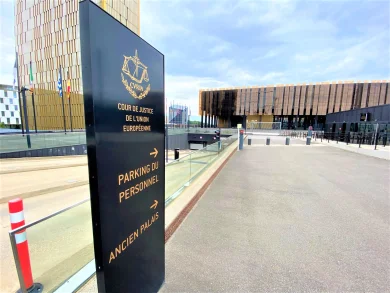
The Court of Justice of the European Union explained the legal test in a 2020 judgment concerning the Röszke transit zone on the Hungarian-Serbian border. The judges classified the situation as detention because the persons concerned could not legally leave the zone of their own accord in any direction. If the measure was contrary to EU law, the national court had to be able to order immediate release. The example shows that the absence of a formal classification does not remove the right to judicial review.
The existence of a legal remedy does not, however, mean that the person can use it. In Greece, the Greek Council for Refugees states that legislation recognises detained asylum seekers’ right to free legal assistance and representation, but that no system had been created to ensure this support for challenging detention. In 2025, the few organisations providing such services were working with limited resources, also affected by funding cuts. The report also describes orders communicated in Greek, without translation or explanation in a language understood by the person concerned.
In Italy, the difficulty may arise even when a lawyer has been appointed. The national report records observations by legal experts according to which lawyers are generally appointed on the morning of the hearing, leaving too little time for preparation. In certain proceedings for the validation or extension of detention, documents are sent to the judge in advance, but the lawyer sees the grounds for the application only immediately before the hearing. Late access to the case file reduces the possibility of an effective defence, even where legal assistance formally exists.
Alternatives should be examined before deprivation of liberty. Regular reporting to the authorities, a financial guarantee, or an obligation to reside in a particular place may keep the person available to the authorities without confinement in a centre. The comparative report identifies alternatives used in practice in 11 countries, rarely in three, and not used in 12. The authors specify that the last category does not prove that the respective authorities or courts never examine such measures.
Their availability in law may be undermined by practical obstacles. In Greece, the joint ministerial decision needed to establish the amount of the financial guarantee had still not been adopted since 2011, according to the national report. In Slovakia, the Human Rights League describes the difficulty faced by applicants with limited resources in quickly depositing the full amount, and notes that they are sometimes not told the purpose of the financial assessment or the possibility of requesting help from relatives. An alternative requiring money that the person cannot mobilise remains difficult to access.
Croatia also provides an example of effective use: in 2025, eight applicants for international protection were required to report to the reception centre at set times. The Ministry of the Interior maintains, in the position reproduced in the national report, that the authorities first apply less coercive measures, following an individual assessment, and resort to detention if these do not achieve their purpose. The cases show that the alternative can be applied; they do not by themselves establish how well the system as a whole functions.
For Romania, the comparison must be read together with the national data. Although the country appears in the category of countries not using alternatives, the Romanian report records, based on information from the General Inspectorate for Immigration, 1,155 restrictive measures in 2024: 1,027 reporting obligations and 128 measures requiring residence in a regional centre. Several measures could concern the same person, and similar data were not available for 2025. This discrepancy does not allow the classification to be turned into a statement that Romania never applies alternatives.
The Romanian report separately records 397 people in public custody centres in 2025, including 42 asylum seekers. The authors specify that, in most cases, asylum seekers are not detained; those who are include people who requested protection while in custody and whose applications were examined under an accelerated procedure. The difference between the two totals shows why data on the detention of foreigners cannot automatically be presented as data on the detention of asylum seekers.
For children and people with special needs, identifying the individual situation is a distinct safeguard. ECRE finds that deficiencies in this assessment contribute to the detention of vulnerable people and recommends assessments carried out by trained staff, including medical personnel, from the earliest stages. Identifying trauma, a disability, or other needs may require adapting the procedure and considering less restrictive measures. The organisation calls for the exclusion of child detention from law and practice and for children to be accommodated with their families; this is ECRE’s recommendation, not an announcement of a general European ban that has already been adopted.
The new European framework retains the obligation to justify detention in each case. Directive (EU) 2024/1346 on the reception of applicants requires an explanation of why less coercive alternatives cannot be applied effectively. Residence obligations must not become detention through their intensity or cumulative effect, and the duration of the deprivation of liberty must be limited to the period during which the legal ground remains valid. The maximum duration of a procedure does not automatically justify detention for its entire length.
Nor can the alternative be imposed automatically on all applicants. The European Union Agency for Asylum explains that, in the strict legal sense, this requires the existence of a legal ground for detention and the use of a less restrictive measure instead of confinement. If the ground is absent or ceases to exist, the alternative no longer has a basis on those grounds; any other monitoring obligations must have a separate legal basis.
ECRE’s analysis uses Asylum Information Database (AIDA) reports for 21 EU Member States and five European countries outside the Union. It mainly concerns practice in 2025, with some information from early 2026, before the implementation of the Pact on Migration and Asylum. The findings do not demonstrate the effects of the reform. Fragmented national statistics, which often mix asylum seekers with other categories of detained foreigners, also prevent the establishment of a comparable total of affected people across all 26 countries.
Latest News
23:04
22:36
22:16
22:01
21:44
See more news
NEWS ON THE SAME TOPICS