Pasquale Tridico asks that digital giants and large fortunes pay fairer taxes in Europe



Always see our news on Google
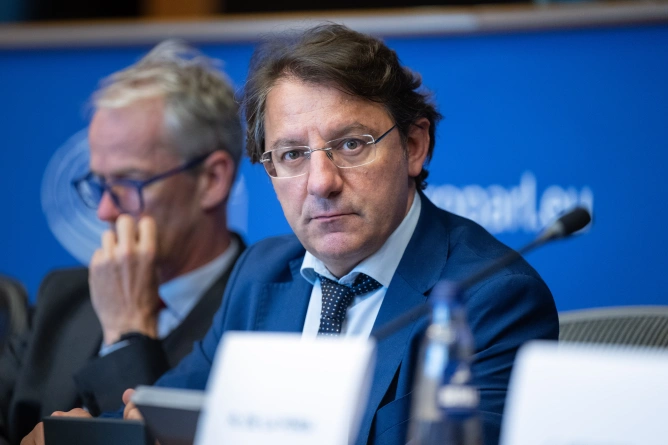
The President of the Subcommittee on Tax Matters in the European Parliament, Pasquale Tridico, is urging the European Commission to propose a European tax on digital services, in the absence of a global agreement on taxing the digital economy. Following a mission of MEPs to Paris, he also called for a harmonized minimum tax at the European level for individuals with very high wealth, stating that over 10,000 high-income French residents do not legally pay income tax in France.
The European Parliament is bringing back into discussion one of the most sensitive tax questions in the European Union: who actually pays taxes in an economy where digital profits, mobile capital, and very large fortunes can easily cross borders. After a mission to Paris, the President of the Subcommittee on Tax Matters, Pasquale Tridico, called for a European tax on digital services and a harmonized minimum tax at the European level for individuals with very high wealth.
In short
1. Pasquale Tridico is asking the European Commission to propose a European tax on digital services until a global agreement on taxing the digital economy is reached.
2. France introduced a tax on digital services in 2019 as a temporary measure, in the absence of an international agreement on redistributing taxing rights.
3. The FISC delegation learned in Paris that over 10,000 high-income French residents do not legally pay income tax in France.
4. Tridico is asking France to support in the European Council a harmonized minimum tax for individuals with very high wealth.
5. MEPs also discussed the effects of the "Side-by-Side" agreement regarding the effective minimum tax of 15% for companies, which raises competition issues between European and American firms.
The stakes of the digital tax are old but still unresolved. Large digital companies can generate significant revenues in a country without having the same physical presence there that traditional economies assumed. For this reason, states have been trying for years to find a formula through which digital profits or services can be taxed where value, users, and revenues are created.
France was one of the countries that moved earlier in this direction. In 2019, it introduced a tax on digital services as a transitional measure, in the absence of a global agreement on redistributing taxing rights for a digital and globalized economy.
Pasquale Tridico, an MEP from The Left group in Italy and President of the Subcommittee on Tax Matters, said after the mission in Paris that this discussion should no longer be postponed at the European level. "I urge the Commission to make a proposal for a European tax on digital services until a global agreement is reached," he stated.
Tridico said that the delegation was encouraged to hear that the global discussion is constructive and that the United States is committed to a solution. The wording is important because taxing the digital economy has been, in recent years, one of the areas of tension between the European Union and the United States, especially due to the impact on American technology companies.
The second issue raised by the FISC delegation concerns large fortunes. Tridico stated that MEPs learned, during the two days of discussions, that over 10,000 high-income French residents do not legally pay income tax in France. The statement does not speak of fraud, but of situations where legislation allows, through tax structures or applicable regimes, that high-income individuals do not owe income tax.
For the European Parliament, this information enters into a broader debate about tax equity. If employees and ordinary companies pay taxes in the country where they work or operate, the political question becomes how individuals with very high wealth, whose income may come from capital, assets, companies, dividends, or complex wealth structures, can contribute proportionally.
Tridico called on France to take the initiative in the European Council to introduce a harmonized minimum tax at the European level for individuals with very high wealth. "I urge France to take the lead in the European Council to ensure that individuals with very high wealth also pay their fair share," he said.
Such a proposal would be politically sensitive. Taxing large fortunes directly touches the tax competences of member states, and tax decisions at the European Union level are difficult to adopt. But the idea of a European minimum aims to prevent competition between states through regimes that allow the wealthiest taxpayers to drastically reduce their tax bill.
The third issue of the mission in Paris was the effective minimum tax of 15% for companies, known in the international debate as part of Pillar 2 of the global tax reform. This mechanism aims to reduce the ability of large multinational groups to shift their profits to jurisdictions with very low taxation.
Tridico stated that the "Side-by-Side" agreement regarding the effective minimum rate of 15% raises concerns in France regarding equal competitive conditions between European and American companies. He called for the simplification of Pillar 2, but also for careful, fair monitoring and evaluation of how the agreement will be applied.
This part of the discussion is important for European companies. If the rules regarding the minimum tax are applied differently in the European Union and in the United States, firms may end up operating under unequal tax conditions, even if the official goal of the reform is precisely to reduce harmful tax competition.
The delegation of the European Parliament was composed of Pasquale Tridico, President of the FISC Subcommittee, Kinga Kollar from the EPP group, Eero Heinäluoma from the S&D group, Pierre Pimpie from the Patriots for Europe group, and Pascal Canfin from the Renew Europe group.
The mission in Paris shows that taxation remains one of the areas where the European Union must choose between fragmented national rules and common solutions. The digital tax, the taxation of large fortunes, and the implementation of the minimum tax for companies have the same underlying stakes: how can tax equity be maintained in an economy where profits and capital move faster than national legislations.
Latest News
21:01
20:56
20:31
20:25
20:22
See more news
NEWS ON THE SAME TOPICS
.webp)
.webp)
.webp)