Victor Negrescu calls for education to be funded through gambling taxes, citing PISA results



Always see our news on Google
Romanian MEP Victor Negrescu is calling for education to remain a priority in the future EU budget. His appeal comes after results showed that approximately half of the 15-year-old students assessed in Romania do not reach the minimum proficiency threshold in mathematics and reading.
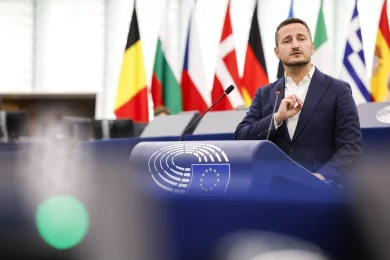
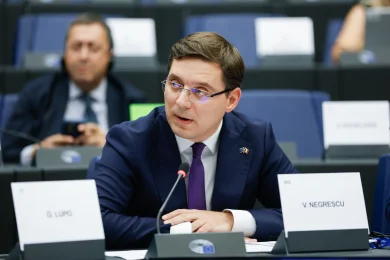
Victor Negrescu told the European Parliament plenary that education should remain a priority in the future EU budget and reiterated his proposal to fund it through gambling taxation. The Romanian MEP cited PISA results to argue that treating schools as an expense rather than an investment has consequences for students’ preparedness.
In brief
The estimate of up to €28 billion concerns the entire 2028–2034 period. The amount is potential revenue, not an annual education budget.
Negrescu cites students’ difficulties in mathematics and reading to call for investment in schools. He argues that education must be treated as an investment in the next generation.
Operators gathered in the EGBA warn that an additional tax could benefit illegal platforms. The objection concerns the effects on competition and national revenues, which the proposal would need to clarify.
A new EU own resource requires unanimity in the Council and national ratification. A plenary intervention alone cannot ensure either tax collection or the allocation of the funds.
The proposal presented by the Socialists and Democrats group in May targets major online gambling and betting operators. An indicative rate of 1% of revenue or turnover would supplement national taxation. Negrescu estimates annual receipts of €2–4 billion, or €14–28 billion for 2028–2034, conditional, among other things, on market growth and action against illegal platforms.
Education is one of the proposed destinations for the funds. The revenue estimate does not represent a guaranteed full allocation to schools.
OECD data for PISA 2025 show that 52% of the 15-year-old students assessed in Romania are below Level 2 in mathematics, the minimum proficiency threshold used in the study. In reading, the proportion is 48%. Average mathematics results are close to those from 2022, while reading performance has declined.
In mathematics, the threshold includes recognising how a simple problem can be expressed mathematically. In reading, it involves identifying the main idea in a moderately long text.
The industry disputes the usefulness of an additional European tax. The European Gaming and Betting Association, which represents licensed online operators in the EU, warned in April that such a measure would make the legal offering less competitive than platforms that do not pay taxes. In its assessment, consumers could turn to the illegal market, while national tax revenues would fall.
Creating an own resource for the EU budget requires the unanimous agreement of the member states in the Council, following consultation with the European Parliament, and ratification by each state. Political support for a source of revenue and the decision to use the money for education remain separate stages. Negrescu’s intervention does not set a date for the tax’s implementation or specify the amounts that would go to Romania.
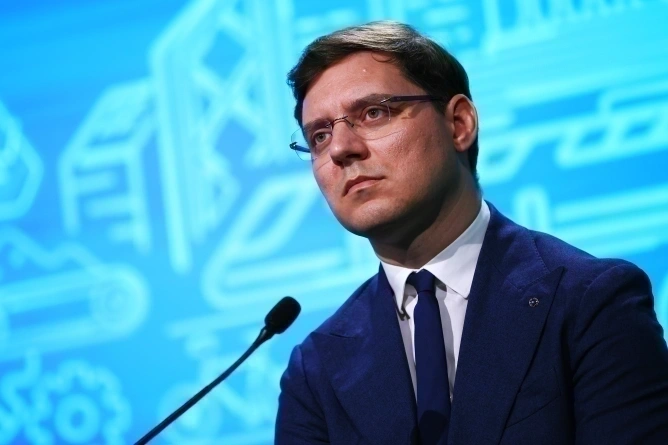
Negrescu, a vice-president of the European Parliament, spoke on 14 September as part of the series of one-minute speeches. He brought education funding in the future European budget back into the discussion without presenting a new legislative act in plenary.
https://2eu.brussels/ro/news/victor-negrescu-cere-finantarea-educatiei-din-taxarea-jocurilor-de-noroc-invocand-rezultatele-pisa
Latest News
22:58
22:44
22:41
22:21
22:08
See more news
NEWS ON THE SAME TOPICS
.webp)
.webp)