The European Parliament approves faster authorizations for the defense industry and the simplification of military procurement



Always see our news on Google
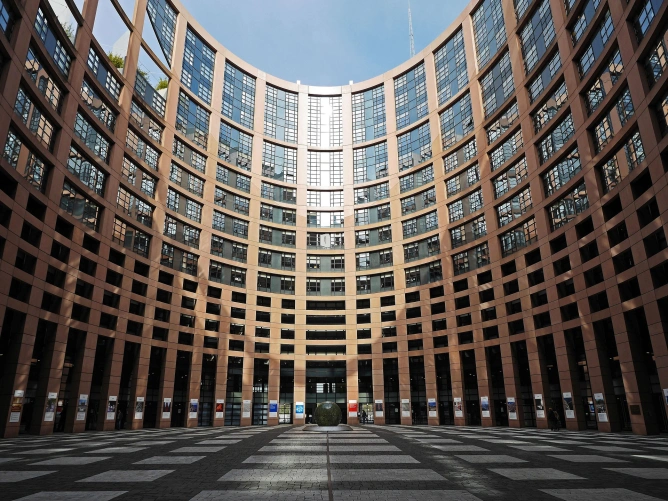
The European Parliament approved three legislative acts setting shorter deadlines for authorising defence projects and simplifying military procurement, transfers of products between Member States, and access to European funding for research and development. The package aims to remove administrative obstacles to expanding production, but still requires the Council’s approval before final adoption.
In brief The standard authorisation deadline is 42 working days, calculated from confirmation that a complete file has been submitted. Extensions for assessing exceptional risks may not bring the total duration above 102 working days. Failure to respond within the deadline may result in tacit approval. States may provide strictly limited exceptions for serious risks to human health or national security, and affected persons must be able to challenge tacit approval. The package expands the use of general licences for transfers of defence products within the EU and allows greater flexibility in joint procurement and framework agreements. The European Defence Fund will have simplified procedures and additional incentives for the participation of small and medium-sized enterprises. The text also allows, under certain conditions, the funding of costs for testing products and technologies in cooperation with Ukrainian entities.
The accelerated authorisation procedure starts from a single point of contact, which coordinates the authorities involved and communicates with the project promoter. The 42-working-day period begins after confirmation that the application is complete. Where environmental assessments are required, the components of those assessments falling under the applicant’s responsibility must be completed and included in the file before this confirmation.
Authorities may extend the examination on a case-by-case basis if the project poses exceptional risks to the health and safety of workers or the public, or to the environment, and additional time is needed for assessment. The total duration remains limited to 102 working days, and the applicant must receive a written justification for the extension and the expected date of the decision.
If the authority does not communicate the outcome within the deadline, the authorisations covered by the application are considered granted. States may exclude the application of this tacit approval in exceptional cases, based on an individual assessment and verifiable evidence of a serious risk to human health or national security. The text retains the possibility for affected persons to challenge tacit approvals.
The second component concerns the movement of defence products between Member States and the way authorities purchase equipment and services. States will have to publish general licences for transfers between certified suppliers and recipients, as well as for transfers carried out under structured industrial partnerships within the EU. Licences for these partnerships also cover transfers of software and intangible technology.
In the area of procurement, the text raises the thresholds for applying the directive to €2 million for supply and service contracts and €10 million for works. It introduces possibilities for occasional joint procurement and more flexible rules for modifying contracts and using framework agreements. For contracts below these thresholds, European principles on transparency, non-discrimination, equal treatment and proportionality remain applicable.
The third text amends the rules of the European Defence Fund and certain provisions on chemicals. For small and medium-sized enterprises, the agreement provides for simplified applications and project assessments, as well as a greater incentive through the funding rate for their participation. States co-financing projects retain access rights to results, while the intellectual property of participating companies is protected.
Cooperation with Ukraine receives a separate provision. The costs of using the infrastructure and resources of Ukrainian entities to test products, components or technologies may become eligible for funding from the fund if they serve the funded project and meet the conditions laid down by the regulation. Regarding chemicals, the package clarifies the exemptions that states may grant when they are necessary in the interests of defence.
Commissioner for Defence and Space Andrius Kubilius described the agreement as a useful compromise, although he would have preferred more ambitious measures. He announced that the European executive would present a new package on the European defence market by the end of 2026.
The Commission presented the proposals in June 2025 as part of the Omnibus V simplification package. The agreement negotiated with the Council came to a plenary vote on 16 September 2026, when Parliament completed its first reading of the three files.
The next step is approval by the Council. Parliament’s vote does not yet bring the new authorisation deadlines or procurement rules into force; these depend on completion of the legislative procedure and the implementing provisions of each act.
קצרOops! JSON invalid due accidental text. Need regenerate only valid.","slug":"european-parliament-faster-authorisations-military-procurement"} 天天彩票提现
Latest News
19:09
19:04
18:51
18:50
18:49
See more news
NEWS ON THE SAME TOPICS


.webp)









.webp)