Kaja Kallas calls for the largest EU sanctions list to date following the new Russian attacks on civilians



Always see our news on Google
The EU foreign ministers are discussing the listing of approximately 250 individuals and entities on the sanctions lists, but they have not yet reached an agreement on the 21st package of measures against Russia. The meeting also includes an initiative for Ukrainian civilians detained in occupied territories, the maritime center prepared by Romania and Bulgaria in the Black Sea, and possible European measures regarding illegal Israeli settlements.
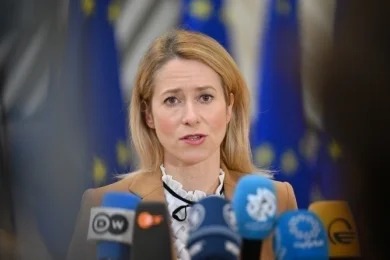
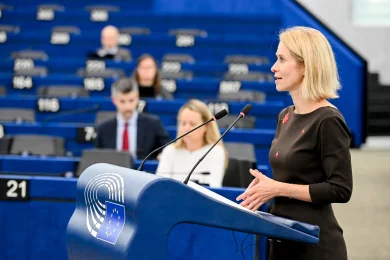
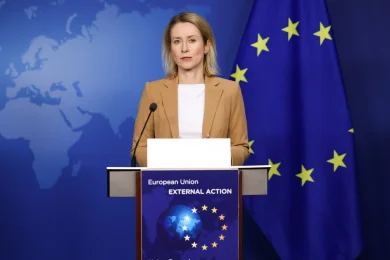
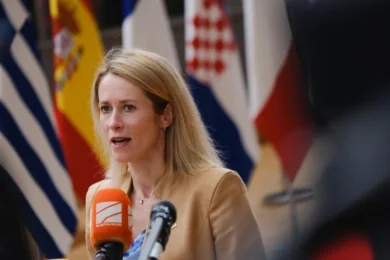
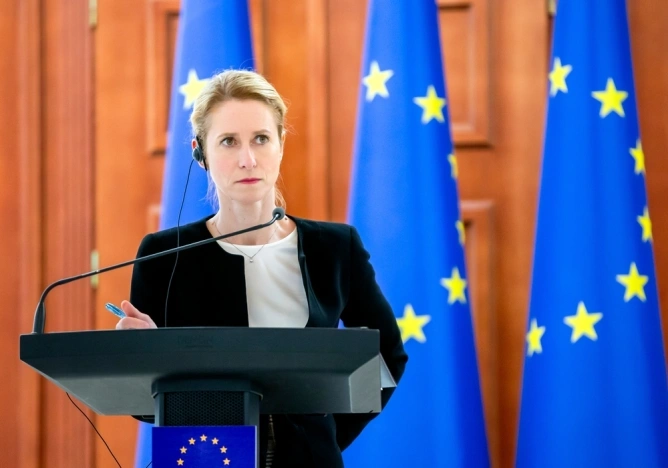
The European Union is trying to approve approximately 250 new listings on the sanctions lists against Russia, the largest number proposed in a single step, following recent attacks on civilians in Ukraine. Kaja Kallas stated before the meeting of foreign ministers that member states have not yet reached an agreement on the 21st sanctions package.
In short
The EU foreign ministers are discussing approximately 250 new listings on the sanctions lists against Russia. Kaja Kallas said it would be the largest number approved so far and that the measure responds to recent attacks on civilians.
The agreement on the 21st sanctions package is not yet finalized. Kallas said that there are still open questions, without specifying which states or what measures are blocking the agreement.
The EU is considering launching a platform for Ukrainian civilians detained in occupied territories, including teachers and journalists. The initiative should help identify them, gather information, and coordinate efforts for their release.
Romania and Bulgaria are working on a maritime center as part of the EU strategy for the Black Sea. The structure is intended to protect critical infrastructure and combat hybrid threats in the region.
Ministers are also discussing possible measures regarding the Middle East, including banning trade with illegal Israeli settlements. Kallas said that the situation in the West Bank makes the implementation of the two-state solution increasingly difficult.
The meeting of the Foreign Affairs Council began with the situation of Ukrainian civilians detained in territories occupied by Russia. Kallas said that the public debate often focuses on prisoners of war and deported children, while information about detained civilians is harder to obtain.
Among the targeted individuals are teachers and journalists. Non-governmental organizations from Ukraine are participating in discussions with ministers to present cases and difficulties encountered in locating those detained.
Kallas announced that the EU is analyzing the creation of a platform dedicated to these individuals. The tool would aim to centralize information, support families and organizations seeking data, and coordinate pressures for the release of civilians.
The ministers then move on to sanctions against Russia. On the table are approximately 250 new listings, which may include individuals and entities whose assets the EU can freeze and limit their access to European territory.
Kallas described the list as the most extensive prepared so far in a single step. She linked the proposal to the activities of the targeted individuals and to Russia's recent attacks on the civilian population.
The situation is different in the case of the 21st sanctions package. Member states have not yet reached an agreement, and Kallas said that some questions remain open. She did not provide details about the measures under dispute.
The agenda also includes the EU strategy for the Black Sea. Romania and Bulgaria are working together on a maritime center that should contribute to protecting critical infrastructure and responding to hybrid threats.
Critical infrastructure may include submarine cables, energy facilities, ports, and maritime routes. Hybrid threats cover actions that do not take the form of a conventional military attack, such as sabotage, cyberattacks, disinformation, or influence operations.
Kallas also mentioned the EU's difficult relationship with the authorities in Georgia. She said that the Union does not wish to support the Georgian government but is looking for ways to continue supporting the population and to maintain the European perspective.
The ministers are also set to approve a new partnership mission for Armenia, focused on hybrid threats and external information manipulation. Kallas used the term FIMI, which refers to foreign interference and information manipulation.
An important part of the meeting concerns the Middle East. The ministers are discussing with Gulf partners about the security of the region and the freedom of navigation through the Strait of Hormuz.
Kallas said that the strait must remain open and that ships should not be required to pay fees to cross it. The route is essential for oil transport and for the revenues of some states in the region.
She explained that blocking oil exports through the Strait of Hormuz would directly affect Iraq. The government in Baghdad relies on these revenues to finance public services, and a significant decrease could fuel tensions and internal conflicts.
The EU has offered expertise in negotiations regarding the Iranian nuclear file and the activities of Iran-backed groups. Kallas said that Gulf states and the European Union have close interests, as instability in the region affects both.
Any potential European involvement in protecting navigation remains unclear. Kallas mentioned the naval operation Aspides, which operates in the Red Sea, but said that any extension would require changing the operational plan and accepting the political conditions in the region.
In the internal discussion about the Middle East, the ministers are analyzing a document from the Commission with several options for action. Kallas said they will see if member states support transforming one of the options into a concrete proposal.
One of the measures requested by several governments is the ban on trade with illegal Israeli settlements. Kallas said that the situation in the West Bank is intolerable and that the expansion of settlements makes it increasingly difficult to achieve a viable Palestinian state.
She specified that there are different legal opinions on the adoption procedure. The Council's legal service considers that a trade measure could be approved by a qualified majority, without the unanimous agreement of the 27 member states.
The Council is also discussing the situation in Syria. Kallas called for inclusive governance, accountability for abuses, and institutions that represent all groups in the country.
The EU has provided assistance for building institutions and preparing an inclusive constitution. Kallas said that the stability of Syria is important to avoid the spread of regional conflicts and new pressures on camps in the area.
On the ministers' agenda are also Bosnia and Herzegovina, the process regarding a new international high representative, and the war in Sudan. Kallas called for clear messages both for actors trying to mediate the Sudanese conflict and for those fueling it.
Regarding political changes in Ukraine, Kallas said that the formation of the government is an internal matter. The EU will work with the new team but expects the continuation of the necessary reforms for the accession process.
https://2eu.brussels/ro/news/kaja-kallas-cere-cea-mai-mare-lista-de-sanctiuni-ue-de-pana-acum-dupa-noile-atacuri-ruse-asupra-civililor
Latest News
22:52
22:34
22:28
21:56
21:29
See more news
NEWS ON THE SAME TOPICS