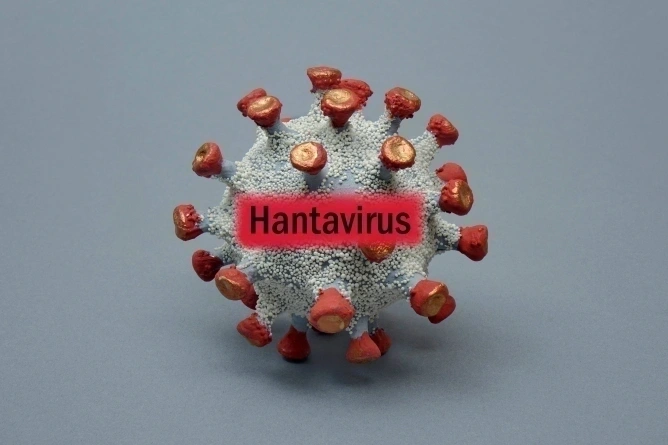
The Presidency of the Council activates the European crisis mechanism for the hantavirus outbreak.



Always see our news on Google
The IPCR mechanism has been activated in information exchange mode to monitor the outbreak and strengthen coordination among member states and EU institutions, while ECDC assesses the risk to the general population in Europe as very low.
The Cypriot Presidency of the EU Council has activated the Integrated Political Crisis Response (IPCR) mechanism in information exchange mode to monitor the hantavirus outbreak and facilitate coordination among member states and European institutions.
In short The Cypriot Presidency of the EU Council has activated the IPCR in information exchange mode to monitor the hantavirus outbreak.
The activation allows for the exchange of information among member states and EU institutions and the centralization of actions already underway. ECDC assesses the risk to the general population in Europe as very low. The Council specifies that hantaviruses do not spread easily from person to person. Information exchange and coordination have already begun at the EU level, especially in health and civil protection communities.
The Cypriot Presidency of the EU Council has decided to activate the Integrated Political Crisis Response (IPCR) mechanism in information exchange mode to actively monitor the hantavirus outbreak.
The activation of the mechanism will facilitate the exchange of information among member states and EU institutions. The platform will bring together relevant information and actions already underway, with the aim of enhancing the overall picture of the situation and supporting the preparedness of authorities.
The Council specifies that information exchange and coordination activities are already taking place at the EU level in relevant sectors, especially in health and civil protection communities.
The European Centre for Disease Prevention and Control (ECDC) assesses the risk to the general population in Europe as very low, based on the information available so far.
The assessment is based on the fact that appropriate infection prevention and control measures are being implemented and that hantaviruses do not spread easily between people.
The activation of the IPCR in information exchange mode does not mean the full activation of the crisis mechanism. The information exchange mode allows for the use of the platform and analytical tools to better understand the evolution of a situation and to prepare for a potential escalation, if necessary.
The IPCR mechanism is used by the Council to support rapid and coordinated decisions at the European political level in the event of major and complex crises. In a crisis situation, the Presidency of the Council coordinates the political response by bringing together relevant actors from EU institutions, affected member states, European agencies, and experts.
IPCR tools include informal roundtable meetings, analytical reports for decision-makers, a web platform for information exchange, and a contact point available 24/7.
In full activation mode, IPCR can support the preparation of coordinated response measures at the EU level, which can be discussed by the EU Council or the European Council. In the case of the hantavirus outbreak, the activation is limited to information exchange.
The mechanism can be triggered by the Presidency of the Council or at the request of a member state based on the solidarity clause. It can be used for crises occurring both within the EU and outside the Union.
The Council has used the IPCR in the past for major crises such as the COVID-19 pandemic, the earthquake in Turkey and Syria, Russia's war against Ukraine, the situation in the Middle East, the migration and refugee crisis, and foreign interference in the context of the 2024 European elections.
In the case of the COVID-19 pandemic, the mechanism was initially activated in information exchange mode in December 2019 and was subsequently moved to full activation mode in March 2020, against the backdrop of the deteriorating situation and its impact on several sectors.
In the case of foreign interference before the June 2024 European elections, the IPCR was activated in information exchange mode to support cooperation between member states and EU institutions regarding risks related to disinformation and information manipulation.
The Council specifies that the IPCR mechanism is currently activated in full mode for three crises: Russia's war against Ukraine, the situation in the Middle East, and the migration and refugee crisis.
The activation for the hantavirus outbreak adds a monitoring and information exchange framework in a public health area, without changing the ECDC's assessment of the very low risk to the general population in Europe.
IPCR is the Council's integrated mechanism for political response to crises. It was created to support coordination at the EU level in major or complex crises, whether natural or man-made, including terrorist attacks, health crises, natural disasters, or situations with cross-border impact.
The need for a crisis response mechanism at the EU level emerged in the early 2000s, following events such as the September 11, 2001 terrorist attacks, the 2004 Madrid attacks, the 2005 London attacks, and the 2004 Indian Ocean tsunami.
In 2006, the Council adopted coordination arrangements in emergency and crisis situations, and in 2013 it adopted the IPCR mechanism, which brought more flexibility, scalability, and use of existing structures. In 2018, the Council adopted an implementation decision that codified the mechanism into a legal act.
For public health crises, the role of IPCR is not to replace scientific assessments or specialized sectoral mechanisms, but to support information exchange and political coordination when a situation may require common attention at the EU level.
In the case of the hantavirus outbreak, the Council indicates that existing coordination mechanisms in health and civil protection are already functioning, and the activation of the IPCR in information exchange mode aims to enhance visibility on actions underway.
https://2eu.brussels/ro/stiri/presedintia-consiliului-activeaza-mecanismul-european-de-criza-pentru-focarul-de-hantavirus
Latest News
23:06
22:49
22:37
22:22
22:03
See more news
NEWS ON THE SAME TOPICS

.webp)