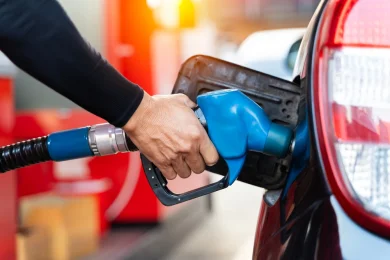
Fuels have become more expensive by over 20% in the European Union, and Romania is among the most affected countries.



Always see our news on Google
Fuel and lubricant prices for personal transport increased by 20.7% in the European Union in May 2026 compared to May 2025, according to Eurostat. Romania is among the four member states where the annual increase exceeded 30%, alongside Bulgaria, Luxembourg, and Lithuania. However, the data shows a significant difference between diesel and gasoline: diesel was 29% more expensive than a year earlier, but it decreased by 5.8% compared to April, while gasoline continued to rise slightly from month to month.
Fuels for personal transport were 20.7% more expensive in the European Union in May 2026 than in May 2025, confirming a strong return of pressure on travel costs after a period in which prices had generally been declining. Data published by Eurostat shows that the increase was felt in all member states, but Romania is among the countries where the annual growth exceeded the 30% threshold.
In short
Fuel and lubricant prices for personal transport increased in the EU by 20.7% in May 2026 compared to May 2025.
The largest annual increases were in Bulgaria, with 33.9%, Luxembourg, with 32.2%, Lithuania, with 30.8%, and Romania, with 30.4%.
Diesel was 29% more expensive than in May 2025, but it decreased by 5.8% compared to April 2026 at the EU level.
Gasoline was 16.2% more expensive than a year earlier and increased by 0.8% compared to April.
The increase in May confirms the acceleration of price hikes that began in the spring. Eurostat shows that fuel and lubricant prices for personal transport increased by 12.9% in March 2026 and by 20.8% in April 2026 compared to the same months of the previous year. Until February 2026, these prices were generally declining both at the EU average level and in most member states.
The differences between countries are significant. In May 2026, all member states recorded annual increases in fuel prices, but four exceeded 30%: Bulgaria, Luxembourg, Lithuania, and Romania. Conversely, the smallest increase was in Hungary, with 3.5%, while in other states, increases varied between 12.7% in Poland and 29.2% in France.
For Romania, the 30.4% increase places fuels among the visible price pressures for households and businesses. Fuels directly influence commuting costs, freight transport, local services, and daily travel. An increase of this magnitude does not remain isolated at the pump, as it can gradually enter logistics costs and the prices of transported goods.
Eurostat separates the evolution of diesel from that of gasoline, and the picture is different. Compared to May 2025, diesel was 29% more expensive in the EU, while gasoline was 16.2% more expensive. In April, the annual increase had been 33.7% for diesel and 13.6% for gasoline, indicating that diesel remained the product with the strongest annual jump, but its dynamics began to temper.
Monthly evolution partially changes the reading of the data. Between April and May 2026, diesel became cheaper by 5.8% at the EU level, after increasing by 7.9% in April compared to March. Gasoline continued to become more expensive, but at a much slower pace, with a 0.8% increase compared to April, after a monthly increase of 2.4% in April.
Diesel decreased almost everywhere in the EU between April and May. The only exception was Romania, where the price of diesel increased by 1.6%. The largest monthly decreases in diesel were in Germany, with 11.9%, Greece, with 8.5%, Estonia, with 8.4%, and Ireland, with 8.1%. The smallest decreases were in Bulgaria, with 0.7%, Hungary, with 0.9%, and Cyprus, with 1.5%.
For gasoline, the evolution was the opposite. In 23 member states, prices increased between April and May 2026. The largest increases reached up to 6.9% in Italy, while Croatia and Hungary had increases of 0.1%. Only Germany, Ireland, and Sweden recorded monthly decreases in gasoline prices, of 5.6%, 2%, and 0.7%, respectively.
This difference between diesel and gasoline matters for the economy. Diesel has a significant share in commercial transport, logistics, agriculture, and industrial activities. A monthly decrease in diesel can alleviate some of the immediate pressure on carriers, but the annual level remains much higher than in 2025. Gasoline affects personal travel more directly, and even a small monthly increase shows that pressure on drivers has not disappeared.
The data comes from the harmonized consumer price index, HICP, primarily used for measuring inflation. Eurostat specifies that the article covers fuels and lubricants for personal transport equipment, with details for diesel and gasoline. In Malta, fuel prices have been regulated since 2020, so there has been no change.
The evolution in May 2026 shows a market still tense for consumers. Prices are much higher than a year ago in all EU states, and Romania is among the group of states with the highest annual increases. The monthly decrease in diesel at the European level may be a signal of relaxation, but gasoline continued to rise, and transport costs remain one of the variables that can influence inflation and household budgets in the coming months.
Latest News
22:52
22:34
22:28
21:56
21:29
See more news
NEWS ON THE SAME TOPICS

.webp)