Romania recorded the EU’s highest harmonised inflation in September, at 6.5%




Always see our news on Google
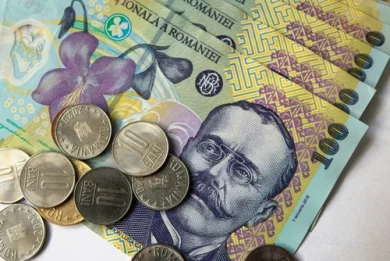
Romania’s annual harmonized inflation rate rose to 6.5% in September 2026, from 6.3% in August, the highest level among the 27 member states. The EU and euro area averages were 3.8%. However, Romanian inflation remains below the 8.6% recorded in September 2025.
In September 2026, Romania recorded the highest annual harmonized inflation rate in the European Union, at 6.5%, according to final data published by Eurostat. The rate rose from 6.3% in August, while annual inflation reached 3.8% both in the EU and in the euro area.
In brief
Romania’s annual harmonized inflation rose from 6.3% in August to 6.5% in September.
Romania had the highest rate in the EU, followed by Lithuania at 6.1% and Bulgaria at 5.6%.
The EU and euro area averages were 3.8%, 2.7 percentage points below Romania’s level.
Compared with September 2025, when Romania’s rate was 8.6%, harmonized inflation is 2.1 percentage points lower.
HICP is designed for comparisons between countries and should not be confused with the national consumer price index or with the costs incurred by a particular household.
Romania stands apart from the other member states in the Eurostat comparison. After the 6.5% rate came Lithuania, at 6.1%, and Bulgaria, at 5.6%. At the other end of the ranking, Sweden recorded annual harmonized inflation of 1%, while Denmark and Hungary each recorded 2.1%.
The increase in September slightly interrupted the downward trend observed in Romania in the preceding months. The annual rate had reached 9.7% in May, then fell to 9.2% in June, 8.2% in July, and 6.3% in August. In September, it returned to 6.5%.
However, comparison with the previous year shows a different picture from the month-to-month variation. In September 2025, Romania’s harmonized rate was 8.6%, meaning that the level in September 2026 is 2.1 percentage points lower than a year earlier.
Prices measured through the harmonized index rose by 0.8% in Romania in September compared with August. The monthly average was 0.6% both for the EU and for the euro area. The monthly rate and the annual rate measure different periods and should not be confused: the former compares September with August, while the latter compares September 2026 with September 2025.
Across the Union as a whole, annual inflation rose from 3.2% in August to 3.8% in September. Eurostat states that the rate rose in 23 member states, remained unchanged in three, and fell in one state.
In the euro area as well, the annual rate rose from 3.2% to 3.8%. The final figure confirms the flash estimate published by Eurostat at the beginning of October and does not represent an additional upward revision.
For the euro area, energy made the largest contribution to annual inflation in September, at 1.71 percentage points. Services contributed 1.52 points, non-energy industrial goods 0.29 points, and food, alcohol, and tobacco 0.25 points. These contributions refer to the euro area average and should not be automatically transferred to Romania.
The 6.5% figure for Romania is the rate calculated using the Harmonized Index of Consumer Prices, HICP. It uses common rules at European level precisely so that price developments can be compared between countries.
However, HICP is not a cost-of-living index for an individual household. The shares of food, energy, services, transport, or other categories in a person’s expenditure can differ greatly from the structure used in the index, meaning that the actual experience of price increases may vary from one household to another.
The harmonized index should also not be confused with the national consumer price index published by the National Institute of Statistics. Both statistics track consumer price developments, but they are constructed for different purposes, and differences in consumption concepts, sources for weights, and classifications can lead to different values.
For HICP, the statistical population covers final monetary consumption carried out within Romania’s economic territory by resident and non-resident households. Eurostat and the INS apply the harmonized methodology to make the results comparable with those of the other member states.
The 6.5% rate does not mean that all products and services in Romania became exactly this percentage more expensive. It is the average change in the overall index compared with the same month of the previous year, resulting from different price developments and from the weights of each category in consumption.
Likewise, the figure alone does not allow the loss of purchasing power to be calculated. Such an assessment requires comparing price developments with income developments and taking household expenditure structures into account. The Eurostat data published now describe price developments, not real wages or disposable incomes.
The September data thus place Romania in a dual situation. Harmonized inflation is significantly lower than a year ago and than the peaks recorded in spring, but in September the country remains the EU state with the fastest annual increase in consumer prices according to the harmonized methodology.
The next complete set of Eurostat inflation data is scheduled for November and will show whether the rise from 6.3% to 6.5% was temporary or whether the previously observed slowdown trend has changed.
Latest News
23:01
22:57
22:53
22:50
22:43
See more news
NEWS ON THE SAME TOPICS





.webp)