The European Parliament opens a political channel with the Russians who oppose the war and the Putin regime.



Always see our news on Google
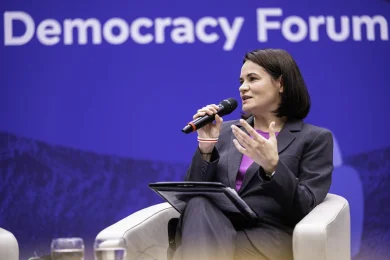
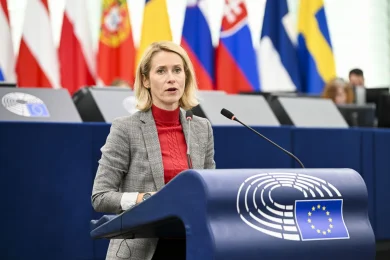
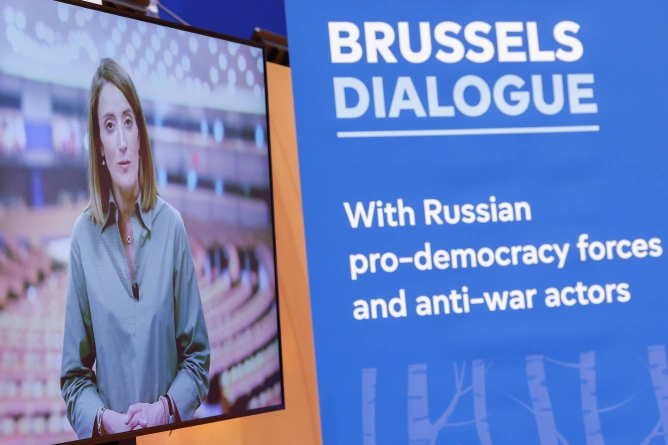
The European Parliament hosted in Brussels the second edition of the Brussels Dialogue, a conference with representatives of Russian democratic forces, anti-war activists, civil society, independent media, academics, European institutions, and international partners. Roberta Metsola conveyed to the participants that the Parliament is "a home for democracy" and that "they are not alone," at a time when the European Union is trying to maintain a political relationship with that part of Russian society that rejects the war against Ukraine and internal repression.
The European Parliament sent a direct political message on Tuesday to Russians who oppose the war and the regime in Moscow: Europe does not confuse democratic Russian society with the Kremlin. The second edition of the Brussels Dialogue brought together in Brussels representatives of Russian democratic forces, anti-war activists, civil society, independent media, academics, European institutions, and international partners, in a format designed to keep an open working channel with Russian actors who defend human rights and a Russia without war.
In short
The European Parliament hosted the second edition of the Brussels Dialogue with pro-democracy and anti-war Russian actors.
The first edition took place in June 2023, after the Parliament had requested since 2022 a structured framework for dialogue with democratic Russian actors.
Roberta Metsola told the participants that the European Parliament is "a home for democracy" and that "they are not alone."
The event was attended by Yulia Navalnaya, Mikhail Khodorkovsky, Vladimir Kara-Murza, Ilya Yashin, Evi Chayka, and representatives of Russian civil society, independent media, the academic community, and European Union institutions.
The discussions focused on human rights, the long-term implications of Russia's war against Ukraine, disinformation, and the conditions for a just and sustainable peace for Ukraine.
The event has a broader stake than just a conference with Russian opponents. The European Parliament is trying to build a structured political relationship with that part of Russian society that rejects war, authoritarianism, and repression, while the European Union sanctions the regime in Moscow and supports Ukraine.
The Brussels Dialogue was hosted by the European Parliament, with the support of the European Commission and the European External Action Service. The conference brought together representatives of EU institutions, member states, international partners, and experts, as well as Russian actors working for democracy, human rights, free press, and an end to the war.
Roberta Metsola, the President of the European Parliament, linked the event to the role of the institution in supporting democratic values in Europe and beyond the borders of the Union. She recalled previous actions of the Parliament, including awarding the Sakharov Prize to human rights defenders such as Oleg Orlov, Sergei Kovalev, and Lyudmila Alexeyeva, as well as opposition politician Alexei Navalny.
Metsola called for the release of political prisoners and emphasized the importance of dialogue to strengthen ties and promote practical initiatives. "This Parliament is a home for democracy and for all those who seek to strengthen and protect it in Europe and beyond," said Metsola.
The most direct message was addressed to the Russian participants. "I know what many of you have gone through and how hard you have worked to bring about a better, brighter future. You are not alone," said Metsola. She added that the dialogue is part of a long series of actions by the Parliament to support their efforts and cause.
At the opening of the event, speakers linked support for Russian civil society to European security. Pina Picierno, Vice President of the European Parliament, said that the war against Ukraine has shown how dangerous it is to separate freedom from security and rights from stability. The central idea of her intervention was that a regime that does not respect boundaries with its own citizens will not respect boundaries with its neighbors either.
This logic explains why the Parliament treats dialogue with pro-democracy Russian actors as part of European security policy, not just a simple moral exercise. Internal repression in Russia, the war against Ukraine, disinformation, intimidation of dissenters, and pressure on civil society are presented as elements of the same type of political regime.
Mariana Katzarova, the UN Special Rapporteur on the situation of human rights in the Russian Federation, described the human rights situation in Russia as continuously deteriorating. She spoke about the pressure on human rights defenders, journalists, lawyers, anti-war activists, LGBTQ individuals, conscientious objectors, and other groups targeted by the authorities.
Katzarova called for support for Russian civil society to become structural, not occasional. In her intervention, she insisted on the need for flexible funding, real protection, legal support, digital security, and tools that would allow organizations in exile to continue their work for those in Russia.
Marta Kos, the Commissioner for Enlargement, said that the war against Ukraine is "Putin's chosen war" and that the price paid by ordinary Russians is becoming increasingly heavy. She linked support for Russian civil society to support for democracies in Russia's neighborhood, stating that Moscow is trying to prevent states like Ukraine, Moldova, or Armenia from strengthening their own democratic and European path.
Kos stated that the European Union has provided 70 million euros in support for Russian civil society and independent media since 2021. According to the commissioner, this support has helped independent media reach audiences from within Russia, combat Kremlin narratives, and support individuals or organizations affected by repression.
Andrius Kubilius, the Commissioner for Defense and Space, presented the issue of Russia from the perspective of the future security architecture of Europe. He warned that normalizing relations with Moscow cannot happen just because the war might reach a ceasefire or a formal peace. For Kubilius, the important question is whether Russia will return to political normality.
Participants in the Brussels Dialogue included prominent names from the Russian opposition and civil society. Among them were Yulia Navalnaya, Chair of the Advisory Board of the Anti-Corruption Foundation and the Human Rights Foundation, Mikhail Khodorkovsky, co-founder of the Russian Anti-war Committee, who participated online, Vladimir Kara-Murza, Vice President of the Free Russia Foundation, also online, Ilya Yashin, President of the "Peaceful Russia" party, and Evi Chayka, founder and executive director of EQUAL PostOst, a human rights defender, anti-war activist, and LGBTQ activist.
The participation of these figures shows that the Brussels Dialogue is not just a meeting about Russia, but an attempt to bring together different directions of the Russian democratic opposition: anti-corruption, independent media, human rights, anti-war activism, minority protection, the academic community, and civic organizations.
Part of the discussions took place in panels closed to the public, to allow for a more open and secure exchange. Participants discussed the challenges facing Russian society in the field of human rights, the long-term implications of Russia's aggression against Ukraine, and disinformation. They also analyzed how to work towards a just and sustainable peace for Ukraine.
For the European Parliament, this format also has symbolic value. It separates the Kremlin regime from Russian citizens who oppose the war and authoritarianism, at a time when Russian propaganda tries to present the conflict as an inevitable confrontation between Russia and the West.
The second edition of the Brussels Dialogue comes after the first meeting organized in June 2023. The continuation of the format shows that the European Parliament wants to maintain a political channel with Russian democratic forces, not just to react to the actions of the Moscow regime.
The long-term stake is what place pro-democracy Russian actors will have in a possible European security architecture after the war. The interventions in Brussels conveyed a common idea: defending Ukraine, supporting independent media, protecting dissenters, and avoiding premature normalization with the Putin regime are part of the same European democratic security strategy.
For now, the institution's message is one of political and moral support. Democratic Russia does not yet exist at the state level, but it exists through the people who document abuses, defend political prisoners, combat propaganda, support victims of repression, and strive to keep open the possibility of a Russia that is no longer built on fear, war, and lies.
Latest News
13:32
13:19
13:14
13:07
12:53
See more news
NEWS ON THE SAME TOPICS