The European Parliament refuses to recognize the new Russian Duma and calls on EU member states to avoid official contacts



Always see our news on Google
The European Parliament refuses to recognize the State Duma elected in September as the legitimate representative and legislature of the Russian Federation and calls on EU governments to adopt the same position, avoid official contacts with the new chamber, and oppose the participation of its representatives in interparliamentary assemblies. The resolution also cites the organization of the vote in occupied territories of Ukraine, in the Transnistrian region of the Republic of Moldova, and in the occupied regions of Georgia.
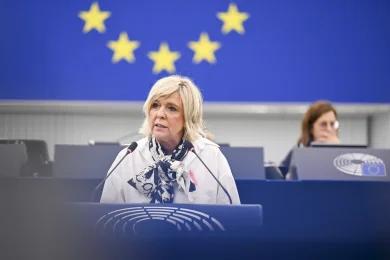
On Thursday, October 8, the European Parliament refused to recognize the new State Duma as the legitimate representative and legislative body of the Russian Federation and called on the 27 member states to adopt the same non-recognition policy. The resolution, approved by 482 votes in favor, 41 against, and 39 abstentions, calls on EU governments to refrain from official contacts with the new Duma and its members and to oppose the participation of Russian representatives in interparliamentary assemblies. This is a political position of the Parliament and does not automatically impose a legal ban on diplomatic or parliamentary contacts by the member states.
In brief
The European Parliament refuses to recognize the new Russian Duma as a legitimate legislature and calls on EU states to adopt the same position.
The resolution calls for avoiding official contacts with the new Duma and opposing the participation of its representatives in interparliamentary assemblies.
MEPs condemn the organization of the vote in occupied territories of Ukraine, in the Transnistrian region of the Republic of Moldova, and in the Georgian regions of Abkhazia and Tskhinvali/South Ossetia.
The Parliament calls for new sanctions against persons involved in political repression and in organizing these electoral processes.
The resolution itself does not impose sanctions and does not legally oblige each member state to sever contacts with Russian lawmakers.
The vote for the State Duma took place between September 18 and 20 and was the first Russian federal parliamentary election since the beginning of the full-scale invasion of Ukraine. According to the official results presented by the Russian authorities, United Russia won 349 of the 450 seats, retaining a constitutional majority. The European Union, however, challenged the political conditions under which the vote took place, citing the absence of fair competition, restrictions on the opposition and independent media, and the decision by the Russian authorities not to invite OSCE observers.
Before the Parliament's vote, the EU's common position had focused primarily on the conditions of the election and on the non-recognition of votes organized in the occupied Ukrainian territories. In the statement of September 21, the High Representative, on behalf of the EU, said that the Union does not recognize and will not recognize the organization or results of these votes in Crimea and Sevastopol, as well as in the occupied parts of the Donetsk, Luhansk, Zaporizhzhia, and Kherson regions. The EU also criticized the exclusion of Yabloko candidates from the federal list and the absence of an independent international observation mission.
The Parliament's resolution goes further by questioning the political legitimacy of the Duma resulting from the election as a whole. MEPs call on member states not to treat the new chamber as the legitimate representative of the Russian Federation, to minimize institutional contacts, and to prevent the normalization of its representatives' participation in international parliamentary cooperation structures. The Parliament also calls for avoiding the normalization of Russia's participation in international sporting and cultural events under the current conditions.
A distinct element of the resolution is the inclusion of the Republic of Moldova. The Parliament condemns the fact that Russia organized the vote in the Transnistrian region as well, a territory internationally recognized as part of the Republic of Moldova. Following the election, the Ministry of Foreign Affairs in Chișinău announced that it had been organized without the consent of the constitutional authorities and characterized the action as a violation of the sovereignty and territorial integrity of the Republic of Moldova. Moldova's OSCE delegation subsequently stated that Russia had opened 16 polling stations in the Transnistrian region, despite the opposition previously expressed by Chișinău.
Moldovan authorities also distinguished between the Transnistrian region and the territory under constitutional control. Chișinău informed Moscow that Russian citizens in the Republic of Moldova could vote at authorized polling stations in areas controlled by the constitutional authorities, but that organizing the election in the Transnistrian region could not take place without the consent of the Republic of Moldova. The MFA stated that the process organized there has no effect on the region's international legal status.
The Parliament includes the electoral processes organized in parts of the Georgian regions of Abkhazia and Tskhinvali/South Ossetia in the same criticism. The EU supports Georgia's sovereignty and territorial integrity within its internationally recognized borders and has separately refused to recognize electoral processes organized under the control of the de facto authorities and Russia in the occupied separatist regions.
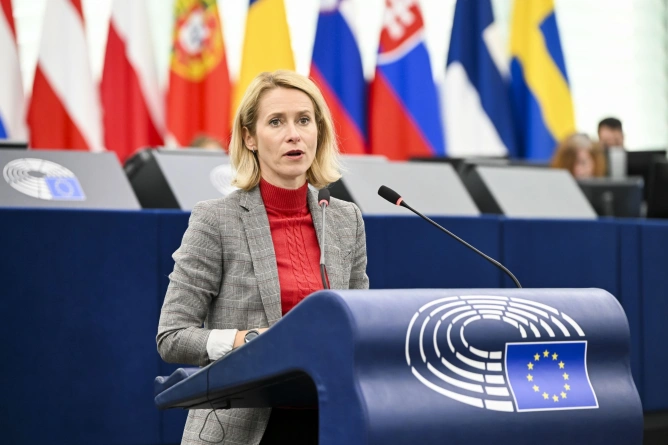
In the case of Ukraine, the EU's position was already more advanced before the October 8 resolution. The Union stated that persons involved in organizing the election in the occupied territories or who ran there on behalf of Russia would be sanctioned. Kaja Kallas said in Parliament on October 6 that the EU was preparing restrictive measures against those involved in organizing these electoral processes in the occupied Ukrainian territories.
The Parliament is now calling for pressure to be extended to Russia's domestic repression apparatus as well. The resolution calls for additional restrictive measures against judges, prosecutors, representatives of Rosfinmonitoring, members of the Central Election Commission, and other persons whom the Parliament considers to be participating in the persecution of the opposition, the suppression of critics, or the organization of electoral processes in the occupied territories. These are requests by the Parliament to the Council and the member states. The October 8 vote does not automatically place these persons on European sanctions lists.
The domestic context of the election is equally important to the European position. The EU states that the Russian authorities have systematically restricted the space for the opposition, civil society, and independent media, and that the exclusion of Yabloko, a party that positioned itself against the war, further reduced electoral options. Moscow did not invite OSCE observers, which, in the EU's assessment, prevented an independent international examination of the election. These findings represent the position of the European institutions and are not an assessment produced by an OSCE mission deployed on the ground, precisely because no such mission was invited.
The resolution also links the political non-recognition of the Duma to future EU–Russia relations. The Parliament states that normalization of relations cannot take place without a just and lasting peace in Ukraine, the withdrawal of Russian troops, respect for Ukraine's territorial integrity, the return of deported Ukrainian children, and accountability for crimes committed during the war. These conditions represent the Parliament's position and do not in themselves constitute a new Council decision on diplomatic relations with Russia.
The procedural difference is important. The Parliament can establish its own political position, limit its institutional relations, and call on governments to do the same, but EU foreign policy and the sanctions regime involve decisions by the member states in the Council. Therefore, following the October 8 vote, the Duma is politically unrecognized by the European Parliament, but adopting a binding and uniform non-recognition policy for all 27 states would require further action at their level and at the level of the Council.
Latest News
09:15
09:14
08:57
08:38
08:34
See more news
NEWS ON THE SAME TOPICS
.webp)

.webp)