EU sanctions 12 individuals and companies involved in evading restrictions against Russia, targeting shipping, oil and payments



Always see our news on Google
The Council of the European Union has adopted new sanctions against three individuals and nine entities involved, according to European authorities, in facilitating imports of restricted products into Russia and circumventing sanctions concerning oil and financial transactions. The measures target operators in Russia, Türkiye, the United Arab Emirates, India and Seychelles, in an effort to prevent the use of commercial and financial intermediaries to maintain flows to the Russian economy.
Three individuals and nine companies involved in evading European sanctions against Russia have been added to the European Union sanctions list through a decision adopted by the EU Council on 15 October 2026. The new designations target transport and logistics networks through which restricted goods reach Russia, intermediaries used to make payments, and companies involved in trading and transporting Russian oil. The persons and entities concerned are subject to asset freezes and a prohibition on receiving funds or economic resources from operators to whom EU legislation applies, while the three individuals are also subject to a ban on entering or transiting the territory of the Union.
In brief
1.The EU Council added three individuals and nine entities to the sanctions list for involvement in mechanisms to circumvent restrictions against Russia.
2.The measures target parallel imports of restricted products, logistics services and payments used to facilitate transactions with Russia.
3.Four of the designated entities are involved, according to the Council, in transporting or trading Russian oil, including through networks associated with the shadow fleet.
4.The sanctions include asset freezes, a prohibition on making funds and economic resources available, and travel restrictions for individuals.
5.The decision was formalized through Decision (CFSP) 2026/2332 and Implementing Regulation (EU) 2026/2333, published in the Official Journal of the European Union.
The new sanctions target the activities of companies that, according to the Council of the European Union, have contributed to maintaining flows of products and revenue to Russia despite the restrictions adopted after the invasion of Ukraine. The designated operators perform different functions in commercial networks: transporting goods, completing customs formalities, organizing payments, maritime transport and brokering oil sales. This diversity shows how sanctions evasion can involve multiple participants and jurisdictions, even when the goods or transactions are subject to European prohibitions.
In the category of goods imports, the Council designated MOVERS GROUP LLC, a freight transport company registered in Russia, and its general director, Dmitry Chudovsky. According to the Council’s assessment, the company was involved in the parallel import into Russia of goods subject to EU restrictive measures. Parallel import involves purchasing and introducing products into a market through commercial channels other than those used by authorized distributors. This mechanism is not automatically illegal, but it may constitute a means of evasion when used to supply products whose export or provision is prohibited by sanctions.
The Council also included LLC DT INIER on the list, a Russian company engaged in customs brokerage and logistics activities, together with its majority shareholder, Ivanna Savchuk. European authorities consider that the operator was involved in decentralized mechanisms for circumventing sanctions by facilitating the international movement of goods and using commercial and customs services. The new designations include, in the same area, BEGLER TEKSTIL INSAAT ELEKTRONIK VE DIS TICARET LTD and MEDSE GROUP LLC, two commercial companies established in Türkiye, which the Council says operate through an international network.
The presence of companies from Türkiye on the European list reflects one aspect of the sanctions-enforcement problem: commercial operations involving operators from third countries may allow restricted products to reach Russia through several stages of trading. Designating a company does not constitute a sanction against the state in which it is registered. The restrictions are individualized and based on the grounds set out in the legal acts adopted by the Council.
Another mechanism targeted is the use of financial intermediaries. United Stream LLC, a financial services company registered in Russia, was sanctioned together with its founder and director, Svetlana Gumenyuk. The Council states that the company acted as a payment agent and intermediary to facilitate imports into Russia of certain European products subject to restrictions. Activities of this kind can separate the final buyer, the supplier and the party making the payment, complicating the identification of the beneficial owner and the verification of transactions’ compliance with the sanctions regime.
Blocking such mechanisms is relevant because trade and financial restrictions operate together. Prohibiting the export of a product may be insufficient when the transaction is organized through intermediary companies and payment is made by an operator other than the actual buyer. For European companies, sanctions require checking commercial and financial partners, transaction beneficiaries and any possible links to designated persons or entities, within the limits of the obligations laid down by applicable legislation.
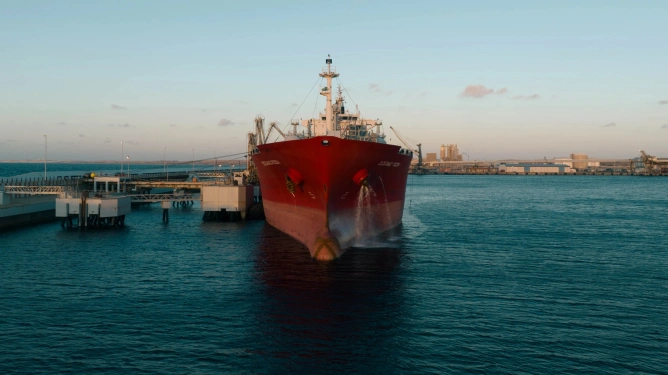
A distinct part of the decision concerns trade in Russian oil and maritime transport. The Council sanctioned DIS Logistics DMCC, Vigor Marine Services LLP and SHIVA SHIPPING LTD, companies established in the United Arab Emirates, India and Seychelles, which it associates with the shadow-fleet ecosystem used to transport Russian oil. This expression refers to networks of vessels and commercial services characterized by ownership or operating structures that are difficult to trace, used in certain cases to reduce the effectiveness of Western restrictions on oil shipments and sales.
HURUS TRADE FZE, a commercial brokerage company that the Council says supplies Russian-origin crude oil to India, was included in the same category of sanctions. The designation concerns the role attributed to this company in circumventing European sanctions on oil and should not be interpreted as a general ban on all Indian imports of Russian oil. The EU sanctions regime contains specific rules and restrictions, and their application depends on the nature of the transaction, the participants, the services involved and the other relevant legal conditions.
By including maritime transport operators and oil intermediaries, the Council is targeting activity that may generate revenue for the Russian economy despite European energy measures. International commercial networks may involve shipowners, managers, traders, service providers and financial intermediaries located in different jurisdictions. Effective enforcement of sanctions therefore requires identifying the entities concerned and monitoring economic relationships that may continue indirectly through intermediaries.
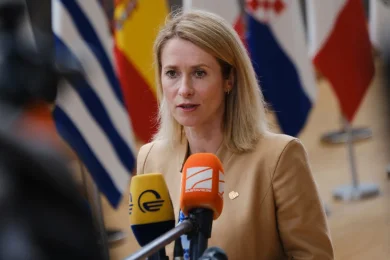
Kaja Kallas, High Representative of the European Union for Foreign Affairs and Security Policy, explicitly linked the new designations to the objective of reducing Russia’s ability to finance the war against Ukraine.
“Circumventing EU sanctions amounts to supporting Russia’s illegal war of aggression. Today we are taking further measures against the individuals and companies doing this,” Kallas said in the Council’s statement.
In the same statement, Kallas said that sanctions had already deprived Moscow of more than one trillion euros, arguing that their effectiveness could be increased through stricter enforcement. The figure is a political claim attributed to the High Representative, and the Council’s statement does not present the calculation methodology or a reference period that would allow this estimate to be independently verified.
The 12 designations were adopted under the European sanctions framework concerning actions undermining or threatening the territorial integrity, sovereignty and independence of Ukraine. The relevant legal acts are Decision (CFSP) 2026/2332, amending Decision 2014/145/CFSP, and Implementing Regulation (EU) 2026/2333, implementing Regulation (EU) No 269/2014. Both were adopted on 15 October and published in the Official Journal of the European Union.
Asset freezing means blocking funds and economic resources falling within the scope of EU legislation and belonging to designated persons or entities, or owned or controlled by them, in accordance with the applicable rules. Operators to whom EU sanctions apply are prohibited from making funds or economic resources available to sanctioned persons, directly or indirectly, including for their benefit. For the three individuals, the regime also includes a ban on entering or transiting the territory of the Member States, under the conditions and exceptions provided for by law.
The measures constitute individual restrictive designations adopted by the Council and do not, in themselves, constitute criminal convictions. The legal grounds for each designation are set out in the annexes to the published acts, and the persons and entities concerned have access to the remedies provided for under European Union law.
The decision of 15 October came three days after the Council adopted a separate set of sanctions against 1,569 individuals and entities associated with Russia’s military-industrial complex. The package of 12 October includes 826 companies and 743 individuals holding management positions in these enterprises, according to the European Commission. The two decisions address complementary dimensions of the economic and industrial system supporting Russia’s ability to continue the war: military production and the commercial, logistics or financial networks through which restrictions can be circumvented.
For European businesses, the immediate consequence of the new designations is the need to check transactions and commercial relationships that could involve the persons or entities added to the lists, including when they become involved indirectly through ownership, transport or financial-services structures. Effective enforcement of sanctions depends on economic operators complying with their obligations, oversight by the competent authorities and the identification of any new evasion mechanisms.
Latest News
16:30
16:22
16:13
16:13
16:04
See more news
NEWS ON THE SAME TOPICS


.webp)