EU announces sanctions against organizers and candidates in Russia’s elections in the occupied territories of Ukraine


.webp)

Always see our news on Google
The announced measures also target those responsible for undermining free and fair elections in Russia. The European Union refuses to recognize the vote held in the occupied Ukrainian territories or its results, but the statement does not name the people who will be sanctioned and sets no timetable.
The European Union announces that it will sanction the organizers and candidates in Russia’s elections in the occupied Ukrainian territories, as well as those responsible for undermining the possibility of free and fair elections in Russia. The statement reaffirms the non-recognition of the vote in the occupied territories and its results, without naming the individuals targeted by sanctions.
In brief
The EU announces sanctions against those involved in organizing Russia’s election in the occupied Ukrainian territories and against candidates there. Those responsible for undermining the possibility of free and fair elections inside Russia are also targeted.
The non-recognition concerns the vote in Crimea, Sevastopol and the occupied parts of the Donetsk, Luhansk, Zaporizhzhia and Kherson regions. The EU considers that holding elections there violates international law and Ukraine’s sovereignty.
The statement does not publish a list of names and does not automatically impose sanctions. Restrictive measures require legal acts adopted by the Council; the decision is taken unanimously. The type of measures and the adoption deadline are not specified.
The EU cites the exclusion of Yabloko candidates from participation on the federal list and Russia’s refusal to invite OSCE observers. The Union considers that voters were deprived of genuine options and of an impartial and independent assessment of the election.
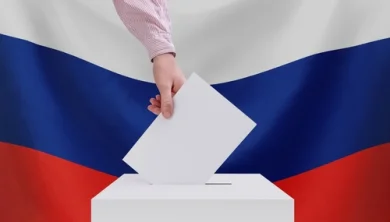
The EU’s position concerns the elections for the State Duma held by Russia from September 18–20, 2026. The vote organized in the Autonomous Republic of Crimea, the city of Sevastopol and the occupied parts of the Donetsk, Luhansk, Zaporizhzhia and Kherson regions violates international law, including the UN Charter, and Ukraine’s sovereignty, the statement published by the Council of the EU says.
The Union specifies that it “does not recognize and will never recognize” either the holding of these elections in the occupied Ukrainian territories or their results. This non-recognition is explicitly formulated for the vote held on Ukrainian territory. Regarding the election in Russia, the EU denounces the deterioration of democratic conditions and announces sanctions against those responsible for undermining free and fair elections.
The announcement does not, in itself, constitute a new sanctions list. Applying restrictive measures requires the Council to adopt the corresponding legal acts. The decision requires the unanimity of the member states and is published in the Official Journal of the EU; asset freezes also require a regulation. Individuals placed on the lists may challenge the decision before the General Court of the European Union, according to the procedure explained by the Council.
In general, individual EU sanctions may include asset freezes and travel bans. The statement on the elections does not specify which of these measures will be applied or how many people will be targeted.
The criticism of the elections in Russia is based on the restriction of political competition before the vote. The EU cites the exclusion of candidates from the Yabloko party from participation on the federal list and describes the party as one of the last remaining opposition forces and the only party with an anti-war platform. In the Union’s assessment, this exclusion further reduced Russian voters’ options.
The EU accuses the Russian authorities of intensifying repression to prevent the democratic opposition from challenging those in power. The statement cites reports by independent analysts and observers about the abusive use of administrative and judicial tools against those who oppose the war and about restrictions on access to independent information. These practices deprived voters of a genuine choice regarding the country’s future, the Union maintains.
Another criticism concerns Russia’s decision not to invite observers from the Organization for Security and Co-operation in Europe (OSCE). The commitment to observe elections is set out in the 1990 Copenhagen Document. It provides for inviting observers from other participating states and relevant organizations to national elections, within the limits of the law, as well as for their obligation not to interfere in the electoral process. In the EU’s assessment, the absence of an invitation prevented an impartial and independent examination of the election within this framework.
The Union and the member states say they will continue to support Russian civil society organizations, human rights defenders and independent media. For the announced sanctions, the statement sets no adoption deadline and does not identify the people who will be placed on the lists.
https://2eu.brussels/ro/news/ue-anunta-sanctiuni-pentru-organizatorii-si-candidatii-alegerilor-ruse-din-teritoriile-ocupate-ale-ucrainei
Latest News
12:49
12:46
12:45
12:33
See more news
NEWS ON THE SAME TOPICS

.webp)