EU warns that lack of funding could weaken the global nuclear test detection system from 2028



Always see our news on Google
The global system that enables the detection of possible nuclear tests risks a significant reduction in its capacity starting in the 2028–2029 budget period unless sufficient funds are secured to maintain the monitoring network. The European Union issued the warning on October 19, 2026, at the opening of the 70th session of Working Group A of the Preparatory Commission for the Comprehensive Nuclear-Test-Ban Treaty Organization (CTBTO), taking place in Vienna from October 19 to 21. The EU supports an internal reallocation to cover urgent needs in 2026 and calls on signatory states to pay their outstanding contributions.
In brief The capacity of the international nuclear test detection network could decline significantly in 2028–2029 if maintenance does not receive the necessary funding, according to the warning issued by the EU. The CTBTO budget for 2026–2027 has no nominal increase, while network maintenance continues to depend on temporary financial solutions and internal reallocations. The EU supports a transfer within the Capital Investment Fund to cover urgent maintenance needs in 2026. The statement does not confirm that the transfer has been adopted. The EU calls for outstanding contributions to be paid following a significant drop in the collection rate compared with the previous year. EU member states have paid their mandatory contributions in full. The Republic of Moldova has joined the European position. The EU says it has provided more than €36 million in additional voluntary contributions for CTBTO activities over the past 20 years. The IMS is already operational, and approximately 90% of the 337 planned facilities are in operation. On-site inspections are still being prepared and may be requested only after the treaty enters into force, which depends on ratification by all 44 States listed in Annex 2.
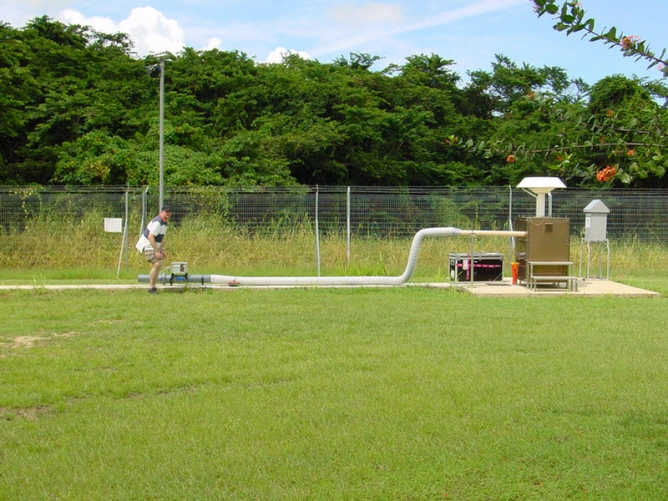
The network covered by the warning is the International Monitoring System (IMS), the technical infrastructure developed to verify compliance with the nuclear test ban. When complete, the system will comprise 321 monitoring stations and 16 laboratories hosted by 89 countries. Approximately 90% of the 337 planned facilities are already operational. The data collected are transmitted to the International Data Centre in Vienna.
The system uses four complementary technologies. Seismic stations record waves propagating through the Earth and can indicate underground explosions. The seismic network is designed with 50 primary stations, which transmit data continuously in real time, and 120 auxiliary stations, which provide data upon request. Hydroacoustic stations detect sound waves in the oceans, while infrasound stations record atmospheric pressure variations at very low frequencies produced by high-intensity events. Radionuclide monitoring facilities can identify radioactive particles and gases that provide indications of the nuclear nature of an explosion.
The International Data Centre processes the information and makes both raw data and analysis results available to signatory states. The final assessment of an event’s nature remains the responsibility of states.
Maintaining the network involves repairing and replacing equipment, calibrating sensors, and maintaining communications. Some stations are located in remote areas where interventions are difficult and costly. Older facilities may require modernization while the network is being completed.
For certification, a station’s equipment, infrastructure, and configuration must comply with CTBTO specifications, and data must be transmitted to Vienna in a timely manner. Data authenticity is protected through digital signatures and devices that detect unauthorized interference. Certified stations are operated by local institutions under contracts with the CTBTO, with monitoring of data quality and availability.
In the Vienna statement, the EU says that the 2026–2027 budget, built on the principle of zero nominal growth, is placing pressure on these activities. Maintaining the same nominal budget value does not guarantee the preservation of its purchasing power when equipment, services, and staffing costs rise. In this context, IMS maintenance activities continue to depend on temporary liquidity injections and the redistribution of available resources among funds.
According to the CTBTO Provisional Technical Secretariat, in the absence of the funding needed for maintenance, the system’s capacity could decline significantly in 2028–2029. The EU cited this projection to support the need for a long-term financial strategy. The statement does not specify a percentage reduction in capacity or which stations would be affected. It concerns a risk for the coming period, not a finding that an interruption has already occurred.
To address immediate needs, the European Union supports the transfer of resources between the two subfunds of the organization’s Capital Investment Fund. The proposal concerns 2026 and aims to cover urgent network maintenance requirements. It is also supported by the CTBTO Advisory Group, according to the European statement. However, the EU’s expressed support does not constitute evidence that the transfer has been definitively approved or executed.
The issue goes beyond reallocating available resources within a single budget year. The EU considers that temporary liquidity injections cannot replace stable long-term funding. Even if reallocations resolve urgent problems, they do not guarantee the funds needed to replace equipment, carry out technological upgrades, and maintain the network’s performance over the long term. Therefore, the EU supports an adequately funded maintenance strategy to guide the priorities of the Provisional Technical Secretariat for the next budget exercise.
The CTBTO has a budget of approximately US$139.31 million for 2026, according to information published by the organization. Funding comes mainly from mandatory contributions assessed to signatory states, supplemented by voluntary contributions. The total budget covers activities broader than the maintenance of monitoring stations, including data analysis, preparation for on-site inspections, administration, and technical cooperation. Therefore, this amount does not represent the IMS funding shortfall or the value of the internal transfer under discussion.
Financial difficulties are compounded by delays in the payment of contributions. The EU warns of a significant decline in the collection rate compared with the previous year and calls on all signatory states to pay their contributions and arrears without delay. The statement does not set a calendar deadline for payment. An organization may have an adopted budget but lack all the projected financial resources when they are needed, limiting the Secretariat’s ability to carry out scheduled activities.
All European Union member states have paid their mandatory contributions in full, according to the October 19 statement. The EU also highlights its additional voluntary contributions for monitoring and verification, which have exceeded €36 million cumulatively over the past 20 years. This amount represents historical support provided during the period mentioned, not a new allocation of €36 million for 2026.
The European statement also concerns preparations for On-Site Inspections (OSI), a distinct component of the verification regime. The EU awaits the results of the ongoing Integrated Field Exercise to assess the experience gained and adapt future activities to financial constraints. IMS monitoring is already operational, but treaty-mandated inspections may be requested only after the treaty enters into force. Until then, the CTBTO is preparing inspectors, equipment, and procedures and testing them through exercises. Stations identify signals that may indicate an explosion; an inspection would seek to obtain additional evidence in the area of the suspected event.
The Comprehensive Nuclear-Test-Ban Treaty was opened for signature in 1996 and prohibits nuclear explosions of any kind. It has not yet entered into force: ratification is required by all 44 States listed in Annex 2. The treaty provides for entry into force 180 days after the deposit of the last required instrument of ratification by those states. The CTBTO Preparatory Commission is developing and operating the verification infrastructure in anticipation of the treaty’s entry into force. The technical system is already operational and has demonstrated that it can detect events such as the six nuclear tests announced by North Korea between 2006 and 2017.
The EU calls on states that have not signed or ratified the treaty to do so without further conditions and supports compliance with the moratorium on nuclear explosions until it enters into force. This position reflects the role the Union attributes to independent verification in the international architecture of nuclear nonproliferation and disarmament.
The Republic of Moldova is among the 12 non-EU states that joined the statement presented in Vienna, alongside Albania, Andorra, Bosnia and Herzegovina, Iceland, Montenegro, North Macedonia, Norway, San Marino, Serbia, Ukraine, and Türkiye. The alignment reflects diplomatic support for the European position and does not automatically entail an additional financial contribution from these states.
Working Group A is responsible for the administrative and financial matters of the CTBTO Preparatory Commission. The 70th session is being held from October 19 to 21, 2026, and the EU position was presented during discussions on the organization’s budget and priorities. The outcome of these deliberations will matter for how needs in 2026 are covered, but the warning for 2028–2029 points to the need for a solution extending beyond the current budget exercise.

Latest News
20:09
19:53
19:25
19:07
19:00
See more news
NEWS ON THE SAME TOPICS

.webp)