The EU and Canada are launching negotiations for an agreement on digital trade, aimed at establishing global rules for the digital economy.



Always see our news on Google
The European Union and Canada have launched negotiations for a Digital Trade Agreement aimed at facilitating cross-border digital trade, strengthening online consumer protection, and establishing common rules regarding data flows, electronic signatures, and trade without documents.
The European Union and Canada have launched negotiations in Toronto for a digital trade agreement, an initiative aimed at facilitating cross-border digital exchanges and establishing common rules for the digital economy between two of the EU's most integrated trade partnerships.
In brief 1.The EU and Canada have launched negotiations for a Digital Trade Agreement (DTA).
2.The agreement aims to establish clear and predictable rules for digital trade between the two economies.
3.The negotiations are based on the economic partnership established by the CETA agreement, which has been in force for nine years.
4.The DTA will include rules regarding trade without documents, the validity of electronic signatures, and the prohibition of customs duties on electronic transmissions.
5.The agreement will promote secure data flows and limit data localization requirements or forced source code transfers.
6.The EU and Canada aim to establish high international standards for digital trade.
7.Digital trade accounts for over 60% of global GDP, and more than half of EU service trade is already conducted digitally.
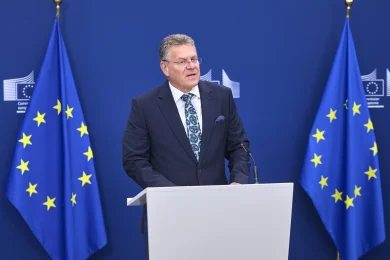
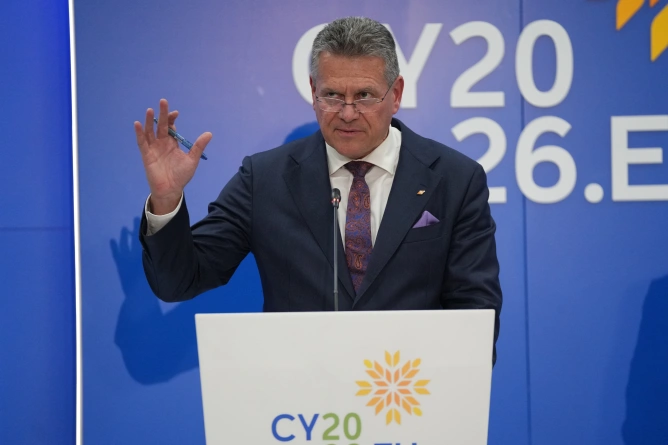
The negotiations for the digital trade agreement were launched by the European Commissioner for Trade and Economic Security, Maroš Šefčovič, and the Canadian Minister of International Trade, Maninder Sidhu. The initiative marks a new step in deepening the economic relationship between the two parties, following nearly a decade of implementing the CETA trade agreement.
According to the European Commission, the agreement is expected to facilitate cross-border digital trade and provide clear rules for companies and consumers participating in the digital economy. Additionally, the agreement is expected to create a safe online environment, with high standards for personal data protection and privacy, as well as protection against unsolicited commercial messages.
European Commissioner Maroš Šefčovič emphasized the strategic role of the agreement in deepening the economic relationship between the EU and Canada. He stated that the launch of negotiations shows the willingness of both parties to take the economic partnership to a new level, explaining that "By launching negotiations on a Digital Trade Agreement, we are ready to take the EU-Canada partnership to the next level." He highlighted the importance of digital trade in the bilateral relationship, adding that "Already more than 40% of our €51 billion in services trade is delivered digitally."
In a translation into Romanian, the commissioner stated that "by launching negotiations for a digital trade agreement we are ready to take the EU-Canada partnership to the next level" and that "already over 40% of our €51 billion in services trade is delivered digitally."
Šefčovič emphasized that data flows are at the heart of modern economies and that "data flows power far more than tech companies – no modern economy runs without trusted, secure data." He compared the new agreement to the evolution of the trade relationship between the two parties, stating that "If CETA laid the foundation, a Digital Trade Agreement will build the next floor."
In the Romanian version, the message is that "data flows power far more than tech companies – no modern economy runs without trusted and secure data" and that "if CETA laid the foundation, a digital trade agreement will build the next level."
The agreement is expected to strengthen legal security for companies by promoting trade without documents and by recognizing electronic signatures, digital contracts, and electronic invoices. Additionally, the negotiations aim to prevent unjustified data localization requirements and forced source code transfers, considered barriers to digital trade.
The initiative reflects the commitment of both parties to an open and rules-based trading system and to strengthening relationships with partners "who share the same values."
The launch of negotiations for the digital trade agreement was prepared at the EU-Canada summit in June 2025 and was preceded by a scoping exercise in September 2025. The new agreement will complement CETA, which came into force nine years ago and has led to increased trade between the two parties: trade in goods has increased by 76%, exceeding €81 billion, while trade in services has increased by 97%, reaching nearly €51 billion.
Digital trade is rapidly growing globally, accounting for over 60% of global GDP. The European Union is one of the main players in the trade of services delivered digitally, which in 2023 accounted for approximately 54% of the EU's total service trade, with €670 billion in imports and €661 billion in exports.
Latest News
07:30
07:25
07:19
23:04
22:36
See more news
NEWS ON THE SAME TOPICS