



ENVI wants to simplify environmental obligations for EU SMEs while retaining representatives for companies from outside the Union



Always see our news on Google
The European Parliament’s Committee on Environment, Climate and Food Safety (ENVI) supported the temporary simplification of certain administrative obligations concerning extended producer responsibility, but narrowed the derogation proposed by the European Commission so that it would benefit only small and medium-sized enterprises established in the Union. Companies from outside the EU would continue to be required to appoint authorised representatives, and producers’ responsibility for managing products throughout their life cycle, including when they become waste, is not eliminated.
In brief
ENVI adopted its position on batteries and packaging with 74 votes in favour, none against and four abstentions.
The position on textiles, footwear, electronic equipment and single-use plastic products passed with 72 votes in favour, none against and five abstentions.
The European Commission had proposed a general suspension until 2035 of the obligation to appoint an authorised representative, but ENVI wants the derogation to be limited to SMEs established in the EU.
Companies from outside the Union would continue to need authorised representatives to fulfil their extended producer responsibility obligations.
The derogation would be temporary and would automatically end when the European horizontal rules on the circular economy enter into force. ENVI’s positions must first be confirmed in plenary.
The measures concern so-called extended producer responsibility, known by the abbreviation EPR. Under these rules, companies placing products on the European market have responsibilities that continue after sale, including for the stage when products become waste. The system aims to ensure that part of the costs and obligations associated with collecting, treating and managing products at the end of their life cycle remain the responsibility of producers.
One of the administrative obligations associated with these systems is the appointment of an authorised representative. The European Commission’s proposal sought to suspend this requirement until 2035 in a broader manner, pending a more coherent European framework for the circular economy. ENVI has instead chosen a narrower approach, considering that the simplification should primarily help small and medium-sized European enterprises, without reducing the obligations of companies established outside the Union.
According to the adopted position, the suspension would be available to SMEs established in the EU. The Parliament’s press release defines SMEs in this context as companies with fewer than 250 employees and annual turnover below EUR 50 million or a total annual balance sheet below EUR 43 million. Companies not established in the Union would continue to appoint authorised representatives.
This distinction also has a competition dimension. If the obligation were suspended in the same way for both European companies and those from third countries, firms selling in the single market without being established here would benefit from the same administrative reduction. ENVI’s position retains the representative requirement for operators from outside the EU, while providing temporary simplification for European SMEs.
The two votes cover different product groups. In the file concerning batteries and packaging, the position was adopted with 74 votes in favour, none against and four abstentions. In the second file, concerning textiles, footwear, electronic equipment and single-use plastic products, the result was 72 votes in favour, none against and five abstentions. The meeting transcript confirms the adoption of the two positions by roll-call vote, while the Parliament’s press release provides the complete results.
In both cases, the proposed amendment is administrative and does not abolish the principle of extended producer responsibility. Companies remain responsible for the obligations laid down under the EPR regime. What is temporarily suspended for the category covered by Parliament is the additional obligation to appoint an authorised representative.
ENVI is also calling for broader simplification measures. MEPs want better reuse and sharing of information already provided to authorities in different Member States, interoperable digital systems and common reporting requirements. The objective is to reduce situations in which the same company must submit similar information through different national mechanisms in order to comply with European rules built around the same principle.
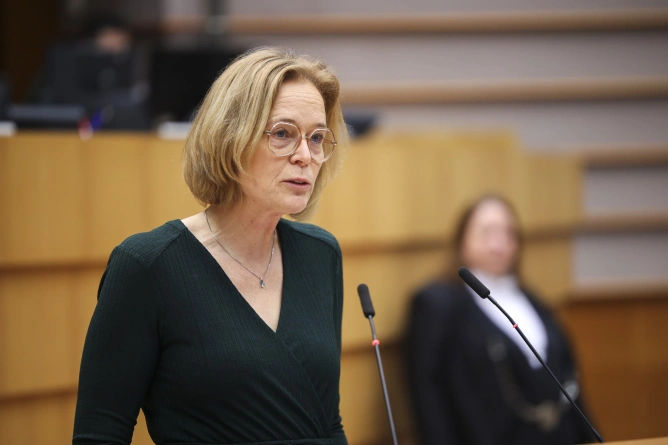
Rapporteur Ingeborg ter Laak presented the measure as a transitional solution for small firms, until the EU adopts a more coherent horizontal framework. According to the Parliament’s press release, her argument is that businesses should not be required to bear years of administrative burdens considered unnecessary while the institutions prepare the permanent legislative solution.
The temporary nature is explicitly provided for through a sunset clause. The suspension would automatically disappear when the general circular economy rules replacing the transitional solution enter into force. The European Commission is expected to present a comprehensive act on the circular economy later in 2026, and the measures discussed by ENVI form part of the environmental simplification package.
This clause is important because Parliament’s position does not seek to create two permanently different systems for SMEs and large companies. The logic is to temporarily remove an administrative obligation for small firms in the EU until the general architecture of producer responsibility is harmonised at European level.
For companies from third countries, however, the representative remains part of the architecture proposed by ENVI. Thus, a company from outside the Union placing the products concerned on the European market would not benefit from the derogation granted to an SME established in a Member State. This difference is one of the most important changes compared with the Commission’s initially broader approach.
The two positions adopted by ENVI do not yet represent the final form of the legislation. They must be confirmed by the European Parliament in plenary, a stage expected during the session of 19–22 October. If plenary confirms the mandates, Parliament will be able to begin negotiations with the Council on the final texts.
Therefore, the votes in ENVI do not mean that European SMEs are already exempt from the obligation. They establish the parliamentary committee’s position for the next stage of the legislative process. The actual legal situation will change only after the procedure has been completed and the adopted acts have entered into force.
Latest News
17:55
17:54
17:54
17:54
17:54
See more news
NEWS ON THE SAME TOPICS








.webp)

.webp)


