Brussels threatens with sanctions: Blocking humanitarian aid is a "collective punishment" and a war crime



Always see our news on Google
Brussels, December 2, 2025 The Development Committee (DEVE) adopted on Tuesday a draft report calling for a fundamental review of the EU's response to humanitarian crises, in a global context defined by "polycrisis". The document, approved with 16 votes in favor, 2 against, and 3 abstentions, draws a clear red line: starving civilians and blocking aid constitute war crimes and must be punished by European sanctions.
In short The EU must sanction actors who block humanitarian access; refusal of aid is considered collective punishment.
Strong condemnation for the killing of 508 humanitarian workers and attacks on hospitals; hunger must not be used as a weapon.
Imperative call for increased humanitarian funding and specific protection for women in conflict areas (Sudan, DRC).
The DEVE report, drafted by Leire Pajín (S&D, Spain), signals an alarming increase in violations of International Humanitarian Law (IHL).
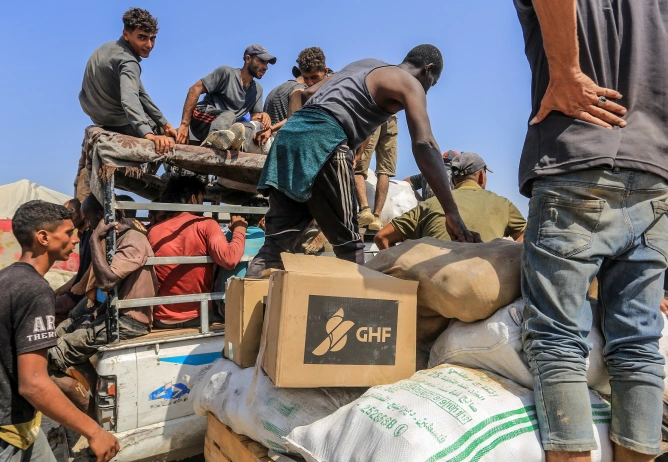
MEPs are "outraged" by the grim toll in Gaza, where 508 humanitarian workers have been killed, and convoys and hospitals are repeatedly targeted. The text explicitly states that "denying access to life-saving humanitarian aid is collective punishment, constituting a war crime." This positioning marks a hardening of the European legislature's tone, which demands rapid, safe, and unimpeded access throughout Gaza and urges the EU to consider concrete sanctions against entities that deliberately obstruct assistance.
Forgotten crises and sexual violence as a weapon The analysis of the context reveals that EU attention should not be limited to the Middle East. The report shines a spotlight on unprecedented humanitarian crises in Sudan and the Democratic Republic of Congo (DRC).
MEPs call on member states to direct specific funds for survivors of conflict-related sexual violence, an endemic phenomenon in these regions. Furthermore, a paradigm shift regarding women and girls is requested: they should not be seen only as victims but as "agents of change" and community leaders who can shape the future of post-conflict areas.
Rapporteur Leire Pajín emphasizes that, in a world with over 300 million people urgently needing assistance, the EU must take on a leadership role not only in donations but also in humanitarian diplomacy. In the context of negotiations for the EU's long-term budget (2028-2035), the report calls for a significant increase in funding that is predictable and sustainable. The European Commission is urged to publish the promised humanitarian strategy for 2026, with a focus on the "humanitarian-development-peace nexus." The report will be put to a final vote in the plenary session in January 2026.
Latest News
13:07
12:59
12:49
12:49
12:49
See more news
NEWS ON THE SAME TOPICS